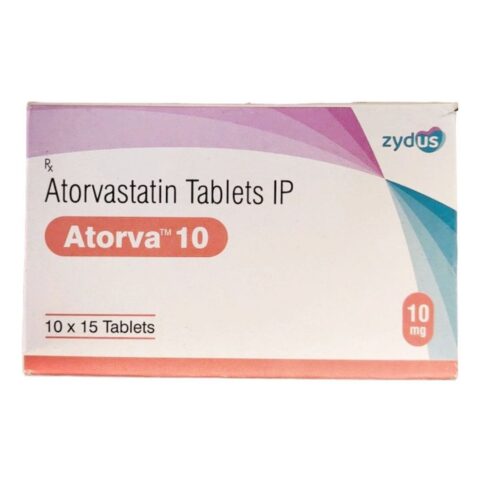
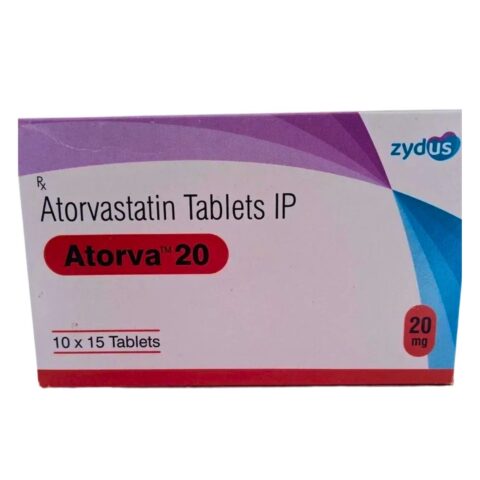
Drug: Atorvastatin Calcium | Class: HMG-CoA Reductase Inhibitor (Statin) | Brand Reference: Lipitor (Pfizer); Atorva 10mg (Zydus India), Tonact (Lupin) | Indication: Hypercholesterolaemia, mixed dyslipidaemia, cardiovascular risk reduction, secondary prevention post-MI/stroke | Standard Dose: Standard: 10–40mg once daily
Atorvastatin is a statin that lowers LDL cholesterol by 35–55% to reduce heart attack and stroke risk. It is indicated for high cholesterol, mixed dyslipidaemia, and cardiovascular risk reduction. ACC/AHA 2023 guidelines recommend high-intensity statin therapy (atorvastatin 40–80mg) for patients with established cardiovascular disease (post-MI, stroke) and moderate intensity (10–20mg) for primary prevention in moderate-risk patients. The ASCOT-LLA trial established that atorvastatin 10mg reduced coronary events by 36% in hypertensive patients with average cholesterol.
Atorvastatin contains Atorvastatin Calcium, a hmg-coa reductase inhibitor (statin) indicated for hypercholesterolaemia, mixed dyslipidaemia, cardiovascular risk reduction, secondary prevention post-mi/stroke. ASCOT-LLA trial: atorvastatin 10mg reduced coronary events by 36%; TNT trial: 80mg reduced major CV events by 22% vs 10mg. Most cited pharmaceutical RCT globally.
| Attribute | Details |
|---|---|
| Generic Name | Atorvastatin Calcium |
| Drug Class | HMG-CoA Reductase Inhibitor (Statin) |
| Brand Reference | Lipitor (Pfizer); Atorva (Zydus India), Tonact (Lupin) |
| Primary Indication | Hypercholesterolaemia, mixed dyslipidaemia, cardiovascular risk reduction, secondary prevention post-MI/stroke |
| Standard Dose | Standard: 10–40mg once daily. Intensive: 40–80mg. High-intensity statins (40–80mg) recommended post-ACS/high CV risk (ACC/AHA 2023 guideline) |
| Dosage Form | Film-Coated Tablet |
| Route | Oral |
| Prescription Required | Yes |
| Evidence Base | ASCOT-LLA trial: atorvastatin 10mg reduced coronary events by 36%; TNT trial: 80mg reduced major CV events by 22% vs 10mg. Most cited pharmaceutical RCT globally |
Competitively inhibits HMG-CoA reductase, reducing hepatic cholesterol synthesis, upregulating LDL receptors, lowering LDL-C by 35–55% dose-dependently — making Atorvastatin Calcium effective against hypercholesterolaemia, mixed dyslipidaemia, cardiovascular risk reduction, secondary prevention post-mi/stroke.
Dose depends on your cardiovascular risk. Low-to-moderate primary prevention: 10–20mg. High risk (diabetes, multiple risk factors): 20–40mg. Very high risk or established cardiovascular disease (post-MI, stroke): 40–80mg (high-intensity statin per ACC/AHA guideline). Your LDL target guides titration: <70mg/dl for very high risk, <100mg/dl for high risk, <130mg/dl for primary prevention.
Unlike simvastatin (which requires evening dosing due to its short half-life matching peak cholesterol synthesis at night), atorvastatin has a long enough half-life (14 hours) and active metabolites to work effectively at any time of day. Morning dosing is equally effective and improves adherence for most patients. Take at the same time daily for consistency.
Myalgia (muscle pain/aching) affects approximately 5–10% of patients. Severe myopathy with elevated CK is rare (<0.1%). The most serious complication — rhabdomyolysis — is very rare at standard doses. Risk increases with high doses (80mg), renal impairment, hypothyroidism, and certain drug combinations (cyclosporine, strong CYP3A4 inhibitors). CK testing is warranted only if muscle symptoms develop — routine baseline testing is not required.
Statins moderately increase the risk of new-onset type 2 diabetes by approximately 10–13% compared to placebo — an absolute increase of about 1 extra case of diabetes per 100 patients treated over 4 years. However, the cardiovascular benefit of statins (preventing 5–10 heart attacks per 100 high-risk patients) substantially outweighs this diabetes risk for high-risk patients. In lower-risk patients, the risk-benefit calculation is more nuanced.
Stopping statin therapy abruptly does not cause a rebound effect, unlike some cardiovascular medications. However, LDL cholesterol returns to pre-treatment levels within 2–4 weeks. For patients with established cardiovascular disease, stopping statins significantly increases risk of recurrent cardiac events. Never stop without discussing with your physician — if side effects are the concern, a dose reduction or switch to a different statin is usually the better solution.
Store at 15–30°C away from sunlight and moisture. Keep out of reach of children. Do not use past expiry date.
Orders ship from our India Head Office within 1–2 business days of confirmation. We include full customs documentation — HS codes, certificates of origin, and pharmaceutical export permits.
Estimated delivery: 3–7 business days to UK. 7–10 business days to UAE, Saudi Arabia and Gulf countries. 10–15 days for USA and Asian countries.
All packages arrive in plain, unmarked brown boxes. No pharmacy name or medication details on the outside.
Only logged in customers who have purchased this product may leave a review.

Reviews
There are no reviews yet.