Q & A
Ask a question
There are no questions yet

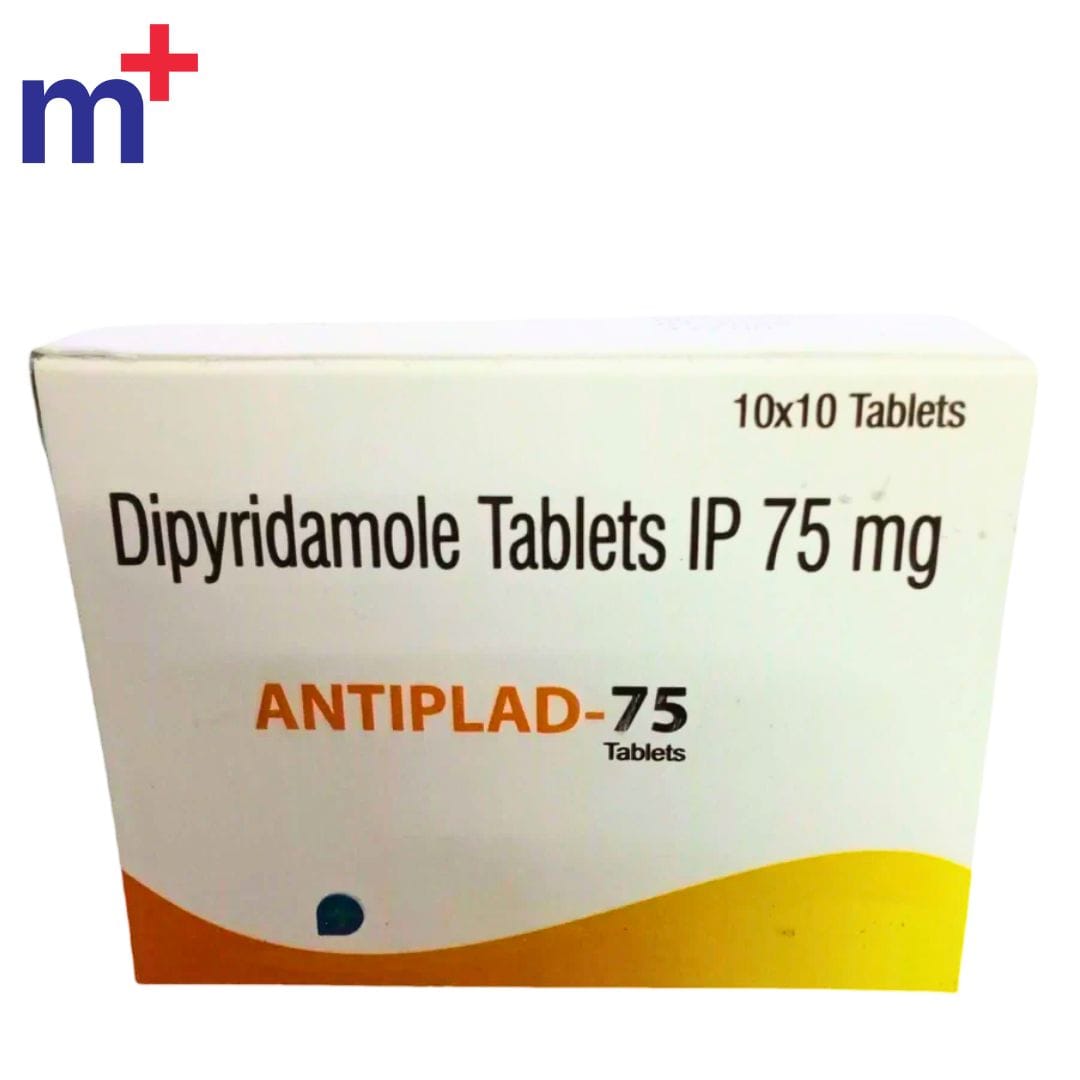
Dipyridamole 75 mg Tablet is a prescription-only, orally administered antiplatelet and vasodilatory drug with a well-established clinical profile spanning several decades of use in cardiovascular medicine. Sold under the original brand name Persantine and now widely available as a generic formulation, Dipyridamole 75 mg belongs to the pharmacological class of nucleoside transport inhibitors and phosphodiesterase (PDE) inhibitors.
It is primarily prescribed as an adjunct to warfarin anticoagulation therapy in patients who have undergone cardiac valve replacement surgery, where the risk of life-threatening thromboembolic events is significantly elevated. It is also used in clinical practice for secondary prevention of ischemic stroke and transient ischaemic attack (TIA), and as part of combination antiplatelet regimens in selected cardiovascular patients.
Thromboembolism Prevention Following Cardiac Valve Replacement
This is the primary FDA-approved indication for Dipyridamole 75 mg. Patients with mechanical prosthetic heart valves face a substantially elevated lifelong risk of thromboembolic complications — including valve thrombosis, stroke, and peripheral embolism — due to the thrombogenic surfaces of mechanical valves and altered blood flow patterns. Dipyridamole 75 mg is prescribed as an adjunct to warfarin therapy in these patients to provide enhanced antiplatelet protection. The combination of warfarin and dipyridamole delivers greater thromboembolic protection than anticoagulation therapy alone.
Secondary Stroke Prevention and Transient Ischaemic Attack (TIA)
Dipyridamole is a cornerstone of secondary stroke prevention, particularly in patients who have experienced a previous ischaemic stroke or TIA caused by blood clots. When combined with low-dose aspirin in an extended-release formulation, it is one of the most clinically validated antiplatelet strategies for reducing the risk of recurrent stroke and thromboembolic events in high-risk patients.
Peripheral Arterial Disease and Coronary Artery Disease
Dipyridamole has established vasodilatory properties and is used clinically to improve blood flow in patients with peripheral arterial disease and coronary artery disease, reducing ischemic symptoms and supporting vessel patency.
Pulmonary Hypertension
Clinical evidence supports the use of Dipyridamole in reducing pulmonary arterial pressure in selected patients with pulmonary hypertension, without producing a significant drop in systemic blood pressure — an important clinical advantage in this patient population.
Haemodialysis Access Graft Patency
Dipyridamole modestly increases unassisted patency of synthetic arteriovenous haemodialysis grafts by inhibiting smooth muscle cell proliferation, and has been used as part of access maintenance strategies in patients on long-term haemodialysis.
Dipyridamole exerts its antiplatelet and vasodilatory effects through two distinct and complementary mechanisms of action:
Mechanism 1 – Phosphodiesterase (PDE) Inhibition
Dipyridamole inhibits cyclic-3',5'-guanosine monophosphate phosphodiesterase (cGMP-PDE) in platelets and vascular smooth muscle. This inhibition augments the increase in cGMP produced by endothelium-derived nitric oxide (EDRF/NO), leading to relaxation of vascular smooth muscle and reduced platelet aggregation. Dipyridamole also weakly inhibits cAMP-PDE, further elevating cyclic AMP levels within platelets — and since elevated cAMP impairs platelet aggregation and promotes arteriolar smooth muscle relaxation, this contributes an additional antiplatelet effect.
Mechanism 2 – Adenosine Uptake Inhibition
Dipyridamole inhibits the cellular reuptake of adenosine into platelets, red blood cells, and endothelial cells in a concentration-dependent manner at therapeutic plasma levels of 0.5 to 1.9 mcg/mL. This inhibition increases local extracellular concentrations of adenosine, which acts on platelet A2-receptors to stimulate platelet adenylate cyclase and elevate platelet cAMP levels — thereby inhibiting platelet aggregation in response to multiple stimuli including platelet activating factor (PAF), collagen, and adenosine diphosphate (ADP).
The combined result of both mechanisms is a clinically meaningful reduction in platelet aggregation and thrombus formation, alongside beneficial vasodilatory effects on the coronary and peripheral vasculature.
Recommended Dose for Thromboembolism Prophylaxis
The standard recommended oral dose is 75 to 100 mg four times daily as an adjunct to warfarin therapy following cardiac valve replacement. The total daily dose typically ranges from 300 to 400 mg per day, divided into four doses taken at evenly spaced intervals throughout the day.
Step 1 – Timing of Doses Take Dipyridamole at evenly spaced intervals four times daily to maintain a consistent level of the drug in the bloodstream. This is essential for optimal antiplatelet effect.
Step 2 – Administration Swallow the tablet whole with a full glass of water (approximately 240 mL). For best absorption, take Dipyridamole at least 1 hour before or 2 hours after meals. If stomach upset occurs, your doctor may advise taking it with food or milk to reduce gastrointestinal discomfort.
Step 3 – Consistency Do not miss doses. Continue taking Dipyridamole exactly as prescribed even when you feel well. Do not stop taking Dipyridamole without consulting your doctor — sudden discontinuation in patients with mechanical heart valves may increase thromboembolic risk.
Step 4 – Missed Dose If a dose is missed, take it as soon as you remember. If it is almost time for the next scheduled dose, skip the missed dose and resume the regular dosing schedule. Do not take a double dose to compensate.
Important — Stress Testing: If you are taking Dipyridamole tablets and require pharmacological cardiac stress testing with intravenous dipyridamole or other adenosinergic agents such as adenosine or regadenoson, discontinue Dipyridamole tablets at least 48 hours before the stress test. Taking oral dipyridamole within 48 hours of IV adenosinergic stress testing significantly increases cardiovascular risk and may impair test sensitivity.
Dipyridamole 75 mg is contraindicated in:
Use with caution and under close medical supervision in:
Dipyridamole 75 mg has a number of clinically important drug interactions. Inform your doctor and pharmacist of all medications you are currently taking, including over-the-counter drugs and herbal products. Key interactions include:
Adenosine and adenosinergic agents (adenosine, regadenoson): Dipyridamole increases plasma levels and cardiovascular effects of adenosine. Dosage adjustment of adenosine may be required. Oral Dipyridamole must be discontinued 48 hours before IV adenosinergic stress testing.
Warfarin and anticoagulants: Combined use provides greater thromboembolic protection but also increases bleeding risk. Close INR monitoring is required.
Aspirin: Combination with aspirin enhances antiplatelet effect but increases the risk of bleeding. Only combine with aspirin under specific medical direction — do not take additional aspirin without your doctor's explicit guidance.
Cholinesterase inhibitors (for myasthenia gravis or dementia): Dipyridamole may antagonise the therapeutic effect of these drugs, potentially worsening symptoms.
Topotecan and Venetoclax: Dipyridamole inhibits P-glycoprotein (MDR1) efflux transporter and increases the levels and toxicity of these oncology drugs. Concurrent use should be avoided or doses adjusted under specialist guidance.
Dabigatran: Both drugs increase bleeding risk through pharmacodynamic synergism. Use with caution and monitor closely for signs of haemorrhage.
SSRIs including citalopram: Combination may increase bleeding risk. Monitor carefully.
Caffeine: Caffeine and aminophylline can reverse the vasodilatory effects of Dipyridamole. Patients should avoid caffeine-containing foods and beverages for 24 hours before any stress test involving IV dipyridamole.
Dipyridamole 75 mg is generally well tolerated at the therapeutic dose. Side effects are most commonly related to its vasodilatory action and are usually mild and temporary. They may include:
Less common but clinically significant side effects include:
Seek immediate medical attention if you experience signs of an allergic reaction including hives, difficulty breathing, or swelling of the face, lips, tongue, or throat — or if you experience severe chest pain, fainting, or unusual bleeding.
Store at 20 to 25 degrees Celsius (68 to 77 degrees Fahrenheit), with excursions permitted between 15 and 30 degrees Celsius. Store in a tightly closed, light-resistant container as defined in the USP. Keep out of reach of children. Do not use after the expiration date printed on the packaging.
What is Dipyridamole 75 mg used for? Dipyridamole 75 mg is used as an adjunct to warfarin therapy to prevent dangerous blood clots in patients with mechanical prosthetic heart valves, and for secondary prevention of ischaemic stroke and TIA in high-risk patients. It is also used in peripheral arterial disease, pulmonary hypertension, and as part of combination antiplatelet therapy.
How does Dipyridamole prevent blood clots? Dipyridamole works through two mechanisms — inhibiting phosphodiesterase enzymes (raising cAMP and cGMP in platelets) and blocking the cellular reuptake of adenosine — both of which reduce platelet aggregation and prevent thrombus formation.
How many times a day should I take Dipyridamole 75 mg? The standard dosing schedule for thromboembolism prophylaxis is four times daily at evenly spaced intervals. Always follow the specific dosing instructions prescribed by your doctor.
Can I take Dipyridamole with aspirin? Only if specifically directed by your doctor. The combination provides enhanced antiplatelet protection but also increases bleeding risk. Do not add aspirin to your regimen without explicit medical guidance.
Can I take Dipyridamole before a cardiac stress test? No. If you require a pharmacological cardiac stress test using IV dipyridamole or adenosine-based agents, you must stop taking oral Dipyridamole at least 48 hours beforehand. Failure to do so increases cardiovascular risk and may give inaccurate test results.
Is Dipyridamole safe for elderly patients? Older adults should use Dipyridamole with caution as they are more susceptible to dizziness and blood pressure changes. Some clinical guidelines suggest that for certain elderly patients, alternative antiplatelet agents may be preferred. Discuss with your healthcare provider.
Do you ship Dipyridamole 75 mg to USA, UK, and UAE? Yes. We provide discreet, secure international shipping to the United States, United Kingdom, UAE (Dubai, Abu Dhabi), Saudi Arabia, Australia, and India.
Is a prescription required? Dipyridamole 75 mg is a prescription medication. Always consult a qualified healthcare provider before beginning or changing any antiplatelet or anticoagulant therapy.
Medically Reviewed Content This product description has been written in accordance with clinical pharmacology guidelines and publicly available pharmaceutical references including FDA-approved prescribing information (Amneal Pharmaceuticals, Oxford Pharmaceuticals), the NCBI StatPearls clinical monograph, MedlinePlus drug information, Mayo Clinic drug reference, Medscape prescribing data, and DrugBank pharmacological data. Always consult a licensed healthcare provider before starting or changing any cardiovascular medication.

Reviews
There are no reviews yet