Start shopping and find your next favourite medicine.
Browse Catalog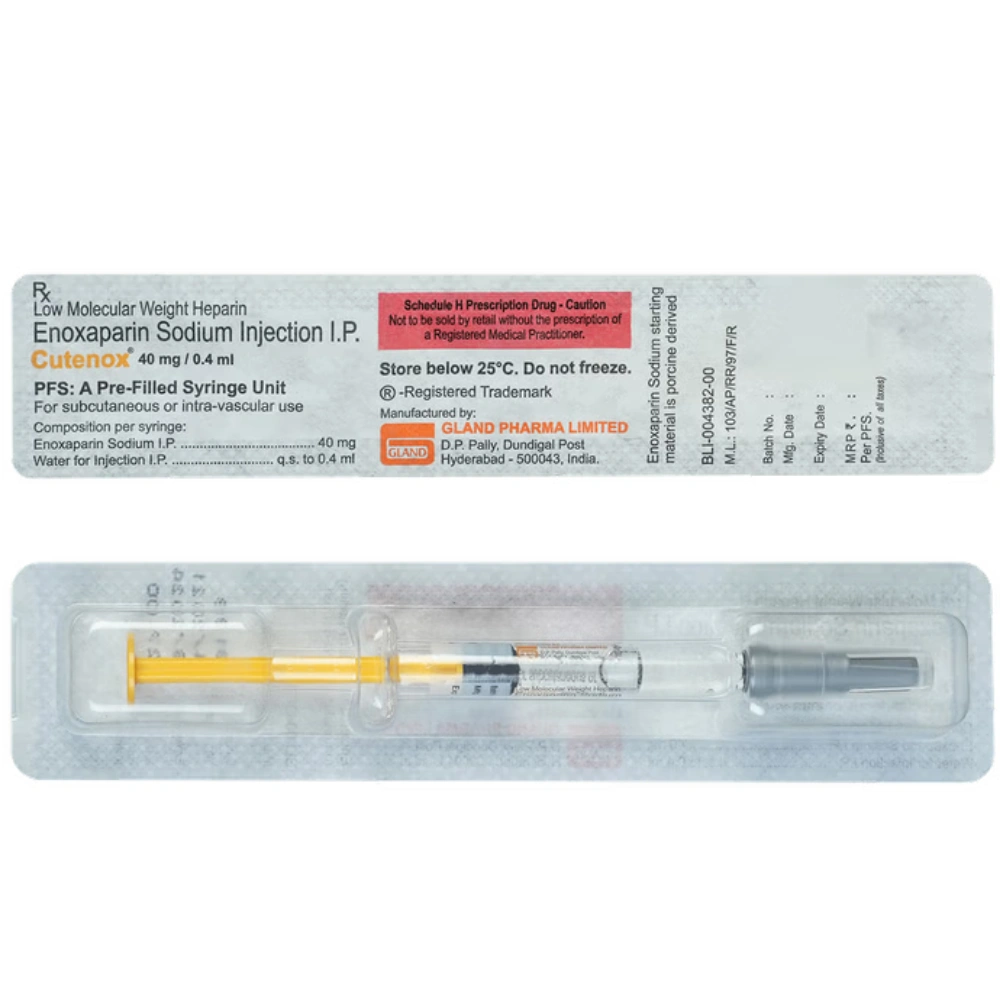
Cutenox 40mg is a low molecular weight heparin (LMWH) injection containing enoxaparin sodium, used primarily to prevent deep vein thrombosis (DVT) and pulmonary embolism (PE) in surgical and immobile patients, and also used off-label in IVF and recurrent pregnancy loss to support uterine blood flow and implantation. It is manufactured by Gland Pharma and administered as a subcutaneous injection, typically self-administered after training.
| Attribute | Details |
|---|---|
| Generic Name | Enoxaparin Sodium |
| Strength | 40mg/0.4mL |
| Drug Class | Low molecular weight heparin (LMWH) / anticoagulant |
| Manufacturer | Gland Pharma |
| Primary Indication | DVT prophylaxis, pulmonary embolism prevention/treatment |
| Off-Label Use | IVF/recurrent pregnancy loss — clotting-related implantation support |
| Route | Subcutaneous injection (abdomen or thigh) |
| Pack Size | 10 injections per pack |
| Prescription | Required in all markets |
Enoxaparin is a low molecular weight heparin that inhibits Factor Xa and, to a lesser extent, thrombin, interrupting the coagulation cascade before clots can form or grow. Compared to unfractionated heparin, its more predictable dose-response means it generally doesn’t require routine blood monitoring for most indications, which is part of why it’s widely used for at-home, self-administered prophylaxis.
Dosing depends on indication and body weight, and must be set by a prescribing physician — typical DVT prophylaxis dosing is 40mg once daily, given subcutaneously.
The most common side effects are mild bruising or pain at the injection site; the main serious risk to watch for is abnormal bleeding.
Seek medical attention immediately for: unusual or heavy bleeding (nosebleeds, blood in urine/stool, heavy menstrual bleeding), signs of allergic reaction (rash, swelling, breathing difficulty), or sudden back pain/numbness if enoxaparin was used around spinal procedures (risk of spinal hematoma).
It’s used off-label in women with clotting disorders to improve uterine blood flow and reduce the risk of implantation failure or pregnancy loss linked to micro-clotting, most commonly in cases of antiphospholipid syndrome.
It’s injected subcutaneously, usually into the abdomen or thigh, and most patients are trained to self-administer at home after their first few doses.
No — it doesn’t affect fertility directly; it’s used to support implantation and reduce clotting-related pregnancy complications in women who already have a diagnosed clotting risk.
Yes, it’s commonly prescribed during pregnancy for women with diagnosed clotting disorders or a history of recurrent pregnancy loss, under physician supervision.
Most patients don’t need routine blood monitoring, but those with kidney impairment, low body weight, or pregnancy may need periodic anti-Factor Xa level checks at their doctor’s discretion.
Medically reviewed. Last updated: [21/06/2026]. This content is for informational purposes and does not replace consultation with a licensed physician.
Orders ship from our India Head Office within 1–2 business days of confirmation. We include full customs documentation — HS codes, certificates of origin, and pharmaceutical export permits.
Estimated delivery: 3–7 business days to UK. 7–10 business days to UAE, Saudi Arabia and Gulf countries. 10–15 days for USA and Asian countries.
All packages arrive in plain, unmarked brown boxes. No pharmacy name or medication details on the outside.


Reviews
There are no reviews yet