Medically reviewed by a qualified haematologist or cardiologist | Last updated: April 2026 Prescription-only medicine | NPPA Regulated | Administered by or under supervision of a qualified healthcare professional
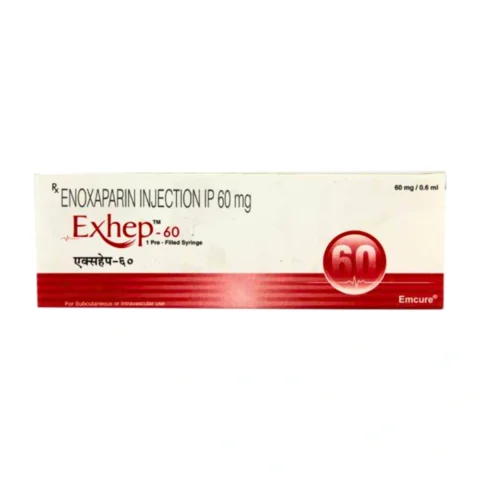
Exhep 60mg Injection is a Low Molecular Weight Heparin (LMWH) anticoagulant manufactured and marketed by Emcure Pharmaceuticals Ltd, one of India’s leading pharmaceutical companies. Each pre-filled syringe of 0.6 mL contains Enoxaparin Sodium 60mg (equivalent to 6,000 IU anti-Factor Xa activity) as the active substance.
Enoxaparin is derived from heparin through a controlled depolymerisation process that produces a standardised LMWH with a mean molecular weight of approximately 4,500 daltons — significantly lower than unfractionated heparin (UFH). This structural refinement delivers a more predictable pharmacokinetic profile, higher subcutaneous bioavailability, a longer duration of action, and a substantially lower risk of heparin-induced thrombocytopenia (HIT) compared to standard unfractionated heparin.
Exhep 60mg is NPPA (National Pharmaceutical Pricing Authority) regulated and is available as a single-dose pre-filled syringe for subcutaneous injection.
Key Facts at a Glance
Active substance: Enoxaparin Sodium 60mg. Anti-Xa activity: 6,000 IU. Volume: 0.6 mL pre-filled syringe. Form: Solution for subcutaneous injection. Manufacturer/Marketer: Emcure Pharmaceuticals Ltd, Pune, Maharashtra, India. Storage: Store below 25°C. Do not freeze. Regulatory status: NPPA regulated. Prescription: Required.
Anticoagulation therapy for venous thromboembolism and acute coronary syndromes has undergone significant guideline evolution in 2025/2026. The landmark 2026 AHA/ACC/ACCP/ACEP/CHEST guideline for the Evaluation and Management of Acute Pulmonary Embolism in Adults — the first comprehensive PE guideline in over a decade — introduces a new Acute Pulmonary Embolism Clinical Categories framework for precision risk stratification and treatment decision-making. Enoxaparin (LMWH) retains its central role in the initial parenteral anticoagulation phase of PE and DVT management, as the preferred bridge agent when transitioning patients to edoxaban or dabigatran, and as the anticoagulant of choice in pregnancy-associated VTE, cancer-associated thrombosis, and patients with severe renal impairment where direct oral anticoagulants (DOACs) are contraindicated.
The 2025 DOAC Guidelines for Australia and New Zealand explicitly recommend enoxaparin 40mg subcutaneously daily as prophylactic anticoagulation for patients at continued high bleeding risk post-surgery where DOAC resumption is unsafe. The ESVS guidelines recommend therapeutic LMWH for at least 3 months for DVT during pregnancy and at least 6 weeks postpartum. The international ITAC 2022 guidelines (Grade 1A) recommend LMWH including enoxaparin as first-line initial treatment of established VTE in cancer patients with adequate renal function.
Enoxaparin remains one of the most clinically indispensable anticoagulants in modern medicine — and Exhep 60mg delivers this proven molecule at an NPPA-regulated, accessible price point.
Exhep 60mg is indicated for the inpatient treatment of acute DVT — with or without pulmonary embolism — in conjunction with warfarin sodium. It is also indicated for outpatient treatment of acute DVT without pulmonary embolism in conjunction with warfarin. Therapeutic enoxaparin anticoagulation initiated at diagnosis prevents existing clots from extending, reduces the risk of PE, and allows the body’s natural fibrinolytic system to gradually dissolve the thrombus over time. The effect of subcutaneous enoxaparin is observed within 20–60 minutes of injection and lasts approximately 12 hours, enabling predictable twice-daily therapeutic anticoagulation.
Exhep 60mg is used for thromboprophylaxis in patients at significant risk of VTE, including those recovering from hip replacement surgery, knee replacement surgery, or abdominal surgery, as well as acutely ill medical patients with reduced mobility. Post-surgical DVT prophylaxis is one of the most critical applications of enoxaparin — undetected post-operative DVT carries a significant risk of fatal pulmonary embolism, and prophylactic LMWH has been shown in multiple randomised controlled trials to dramatically reduce post-operative VTE incidence. Exhep 60mg 40mg once daily (the prophylactic dose formulation) or 60mg twice daily (therapeutic dose for higher-risk patients) may be prescribed depending on the clinical indication.
Enoxaparin is indicated for the treatment of acute PE and is recommended by the 2026 AHA/ACC/ACCP Joint PE Guideline as a first-line parenteral anticoagulant in the initial management of confirmed acute PE, particularly as a bridge to oral anticoagulation with edoxaban or dabigatran (which require a minimum 5-day LMWH run-in period). Exhep 60mg provides reliable, weight-based therapeutic anticoagulation during the critical early phase of PE treatment.
Exhep 60mg is indicated for the prevention of ischaemic complications of unstable angina and non-Q-wave myocardial infarction (NSTEMI) when administered concurrently with aspirin therapy. In acute coronary syndromes, thrombus formation on ruptured or eroded atherosclerotic plaques drives the clinical event. Enoxaparin’s targeted anti-Factor Xa and anti-thrombin activity interrupts the coagulation cascade, preventing thrombus propagation and reducing the risk of myocardial infarction and death in this high-risk population.
Exhep 60mg is indicated for the management of acute STEMI — both in patients managed medically and in those undergoing percutaneous coronary intervention (PCI). In STEMI managed with thrombolysis, enoxaparin significantly reduces reinfarction and mortality compared to UFH. In PCI, enoxaparin provides effective periprocedural anticoagulation with a more predictable pharmacokinetic profile than UFH.
Low molecular weight heparin, including enoxaparin, is the recommended anticoagulant for the initial and extended treatment of cancer-associated VTE when creatinine clearance is ≥30 mL/min, per international ITAC 2022 Grade 1A guidelines. Cancer patients with active malignancy are at significantly elevated VTE risk due to tumour procoagulant activity, immobility, and chemotherapy-related endothelial damage. Exhep 60mg provides reliable anticoagulation in this complex patient population where DOACs may be less preferred due to drug interactions, bleeding risk from gastrointestinal tumours, or patient characteristics.
Exhep 60mg is widely used in assisted reproduction and pregnancy to prevent blood clots. Following successful IVF embryo implantation, enoxaparin is prescribed to women with thrombophilia or prior VTE history to reduce the risk of miscarriage and pregnancy-associated DVT. LMWH does not cross the placenta and is the anticoagulant of choice during pregnancy — DOACs and warfarin are contraindicated in pregnancy. ESVS guidelines recommend therapeutic LMWH for at least 3 months for DVT diagnosed during pregnancy and for at least 6 weeks postpartum.
Enoxaparin is used to prevent clot formation in the extracorporeal circulation during haemodialysis — typically administered as a single IV bolus at the start of the dialysis session.
Enoxaparin in Exhep 60mg is a low molecular weight heparin that works through potentiation of antithrombin — a naturally occurring serine protease inhibitor in the blood. Enoxaparin binds to antithrombin via a specific pentasaccharide sequence, inducing a conformational change that dramatically accelerates antithrombin’s inhibitory activity against the coagulation proteases responsible for clot formation.
Dual coagulation factor inhibition: Enoxaparin produces selective inhibition of Factor Xa (anti-Xa activity) and, at therapeutic doses, partial inhibition of Factor IIa (thrombin) (anti-IIa activity). The anti-Xa to anti-IIa ratio of enoxaparin is approximately 3.5:1 — compared to 1:1 for unfractionated heparin. This relatively greater anti-Xa activity is the key pharmacological basis for enoxaparin’s clinical advantages over UFH.
What this achieves clinically: Factor Xa inhibition prevents the conversion of prothrombin to thrombin — the central amplification step of the coagulation cascade. By interrupting this amplification, enoxaparin prevents new clot formation and stops existing clots from growing larger, while the body’s natural fibrinolytic system progressively dissolves existing thrombi over time. Enoxaparin does not directly dissolve clots that have already formed.
Pharmacokinetic advantages over unfractionated heparin:
Subcutaneous bioavailability: Near 100% — compared to approximately 30% for subcutaneous unfractionated heparin. This means every subcutaneous dose of Exhep 60mg delivers virtually its full anticoagulant effect reliably and predictably. Peak anti-Xa activity is reached approximately 3–5 hours after subcutaneous injection. Duration of anti-Xa activity is approximately 12 hours at therapeutic doses, enabling reliable twice-daily or once-daily dosing. Plasma half-life is approximately 4–5 hours after subcutaneous administration. The predictable pharmacokinetic profile of enoxaparin eliminates the need for routine aPTT monitoring required with UFH infusions — a major advantage in clinical practice.
Bioavailability: Enoxaparin subcutaneous bioavailability is approximately 100%. UFH subcutaneous bioavailability is approximately 30% — highly variable.
Monitoring: Enoxaparin does not require routine coagulation monitoring (aPTT) at standard doses. UFH infusions require continuous aPTT monitoring and frequent dose adjustments.
Dosing: Enoxaparin is weight-based and fixed — once or twice daily subcutaneous injection. UFH requires continuous intravenous infusion with ongoing titration.
HIT risk: Heparin-induced thrombocytopenia (HIT) — a rare but potentially catastrophic immune-mediated platelet reduction — occurs significantly less frequently with LMWH than with UFH. This is due to enoxaparin’s reduced binding to platelet factor 4 (PF4).
Administration: Enoxaparin subcutaneous injection can be self-administered at home by the patient or caregiver after training — enabling outpatient DVT treatment and prophylaxis. UFH typically requires inpatient intravenous administration.
Anti-Xa:Anti-IIa ratio: Enoxaparin 3.5:1 vs UFH 1:1 — enoxaparin’s preferential anti-Xa activity delivers effective anticoagulation with less thrombin inhibition and consequently fewer bleeding complications at equivalent antithrombotic efficacy.
Exhep 60mg is prescribed and dosed by a qualified haematologist, cardiologist, or physician. Always follow your prescriber’s exact dosage instructions.
Route of administration: Subcutaneous (SC) injection only. Never inject intramuscularly. Intravenous administration is used only for the STEMI indication and haemodialysis circuit anticoagulation.
Injection technique: Patient should be lying down. Alternate injection sites between the left and right anterolateral or posterolateral abdominal wall at each injection. Hold a skin fold between the thumb and forefinger throughout the injection. Insert the full length of the needle perpendicularly (at 90 degrees) into the skin fold. Do not rub the injection site after injection — this can cause bruising.
DVT Treatment (with or without PE) — Inpatient: 1 mg/kg subcutaneously every 12 hours, or 1.5 mg/kg subcutaneously once daily. Continue enoxaparin for a minimum of 5 days and until a therapeutic INR of 2.0–3.0 is achieved on warfarin (or until the 5-day LMWH run-in for edoxaban or dabigatran is completed). Exhep 60mg (0.6 mL) is the standard vial for patients in the 50–70 kg body weight range at 1 mg/kg dosing.
DVT Prophylaxis — Post Orthopaedic Surgery (Hip/Knee Replacement): 30 mg subcutaneously every 12 hours, initiated 12–24 hours post-surgery, or 40 mg once daily initiated 12 hours pre-operatively. Duration: typically 10–14 days for knee replacement; up to 35 days extended-duration prophylaxis for hip replacement.
DVT Prophylaxis — Post Abdominal Surgery: 40 mg subcutaneously once daily, initiated 2 hours pre-operatively. Duration: 7–10 days, or up to 28 days for cancer surgery patients (per ITAC 2022 Grade 1A recommendation).
Unstable Angina and NSTEMI: 1 mg/kg subcutaneously every 12 hours, with concurrent aspirin therapy. Usual treatment duration: 2–8 days until clinical stabilisation.
STEMI: Patients under 75 years: 30 mg single IV bolus, immediately followed by 1 mg/kg subcutaneously, then 1 mg/kg every 12 hours for up to 8 days or hospital discharge. Patients 75 years and over: No initial IV bolus. 0.75 mg/kg subcutaneously every 12 hours for up to 8 days.
Renal Impairment Dose Adjustment: Enoxaparin is primarily renally cleared. Dose adjustment is required in patients with creatinine clearance below 30 mL/min. Therapeutic dose is typically reduced to 1 mg/kg once daily; prophylactic dose to 20 mg once daily. Anti-Xa level monitoring is recommended in severe renal impairment. ACCP guidelines recommend measuring anti-Xa levels 4 hours after enoxaparin administration at steady state in these patients.
Elderly Patients (over 75 years): Dose adjustment is required for therapeutic use in STEMI (see above). Monitor closely for bleeding in all elderly patients receiving enoxaparin.
Pre-surgical last dose: Per ACCP guidelines, the last pre-surgical dose of enoxaparin should be administered at least 24 hours before surgery. Treatment can be restarted 12 hours after surgery if clinically indicated.
Reversal: In the event of significant bleeding, protamine sulfate partially reverses enoxaparin’s anticoagulant activity. Protamine neutralises approximately 60% of LMWH activity. For enoxaparin administered within the previous 8 hours: 1 mg protamine sulfate per 1 mg of enoxaparin. The maximum single dose of protamine is 50 mg (ACCP). A second dose of 50 mg may be given if bleeding persists.
Do not use Exhep 60mg if: you have active major bleeding or a bleeding disorder; you have a history of confirmed or suspected immune heparin-induced thrombocytopenia (HIT) within the past 100 days or in the presence of circulating anti-PF4/heparin antibodies; you are allergic to enoxaparin, heparin, or any porcine product; you have active gastric or duodenal ulcer with risk of haemorrhage; you have had a recent haemorrhagic stroke; you are scheduled for epidural/spinal anaesthesia or lumbar puncture (see spinal/epidural haematoma warning below); you have severely impaired haemostasis.
Use under close medical supervision in: patients with a history of peptic ulcer or gastrointestinal bleeding; patients with recent ophthalmologic or neurosurgical procedures; patients with uncontrolled hypertension; patients with diabetic retinopathy; patients with severe liver disease; patients at low body weight (under 45 kg for women; under 57 kg for men) — increased bleeding risk; patients with severe renal impairment (creatinine clearance below 30 mL/min) — dose adjustment and anti-Xa monitoring required; elderly patients over 75 years.
Pregnancy: Enoxaparin does not cross the placenta and is the anticoagulant of choice during pregnancy when anticoagulation is required. However, use only when clearly indicated and with specialist supervision. Monitor closely for bleeding complications. Enoxaparin is not recommended in the peripartum period without haematologist guidance.
Breastfeeding: Limited data suggest minimal passage into breast milk. Use only if clinically indicated and with medical supervision.
Patients receiving enoxaparin who undergo neuraxial anaesthesia (spinal or epidural) or spinal puncture are at risk of developing a spinal or epidural haematoma — a rare but potentially catastrophic complication that can result in long-term or permanent paralysis. This risk is increased by: indwelling epidural catheters; concomitant use of other anticoagulants, NSAIDs, or platelet inhibitors; traumatic or repeated epidural or spinal puncture; a history of spinal surgery or spinal deformity.
Monitor patients receiving neuraxial anaesthesia and concurrent enoxaparin frequently for signs of neurological impairment — including back pain, bilateral leg weakness or numbness, and bowel or bladder dysfunction. If neurological compromise occurs, treat as an emergency requiring immediate diagnosis and intervention.
Other anticoagulants and antithrombotic agents: Concurrent use of other anticoagulants — including oral anticoagulants (warfarin, DOACs), unfractionated heparin, fondaparinux, and thrombolytics — significantly increases bleeding risk. Use with close monitoring or avoid when not clinically necessary.
Antiplatelet agents: Aspirin, clopidogrel, ticagrelor, prasugrel, dipyridamole, and glycoprotein IIb/IIIa inhibitors increase bleeding risk when combined with enoxaparin. This combination is clinically necessary in ACS management (enoxaparin plus aspirin) — use with careful risk-benefit assessment.
NSAIDs (ibuprofen, naproxen, diclofenac, ketorolac): Concurrent NSAID use increases both the anticoagulant effect of enoxaparin and the risk of gastrointestinal bleeding. Avoid if possible; if required, monitor closely.
Selective serotonin reuptake inhibitors (SSRIs) and serotonin-norepinephrine reuptake inhibitors (SNRIs): These agents impair platelet aggregation and may potentiate the bleeding risk of enoxaparin.
Natural food interactions: Ginger, garlic, ginkgo biloba, and high-dose omega-3 fatty acid supplements have natural anticoagulant properties and may increase bleeding risk in patients taking enoxaparin.
Alcohol: Alcohol ingestion increases the risk of gastrointestinal bleeding in patients receiving anticoagulant therapy. Limit alcohol intake during Exhep 60mg treatment.
Very common: Bleeding at any site — including minor bleeding at the injection site (bruising, haematoma). Injection site reactions including pain, redness, swelling, and skin induration. Mild, transient thrombocytopenia in the first few days of therapy.
Common: Elevated liver enzymes (serum aminotransferases, GGT, alkaline phosphatase) — typically transient and clinically benign. Nausea. Anaemia. Oedema. Fever. Diarrhoea. Headache.
Uncommon but clinically important: Heparin-induced thrombocytopenia (HIT) — immune-mediated platelet reduction occurring typically between days 5 and 14. Monitor platelet counts in all patients on enoxaparin beyond 5 days. If platelet count falls below 100,000/µL or by more than 50% from baseline, discontinue immediately and test for anti-PF4/heparin antibodies. Hypersensitivity reactions including urticaria, pruritus, and rash. Hyperkalaemia in patients with renal impairment.
Serious — seek immediate medical attention for: Signs of major bleeding — unusual or unexpected bruising, blood in urine (pink/red/dark urine), blood in stools (black/tarry stools or fresh blood), vomiting blood, coughing up blood, severe or unusual headache (may indicate intracranial haemorrhage), severe abdominal pain (may indicate retroperitoneal or gastrointestinal haemorrhage). Signs of spinal/epidural haematoma in patients post-neuraxial procedure — back pain, leg weakness, bowel or bladder dysfunction. Signs of HIT with thrombosis — new clots developing despite anticoagulation, skin necrosis at injection sites, painful skin discolouration.
Monitoring during therapy: Platelet count before initiation and regularly during therapy (especially in patients receiving enoxaparin for more than 5 days). Renal function tests at baseline and periodically during therapy, particularly in elderly patients. Anti-Xa level monitoring in patients with severe renal impairment, pregnant patients, and those at extremes of body weight. Blood pressure monitoring. Stool occult blood testing if gastrointestinal bleeding is suspected.
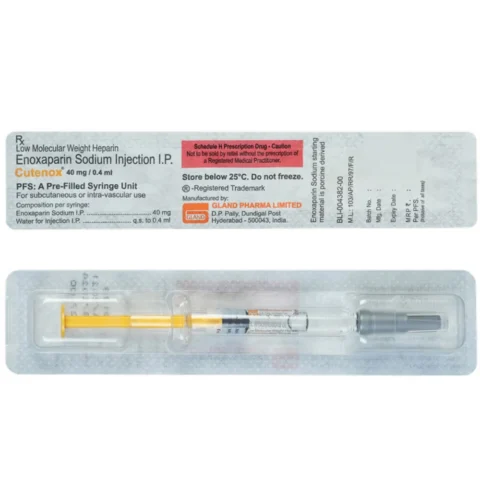
Store below 25°C. Do not freeze. Store in the original packaging to protect from light. Multiple-dose vials, once opened, must not be stored for more than 28 days. Pre-filled syringes are single-use only — do not reuse. Dispose of used syringes and needles safely in an approved sharps container. Keep out of reach of children.
What is Exhep 60mg used for? Exhep 60mg is used to prevent and treat DVT and PE, to manage acute coronary syndromes including unstable angina, NSTEMI, and STEMI, for post-surgical thromboprophylaxis, for cancer-associated thrombosis, for VTE in pregnancy after IVF or with thrombophilia, and to prevent clotting in haemodialysis circuits.
How is Exhep 60mg given? By subcutaneous (under-the-skin) injection into the abdominal wall. Rotate injection sites with each dose. Never inject intramuscularly. A healthcare professional will typically administer the first dose and teach patients or caregivers the technique for home administration where appropriate.
How quickly does Exhep 60mg work? The anti-Xa effect of enoxaparin begins within 20–60 minutes of subcutaneous injection. Peak activity is reached in approximately 3–5 hours. The anticoagulant effect lasts approximately 12 hours at therapeutic doses.
Does Exhep 60mg dissolve blood clots? No. Enoxaparin prevents existing clots from growing larger and stops new clots from forming. It does not directly dissolve clots. The body’s own fibrinolytic system gradually dissolves existing thrombi over time while enoxaparin provides anticoagulant cover.
Is Exhep 60mg safe in pregnancy? Enoxaparin is the anticoagulant of choice during pregnancy when anticoagulation is needed — it does not cross the placenta and is widely used in pregnancy-associated DVT, thrombophilia management, and following IVF. Always use under specialist supervision.
Can Exhep 60mg be self-injected at home? Yes — with proper training from a healthcare professional. Subcutaneous enoxaparin self-injection at home is standard practice for DVT prophylaxis and treatment in many settings, allowing patients to avoid prolonged hospitalisation.
What is the antidote for Exhep 60mg? Protamine sulfate partially reverses enoxaparin’s anticoagulant effect. Protamine neutralises approximately 60% of LMWH activity. For doses administered within 8 hours, 1 mg protamine sulfate is given per 1 mg of enoxaparin, up to a maximum single dose of 50 mg.
Do you ship Exhep 60mg internationally? Yes — discreet, secure shipping to USA, UK, UAE (Dubai, Abu Dhabi), Canada, Japan, Russia, China, Thailand, India, Saudi Arabia, and Australia.
Is a prescription required? Yes. Exhep 60mg is a prescription-only anticoagulant medicine. Always consult a qualified haematologist, cardiologist, or physician before starting, adjusting, or stopping enoxaparin therapy.
Orders ship from our India Head Office within 1–2 business days of confirmation. We include full customs documentation — HS codes, certificates of origin, and pharmaceutical export permits.
Estimated delivery: 3–7 business days to UK. 7–10 business days to UAE, Saudi Arabia and Gulf countries. 10–15 days for USA and Asian countries.
All packages arrive in plain, unmarked brown boxes. No pharmacy name or medication details on the outside.
Only logged in customers who have purchased this product may leave a review.

Reviews
There are no reviews yet.