Q & A
Ask a question
There are no questions yet

Medically reviewed by a qualified oncologist or rheumatologist | Last updated: April 2026 Prescription-only medicine | Administered by a qualified healthcare professional only
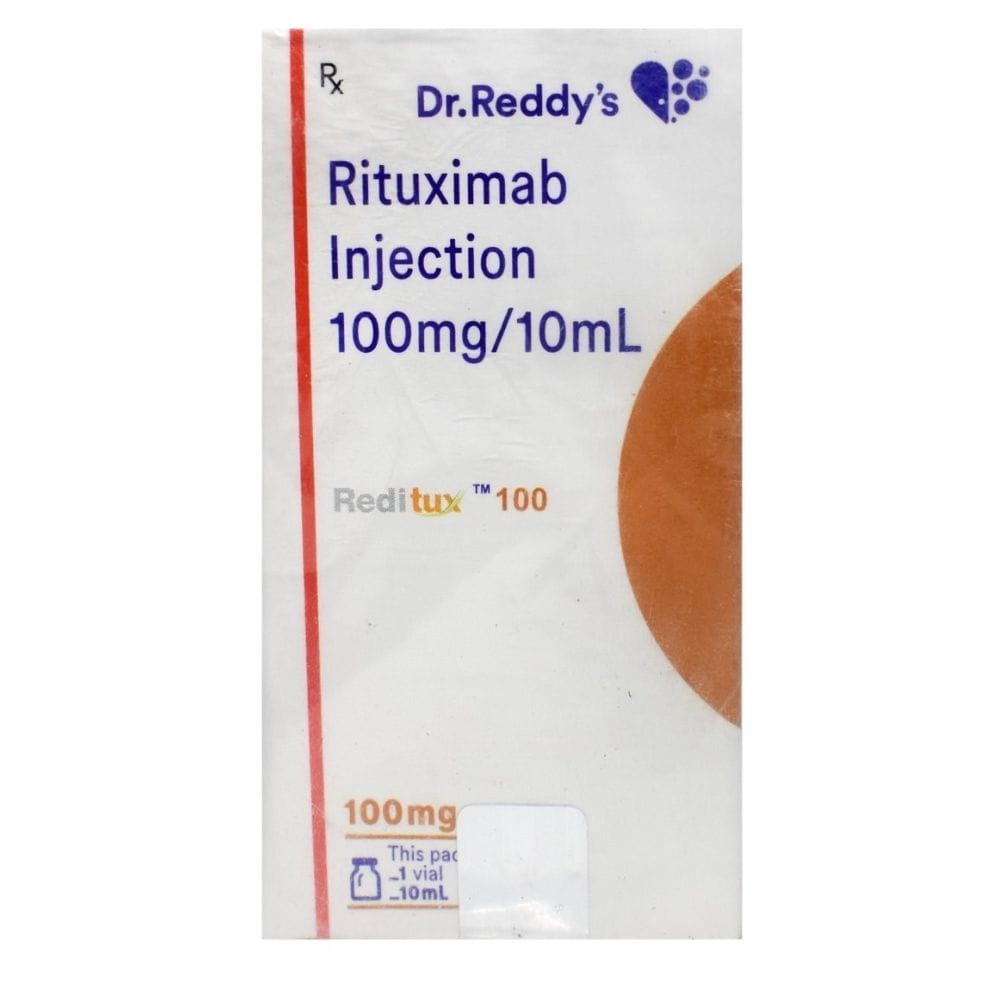
Reditux 100mg Injection is a biosimilar rituximab formulation manufactured by Dr. Reddy's Laboratories Ltd, Hyderabad, India — one of the world's leading pharmaceutical companies in biologics and biosimilar development. Each 10 mL vial contains Rituximab 100mg (10 mg/mL) as the active substance.
Reditux holds a distinction unmatched by any other biosimilar on the market: it is the world's first biosimilar monoclonal antibody, launched in India in April 2007 — more than a decade before most global markets saw their first biosimilar mAb approvals. Since its introduction, Reditux has been approved in nearly 26 countries and has treated over half a million patients worldwide, establishing a global safety and efficacy record surpassing virtually any other rituximab biosimilar.
Rituximab is a chimeric murine/human monoclonal immunoglobulin G1 (IgG1) antibody that specifically targets CD20 — a B-cell differentiation marker expressed on the surface of late pre-B and mature B lymphocytes. CD20 is not found on other cell types or free in circulation, making it an exceptionally precise therapeutic target. By depleting CD20-positive B cells, Reditux treats both B-cell cancers and B-cell-driven autoimmune diseases through the same fundamental mechanism.
Key Facts at a Glance
Active substance: Rituximab 100mg. Concentration: 10 mg/mL. Vial size: 10 mL. Form: Concentrate for solution for intravenous infusion. Manufacturer: Dr. Reddy's Laboratories Ltd, Village Malpur, P.O. Bhud, Baddi, Dist. Solan, HP, India. Corporate address: 8-2-337, Road No. 3, Banjara Hills, Hyderabad, Telangana 500034, India. Storage: 2–8°C refrigerated. Do not freeze. Keep in original carton. Pack: 1 vial. Prescription: Required. Administered by oncologist, haematologist, or rheumatologist only.
When Dr. Reddy's launched Reditux in 2007 at approximately 50% of the price of innovator rituximab (MabThera/Rituxan), it triggered a 10-fold market expansion for rituximab in India — bringing life-changing anti-CD20 therapy within reach of patients who previously could not afford it. In 2010–2011 alone, Reditux revenues grew 75%, making it the fourth-largest brand in Dr. Reddy's entire portfolio.
The impact on patient outcomes has been measurable and historic. In 2010, only 35% of Diffuse Large B-Cell Lymphoma (DLBCL) patients in India could afford rituximab — resulting in a 20% drop in 2-year overall survival compared to patients who received it. By 2023, rituximab was given to 95% of DLBCL patients as standard of care in India. That transformation was driven primarily by the availability of Reditux.
Globally, biosimilar rituximab products are now available at less than half the price of the innovator in many countries. By 2029, biosimilars are forecast to collectively account for nearly 80% of total US rituximab market share. Reditux, approved in 26+ countries and backed by more than 17 years of real-world clinical evidence, is uniquely positioned at the centre of this global shift.
Reditux is indicated for multiple subtypes of CD20-positive Non-Hodgkin Lymphoma in adults:
Follicular and Low-Grade NHL: As monotherapy for relapsed or refractory, low-grade or follicular, CD20-positive B-cell NHL. As first-line treatment in combination with chemotherapy for previously untreated follicular NHL. As single-agent maintenance therapy in patients achieving complete or partial response to rituximab plus chemotherapy induction.
Diffuse Large B-Cell Lymphoma (DLBCL): In combination with CHOP (cyclophosphamide, doxorubicin, vincristine, prednisone) chemotherapy — the R-CHOP regimen — as standard first-line treatment for previously untreated DLBCL. The R-CHOP regimen, with rituximab as its cornerstone, has transformed DLBCL from a frequently fatal disease to one where long-term remission is achievable in the majority of patients. The 2025 NCCN B-Cell Lymphoma Guidelines update (version 3.2025) further expanded rituximab-containing regimen options, adding tafasitamab plus lenalidomide and rituximab as a preferred second-line option.
Other NHL subtypes: Mantle cell lymphoma, marginal zone lymphoma, and other CD20-positive B-cell NHL subtypes per oncologist assessment and applicable national guidelines.
Reditux is indicated in combination with fludarabine and cyclophosphamide (R-FC regimen) for the treatment of adults with previously untreated and previously treated CD20-positive Chronic Lymphocytic Leukaemia. CLL is the most common adult leukaemia in Western countries; rituximab combined with chemotherapy significantly improves progression-free and overall survival compared to chemotherapy alone.
Reditux is indicated in combination with methotrexate for the treatment of adults with moderately to severely active Rheumatoid Arthritis who have had an inadequate response to one or more TNF antagonist (anti-TNF) therapies. The landmark REFLEX Phase III trial demonstrated that rituximab plus methotrexate produced significantly higher ACR20/50/70 and EULAR moderate/good responses versus methotrexate alone at 24 weeks in anti-TNF-failed patients, with significantly less radiological joint damage progression at 2 years. In real-world data from patients treated with Reditux specifically, 97% of patients achieved ACR20 response by 24 weeks with no clinically relevant serious adverse events. Rituximab is endorsed in the EULAR 2025 update for RA management as a biological DMARD option (alongside biosimilars) for patients with inadequate response to conventional synthetic DMARDs and appropriate bDMARD sequencing.
Reditux is indicated in combination with glucocorticoids for the treatment of adults with Granulomatosis with Polyangiitis (formerly Wegener's Granulomatosis) and Microscopic Polyangiitis — two severe ANCA-associated vasculitis conditions characterised by inflammation of small blood vessels that can cause life-threatening organ damage. Rituximab has become a cornerstone of induction therapy for these conditions, particularly in patients with severe or refractory disease or those in whom cyclophosphamide is contraindicated.
Reditux is indicated for the treatment of adults with moderate to severe Pemphigus Vulgaris — a rare, potentially life-threatening autoimmune blistering disorder of the skin and mucous membranes caused by pathogenic anti-desmoglein antibodies produced by autoreactive B cells. Rituximab's B-cell depleting mechanism is directly therapeutic in PV and has been shown to induce durable complete remission in the majority of patients.
Rituximab in Reditux is a chimeric murine/human IgG1 monoclonal antibody. Its only binding target is the CD20 antigen — a cell surface marker exclusively present on late pre-B and mature B lymphocytes. When rituximab binds to CD20, it destroys B lymphocytes through three complementary mechanisms that work simultaneously:
Mechanism 1 — Complement-Dependent Cytotoxicity (CDC): Rituximab binding to CD20 activates the complement cascade — a series of immune proteins that directly punch holes in the B-cell membrane, causing lysis and cell death.
Mechanism 2 — Antibody-Dependent Cell-Mediated Cytotoxicity (ADCC): The Fc region of the rituximab molecule recruits natural killer cells, macrophages, and other immune effector cells, which bind to the antibody-coated B cells and destroy them directly.
Mechanism 3 — Apoptosis Induction: Rituximab binding to CD20 directly signals the B cell to undergo programmed cell death (apoptosis) — a third, independent mechanism of B-cell elimination.
These three mechanisms work in concert to produce rapid, near-complete depletion of CD20-positive B cells from the circulation and lymphoid tissues. In DLBCL patients treated with Reditux, complete B-cell depletion was observed by day 3 of the first cycle and maintained through day 21 — confirming the potency and speed of Reditux's pharmacodynamic effect. B-cell recovery typically begins 6–9 months after the last dose, with normal counts returning at 9–12 months.
Why Targeting CD20 Specifically Matters: Because CD20 is expressed exclusively on B lymphocytes and not on plasma cells, stem cells, or other haematopoietic cells, rituximab depletes mature and malignant B cells without permanently destroying the B-cell precursor pool required for immune reconstitution. This biological precision is the foundation of rituximab's therapeutic index.
Reditux has been found to be highly similar to reference rituximab (MabThera/Rituxan) based on a comprehensive totality of evidence, with no clinically meaningful differences in physicochemical properties, pharmacokinetics, pharmacodynamics, safety, efficacy, or immunogenicity.
In a landmark real-world observational study across 29 centres in India involving 1,365 DLBCL patients (1,250 treated with Reditux; 115 with innovator Ristova), outcomes at 2 years were fully comparable: 2-year progression-free survival was 69% and 2-year overall survival was 78.7% — with no statistically significant difference between the two products, and comparable best overall response rates of 89.2% (Reditux) vs 94.3% (Ristova).
In a separate retrospective comparative analysis of 152 patients treated with either innovator rituximab or Reditux in R-CHOP regimens, overall response rates were 88% (innovator) and 82% (Reditux) — comparable outcomes confirming clinical equivalence. Population pharmacokinetic studies at Tata Memorial Centre further confirmed that the pharmacokinetic profile and B-cell response to Reditux are comparable to those reported for MabThera, concluding that MabThera can be substituted with Reditux for B-cell lymphoma treatment.
Reditux is administered only by a qualified oncologist, haematologist, or rheumatologist in a clinical or hospital setting. Never self-administer.
Mandatory pre-medication: All patients must receive premedication before every Reditux infusion — typically paracetamol (acetaminophen) 1g and an antihistamine such as diphenhydramine 50mg, administered 30–60 minutes before starting the infusion. Glucocorticoid premedication is required for GPA/MPA and recommended for RA infusions. Emergency resuscitation equipment must be immediately available during all infusions.
Preparation: Reditux 100mg vials are diluted in 0.9% sodium chloride or 5% dextrose solution to a final rituximab concentration of 1–4 mg/mL. Gently invert the infusion bag to mix. Do not shake. Inspect for particulates before use.
NHL — Standard Dosing: 375 mg/m² IV on Day 1 of each chemotherapy cycle (R-CHOP, R-CVP, R-FC, or other approved regimens) for up to 8 doses. For follicular NHL maintenance: 375 mg/m² every 2 months for up to 2 years following completion of induction chemotherapy.
CLL — Standard Dosing: 375 mg/m² IV on the day prior to initiation of fludarabine and cyclophosphamide (FC) chemotherapy in cycle 1, then 500 mg/m² on Day 1 of cycles 2–6 (every 28 days).
Rheumatoid Arthritis: 1,000 mg IV on Day 1 and Day 15 (2-week interval) — constituting one treatment course. Subsequent courses every 24 weeks or based on clinical evaluation. Administered with methylprednisolone 100 mg IV (or equivalent) as premedication 30 minutes before each infusion. Always given in combination with methotrexate.
GPA and MPA: 375 mg/m² IV once weekly for 4 weeks, in combination with methylprednisolone IV for 1–3 days followed by oral prednisone.
Pemphigus Vulgaris: 1,000 mg IV on Day 1 and Day 15, followed by 500 mg at month 12 and every 6 months thereafter, or based on clinical evaluation. Administered with methylprednisolone 100mg IV as premedication.
Infusion Rate — First Infusion: Start at 50 mg/hour. If no infusion reactions, increase rate by 50 mg/hour every 30 minutes to a maximum of 400 mg/hour.
Infusion Rate — Subsequent Infusions (if first was well tolerated): Start at 100 mg/hour. Increase by 100 mg/hour every 30 minutes to a maximum of 400 mg/hour.
PCP Prophylaxis for CLL: Pneumocystis jirovecii pneumonia (PCP) prophylaxis is recommended for all patients receiving the R-FC combination, starting at the beginning of treatment and continuing for 12 months after completion.
Do not use Reditux if: you have a known hypersensitivity to rituximab, murine proteins, or any excipient; you have active, severe infection; you are in a severely immunocompromised state; you have severe, active cardiac disease (for RA indication); you have active hepatitis B virus (HBV) infection — HBV reactivation screening is mandatory before use.
Use under close specialist supervision in: patients with a history of cardiovascular disease, arrhythmia, or angina; patients with pre-existing pulmonary disease or history of pulmonary infiltrates; elderly patients; patients with a history of recurring or chronic infections; patients with a prior history of progressive multifocal leukoencephalopathy (PML); patients with a history of prior severe infusion reactions to biological agents.
Reditux is not indicated in children and adolescents under 18 years for any indication.
Hepatitis B Screening Mandatory: All patients must be screened for HBV infection before initiating Reditux therapy. HBV reactivation — including fulminant hepatitis and hepatic failure — has occurred in patients treated with rituximab, including cases with fatal outcome. Anti-viral prophylaxis should be initiated in HBsAg-positive patients before starting Reditux.
Fatal Infusion-Related Reactions: Severe and fatal infusion-related reactions have been reported, with approximately 80% of fatal reactions occurring during the first infusion. Reactions include hypotension, angioedema, hypoxia, bronchospasm, pulmonary infiltrates, acute respiratory distress syndrome, myocardial infarction, ventricular fibrillation, and anaphylaxis. Patients must be closely monitored during all infusions. Emergency intervention capability must be available at all times.
Progressive Multifocal Leukoencephalopathy (PML): JC virus-induced PML, including fatal cases, has been reported following rituximab therapy. PML should be considered in any patient presenting with new or worsening neurological symptoms during or after rituximab treatment. If PML is suspected, rituximab must be discontinued immediately.
Severe Mucocutaneous Reactions: Severe and fatal mucocutaneous reactions — including toxic epidermal necrolysis (TEN), Stevens-Johnson syndrome, paraneoplastic pemphigus, and lichenoid dermatitis — have been reported. Discontinue rituximab immediately if these reactions occur.
Tumour Lysis Syndrome (TLS): Acute tumour lysis syndrome may occur within 12–24 hours of the first infusion in patients with high tumour burden. Monitor for signs of TLS — hyperkalaemia, hyperuricaemia, hypocalcaemia, hyperphosphataemia, and acute renal failure — and initiate prophylactic measures as clinically appropriate.
Cardiac Toxicity: Supraventricular tachyarrhythmias, ventricular tachycardia, and angina have been reported during Reditux infusion. Monitor patients with pre-existing cardiac conditions continuously throughout treatment.
Live vaccines: Do not administer live or live-attenuated vaccines to patients receiving or recently treated with Reditux. The immune response to all vaccines may be impaired. Allow adequate B-cell recovery time before vaccination where possible.
Herpes Zoster/Shingles Vaccine (Recombinant, Adjuvanted): Concurrent use is classified as a life-threatening interaction — do not co-administer.
Cisplatin: Renal toxicity has been reported with concomitant cisplatin. Not an approved combination — monitor renal function carefully if this combination is used.
Anthracyclines (doxorubicin, epirubicin): Used in standard R-CHOP regimens. No pharmacokinetic interaction with rituximab. However, monitor cardiac function throughout treatment.
Methotrexate (for RA): Standard combination partner. Rituximab plasma concentrations are not altered by methotrexate co-administration.
Fludarabine and Cyclophosphamide (for CLL): Standard R-FC combination. No clinically significant pharmacokinetic interactions. PCP prophylaxis required during and for 12 months after treatment.
Anti-hypertensive medications: Consider temporary withholding of anti-hypertensive agents 12 hours before infusion, as rituximab infusions may cause transient hypotension.
Very common: Infusion-related reactions during or within 24 hours of infusion — fever, chills, rigors, nausea, urticaria, fatigue, headache, pruritus, bronchospasm, and throat irritation. Most infusion reactions are mild to moderate and occur with the first infusion. Lymphopenia and neutropenia are very common haematological effects.
Common: Increased susceptibility to bacterial, viral, and fungal infections. Nausea, vomiting, diarrhoea, abdominal pain. Night sweats, flushing, back pain. Mouth sores, pale skin, painful urination. Peeling skin, injection site reactions.
Serious — seek immediate medical attention for: Severe infusion reactions including anaphylaxis, bronchospasm, and cardiovascular collapse. Signs of serious infection including high fever, rigors, and sepsis. Neurological changes suggesting PML. Severe skin reactions. Signs of tumour lysis syndrome. Signs of HBV reactivation — jaundice, hepatitis, liver failure.
Monitoring during therapy: Full blood count before each infusion cycle. Hepatic function tests. HBV monitoring in at-risk patients. Cardiac monitoring in patients with pre-existing cardiovascular disease. Neurological assessment if new symptoms develop.
Store at 2–8°C in a refrigerator. Do not freeze. Keep in the original carton to protect from light. Do not shake the vial. Prepared infusion solutions in 0.9% saline or 5% dextrose are stable for 24 hours at 2–8°C and an additional 12 hours at room temperature — use within these time limits. Dispose of unused medicine in accordance with local regulations for cytotoxic biological waste.
What is Reditux 100mg used for? Reditux is used to treat Non-Hodgkin Lymphoma, Chronic Lymphocytic Leukaemia, Rheumatoid Arthritis (in patients who failed anti-TNF therapy), Granulomatosis with Polyangiitis, Microscopic Polyangiitis, and Pemphigus Vulgaris. All uses require confirmed CD20-positive disease where applicable.
Is Reditux the same as MabThera or Rituxan? Reditux is a biosimilar — confirmed highly similar to MabThera/Rituxan with no clinically meaningful differences in efficacy, safety, or immunogenicity. It is the world's first biosimilar monoclonal antibody and has been used in over half a million patients globally since 2007.
Why is Reditux significant historically? Reditux was the world's first biosimilar monoclonal antibody, launched by Dr. Reddy's Laboratories in India in April 2007 — making it a landmark in global pharmaceutical history and the pioneer that proved biosimilar mAbs could safely and effectively replace their originator products.
How is Reditux 100mg given? By slow intravenous infusion only, administered by a qualified oncologist, haematologist, or rheumatologist in a clinical or hospital setting with full resuscitation facilities available.
What premedication is required before Reditux? Paracetamol (acetaminophen) and an antihistamine must be given 30–60 minutes before every infusion. Corticosteroid premedication is required for GPA/MPA and recommended for RA.
Can Reditux cause serious infections? Yes. Reditux depletes B cells, reducing humoral immunity. Serious and fatal infections — bacterial, viral, and fungal — have been reported. Hepatitis B reactivation is a specific risk that requires mandatory screening before treatment.
Can Reditux be used in children? No. Reditux is not approved for use in patients under 18 years of age.
Do you ship Reditux 100mg internationally? Yes — discreet, secure shipping to USA, UK, UAE (Dubai, Abu Dhabi), Canada, Japan, Russia, China, Thailand, India, Saudi Arabia, and Australia.
Is a prescription required? Yes. Reditux 100mg is a prescription-only biological medicine. Always consult a qualified oncologist, haematologist, or rheumatologist before initiating, adjusting, or stopping rituximab therapy.
Reviews
There are no reviews yet