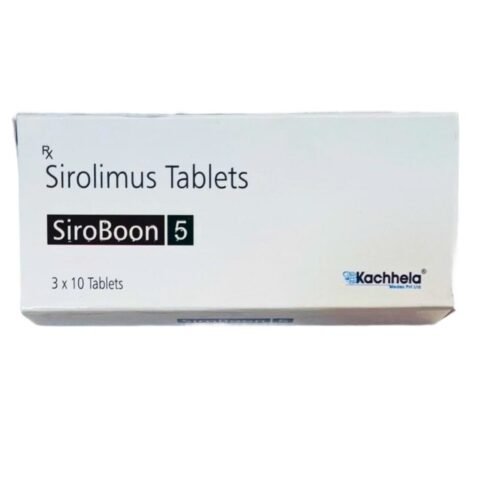
Sirolimus 5mg Tablet ( SiroBoon 5mg ) contains sirolimus (rapamycin), an mTOR inhibitor used to prevent organ transplant rejection and regulate abnormal immune responses. It helps suppress T-cell activity while preserving kidney function better than some traditional immunosuppressants. Used under specialist medical supervision.
Sirolimus is an immunosuppressive medicine best known for its role in organ transplantation.
When a patient receives a transplanted kidney, liver, or other organ, the immune system immediately recognizes it as foreign. Left unchecked, the body may attempt to destroy the transplanted tissue.
Sirolimus helps prevent this response.
Unlike older immunosuppressants that broadly suppress immune activity, sirolimus specifically targets the mTOR (mammalian target of rapamycin) pathway, a critical regulator of cell growth, immune activation, and cellular metabolism.
Today, sirolimus is widely recognized not only in transplant medicine but also in several emerging areas of specialty care.
Many immunosuppressants work by directly blocking immune-cell activation.
Sirolimus works differently.
Instead of stopping immune cells from becoming activated, it prevents them from multiplying effectively after activation.
This distinction reduces the body’s ability to mount a rejection response against a transplanted organ.
By inhibiting the mTOR pathway, sirolimus may:
Its mechanism is so unique that researchers continue studying sirolimus in oncology, rare diseases, and longevity-related research.
Doctors commonly prescribe sirolimus for:
Treatment requires careful monitoring of blood levels to ensure effectiveness and safety.
| Condition | Clinical Use |
|---|---|
| Kidney Transplantation | Prevention of organ rejection |
| Organ Transplant Maintenance | Long-term immunosuppression |
| Lymphangioleiomyomatosis (LAM) | Disease progression management |
| Tuberous Sclerosis Complex | Specialist-directed therapy |
| Vascular Malformations | Selected treatment protocols |
| mTOR Pathway Disorders | Targeted therapeutic use |
Most transplant patients are familiar with drugs such as tacrolimus or cyclosporine.
Sirolimus belongs to a different category.
Rather than targeting calcineurin pathways, it inhibits mTOR signaling, affecting immune-cell proliferation and growth.
This distinction can be clinically important.
In selected patients, sirolimus-based regimens may help preserve kidney function while providing effective immunosuppression.
Its unique mechanism is one reason sirolimus remains one of the most studied immunosuppressive agents in modern medicine.
| Strength | Common Use |
| 1 mg | Maintenance therapy |
| 2 mg | Standard dosing protocols |
| 5 mg | Higher-dose specialist regimens |
| Individualized Dosing | Based on blood level monitoring |
Dosage is determined by transplant specialists and adjusted according to therapeutic drug monitoring.
| Attribute | Details |
| Generic Name | Sirolimus |
| Alternative Name | Rapamycin |
| Brand Name | Rapamune® |
| Strength | 5 mg |
| Dosage Form | Tablet |
| Drug Class | mTOR Inhibitor |
| Route | Oral |
| Used For | Organ Transplant Rejection Prevention, LAM, mTOR Disorders |
Yes. Rapamycin is the original name of sirolimus. Both refer to the same active pharmaceutical ingredient.
Sirolimus is primarily used to prevent organ transplant rejection, particularly in kidney transplant recipients. It is also used in certain rare diseases involving mTOR pathway dysregulation.
No. Sirolimus is classified as an immunosuppressant and mTOR inhibitor, although its pathway is also studied in cancer research.
It blocks the mTOR pathway, preventing activated immune cells from multiplying and attacking transplanted tissue.
Yes. Regular blood tests are often necessary to ensure therapeutic drug levels and minimize side effects.
Sirolimus has attracted scientific interest in aging and longevity research because of its effects on mTOR signaling. However, such uses remain investigational and are not approved indications.
Answer: Yes. International shipping is available to many countries, subject to local regulations and product availability.
Answer: Sirolimus contains the same active ingredient found in Rapamune® and is used for similar therapeutic purposes.
Answer: Products are supplied in manufacturer-sealed pharmaceutical packaging and packed securely for international delivery.
Answer: Verify manufacturer details, batch number, expiry date, and original packaging upon receipt.
Orders ship from our India Head Office within 1–2 business days of confirmation. We include full customs documentation — HS codes, certificates of origin, and pharmaceutical export permits.
Estimated delivery: 3–7 business days to UK. 7–10 business days to UAE, Saudi Arabia and Gulf countries. 10–15 days for USA and Asian countries.
All packages arrive in plain, unmarked brown boxes. No pharmacy name or medication details on the outside.
Only logged in customers who have purchased this product may leave a review.

Reviews
There are no reviews yet.