
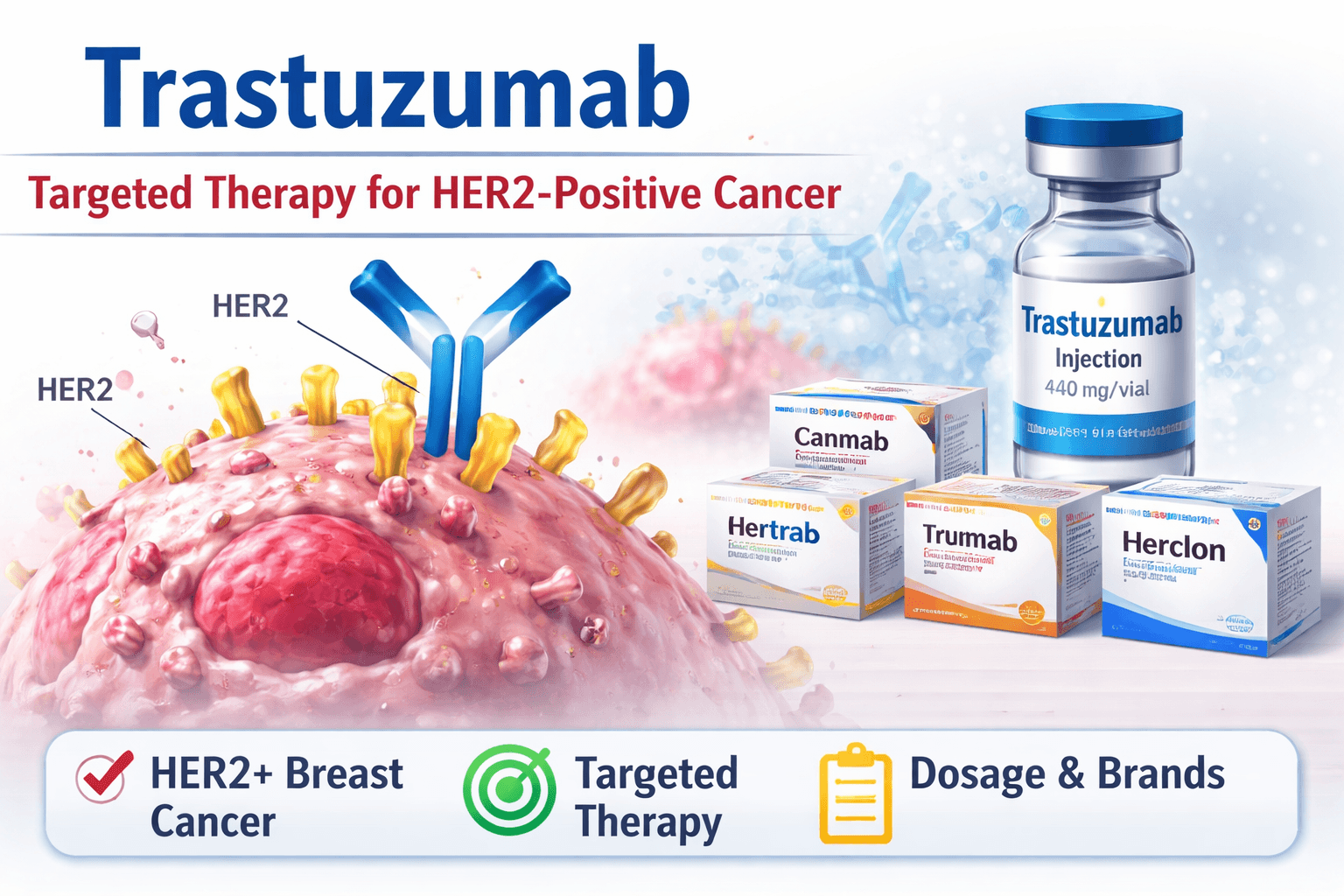
Trastuzumab stands as one of the most significant breakthroughs in modern oncology, fundamentally changing the treatment landscape for HER2-positive cancers, most notably breast and gastric cancer. Unlike traditional chemotherapy, which attacks all rapidly dividing cells, trastuzumab is a targeted therapy—a monoclonal antibody precision-engineered to seek out and block cancer cells that overexpress the HER2 receptor. This精准 approach leads to improved outcomes and a more tailored treatment experience.
Since its introduction, trastuzumab has become a cornerstone of care for both early-stage and metastatic HER2-positive cancers and is a standard recommendation in major international treatment guidelines.
What is Trastuzumab?
Trastuzumab is a recombinant humanized monoclonal antibody. In simpler terms, it’s a laboratory-made immune molecule designed to bind specifically to the HER2 (Human Epidermal Growth Factor Receptor-2) protein, which is found in abundance on the surface of certain cancer cells.
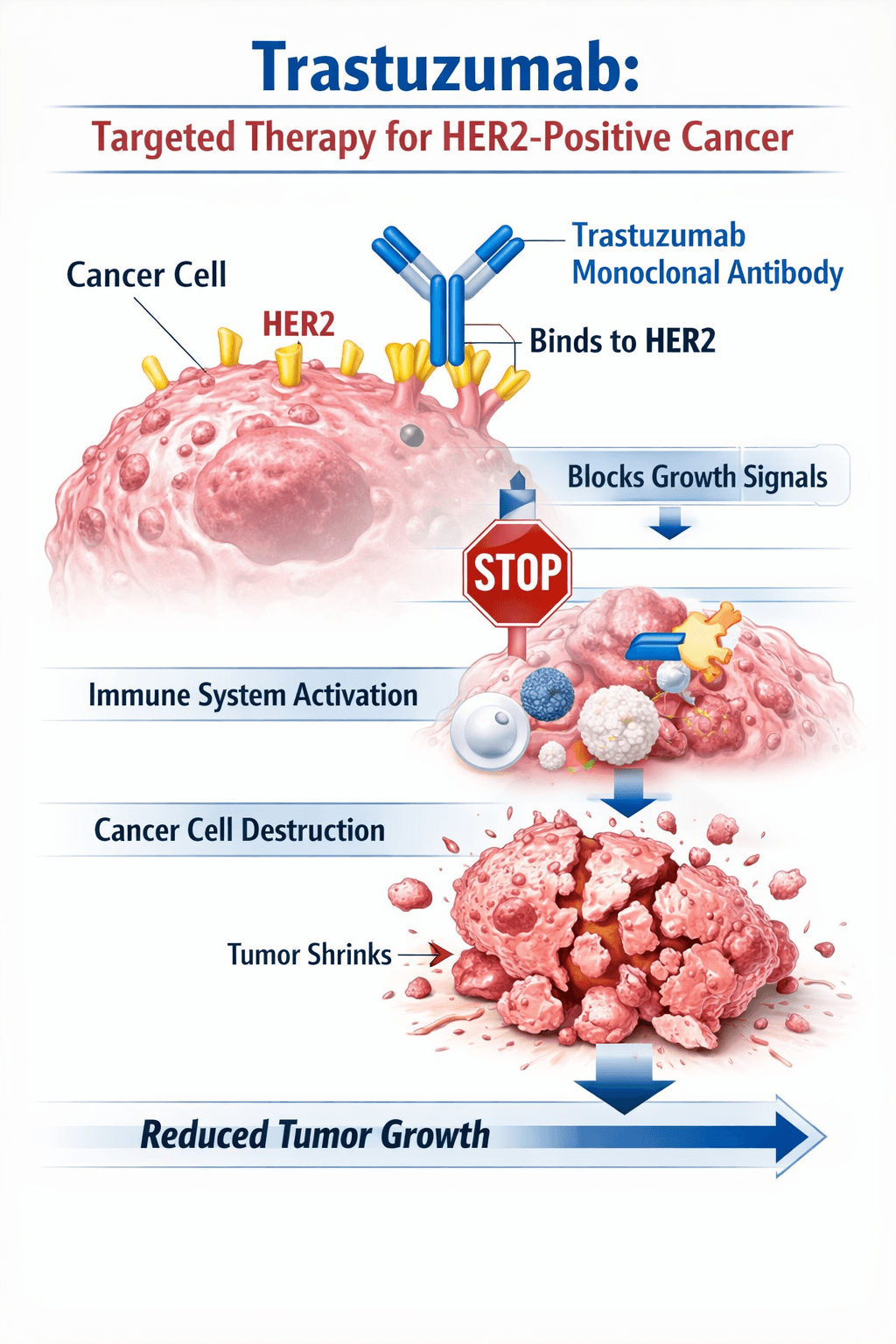
This overexpression of HER2 drives aggressive tumor growth. By attaching to the receptor, trastuzumab works in two key ways:
-
Blocks Growth Signals: It directly interrupts the signals that tell the cancer cell to divide and multiply.
-
Activates the Immune System: It flags the cancer cell for destruction, helping the body’s own immune system recognize and eliminate the tumor.
Trastuzumab is administered as an intravenous (IV) infusion in a clinical setting under the supervision of a healthcare professional.
Conditions Treated With Trastuzumab
Trastuzumab is used to treat HER2-positive cancers, often in combination with other chemotherapy drugs like paclitaxel, docetaxel, carboplatin, or cisplatin.
| Condition | Typical Use Case |
|---|---|
| HER2-positive Breast Cancer | Early-stage (adjuvant/neoadjuvant) and metastatic disease |
| HER2-positive Gastric Cancer | Advanced or metastatic cancer |
| Gastro-esophageal Junction Cancer | In combination with chemotherapy |
| Recurrent HER2-positive Cancer | As part of a combination therapy regimen |
| Adjuvant Therapy | After surgery to reduce the risk of recurrence |
Targeted Therapy vs. Chemotherapy: A Visual Comparison
This chart highlights the key differences that make targeted therapies like trastuzumab a more selective option.
| Feature | Chemotherapy | Trastuzumab (Targeted Therapy) |
|---|---|---|
| Target | All rapidly dividing cells | Specifically targets HER2 receptors |
| Precision | Low | High |
| Mechanism of Action | Interferes with cell division | Blocks growth signals & activates immune system |
| Impact on Healthy Cells | Significant damage (higher toxicity) | Minimal damage (lower toxicity) |
| Role in HER2+ Cancer | Effective but non-specific backbone | Standard-of-care, specific therapy |
Targeted therapy empowers oncologists to treat cancer more effectively, improving survival rates while minimizing unnecessary systemic toxicity and side effects for the patient.
Available Trastuzumab Brands (440mg Injection)
Thanks to the development of biosimilars, highly effective and safer versions of trastuzumab are now widely available around the world. These contain the same active molecule and are rigorously approved for use in all indicated HER2-positive cancers, offering the same therapeutic benefits, often at a lower cost.
Commonly available biosimilar brands include:
-
Canmab 440mg Injection – View Product
-
Trumab 440mg Injection – View Product
-
Hertraz 440mg Injection – View Product
-
Herclon 440mg Injection – View Product
Dosage and Administration
Trastuzumab is administered as an intravenous (IV) infusion. The dosage is calculated based on the patient’s body weight.
-
Loading Dose: 8 mg/kg body weight (first infusion)
-
Maintenance Dose: 6 mg/kg body weight, typically repeated every 3 weeks
The exact dosage and duration of treatment are determined by:
-
Body weight
-
Type and stage of cancer
-
Whether it is used alone or in combination with other drugs
-
The patient’s overall health, especially cardiac function
Treatment can continue for several months to years, depending on the treatment goals and response.
Important Safety Information
Patients receiving trastuzumab require regular monitoring by their healthcare team, particularly for cardiac health.
Common Side Effects:
-
Infusion-related reactions (fever, chills)
-
Fatigue
-
Nausea
-
Headache
Serious Side Effects (requiring immediate medical attention):
-
Cardiotoxicity: Decreased heart function (heart failure). This is why regular echocardiograms (heart ultrasounds) are recommended before and during treatment.
-
Severe Allergic Reactions: Shortness of breath, wheezing, drop in blood pressure.
-
Pulmonary Toxicity: Difficulty breathing.
When is Trastuzumab Prescribed?
Trastuzumab is only effective for cancers that are HER2-positive. Doctors will only prescribe it after confirming the HER2 status through specific laboratory tests performed on a tumor biopsy sample.
-
IHC (Immunohistochemistry): Measures the amount of HER2 protein on the cell surface.
-
FISH (Fluorescence in situ Hybridization): Counts the number of HER2 gene copies inside the cell.
If a cancer is HER2-negative, trastuzumab will not be effective.
Availability and Sourcing
Due to their cost, specific storage requirements (refrigeration), and supply chains, trastuzumab injections may not always be readily available at local pharmacies. In such cases, hospitals, clinics, and patients often rely on specialized, reputable suppliers who deal in oncology medicines and can provide approved brands.
Brands such as Canmab, Hertraz, Trumab, and Herclon are commonly supplied internationally to ensure patients can continue their prescribed, uninterrupted treatment.
You can find information on these formulations here:
This information is provided to increase awareness regarding the availability of various treatment options.
Conclusion
Trastuzumab has truly transformed the prognosis for patients with HER2-positive cancers. By harnessing the power of targeted therapy, it offers a way to fight cancer with greater precision, improving survival and quality of life.
With the growing availability of safe and effective biosimilar versions, access to this life-saving treatment has expanded globally, bringing hope to more patients and families than ever before. A clear understanding of its mechanism, proper use, available brands, and safe sourcing is essential for all involved in the cancer treatment journey.