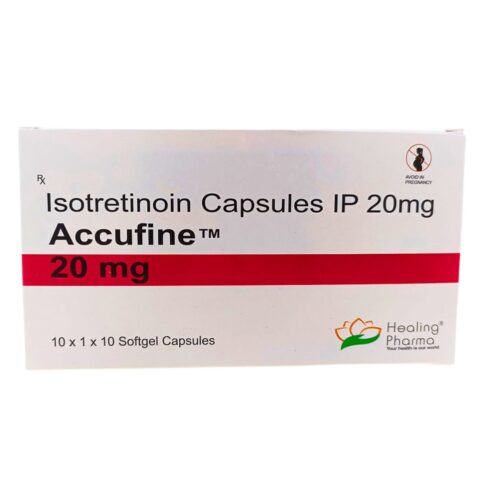
Drug: Isotretinoin (13-cis-Retinoic Acid) | Class: Oral Retinoid / Vitamin A Derivative | Brand Reference: Roaccutane/Accutane 20mg (Roche); Sotret 20, Acutret 20 (Indian generics) | Indication: Severe nodular/cystic acne, acne unresponsive to antibiotics and topicals, acne with scarring risk | Standard Dose: 0
Isotretinoin 20mg is an oral retinoid used for severe cystic and nodular acne that has not responded to antibiotics and topical treatments. It is the most effective acne treatment available — producing complete clearance in 85% of patients, often permanently. At 20mg, it is typically prescribed as part of a weight-based dose (0.5mg/kg/day), suitable for a 40kg patient or as a lower-dose protocol for moderately severe acne to improve tolerability. Isotretinoin requires strict pregnancy prevention due to its teratogenic risk.
Isotretinoin 20mg contains Isotretinoin (13-cis-Retinoic Acid), a oral retinoid / vitamin a derivative indicated for severe nodular/cystic acne, acne unresponsive to antibiotics and topicals, acne with scarring risk. Cochrane review: isotretinoin produces complete remission in 85% of severe acne cases; NICE-recommended for severe acne.
| Attribute | Details |
|---|---|
| Generic Name | Isotretinoin (13-cis-Retinoic Acid) |
| Drug Class | Oral Retinoid / Vitamin A Derivative |
| Brand Reference | Roaccutane 20mg (Roche); Sotret 20, Acutret 20 (Indian generics) |
| Primary Indication | Severe nodular/cystic acne, acne unresponsive to antibiotics and topicals, acne with scarring risk |
| Standard Dose | 0.5–1mg/kg/day (typically 0.5mg/kg = 30–40mg/day for 70kg patient). Total cumulative dose target: 120–150mg/kg. Duration: usually 4–6 months |
| Dosage Form | Oral Soft Gel Capsule |
| Route | Topical |
| Prescription Required | Yes |
| Evidence Base | Cochrane review: isotretinoin produces complete remission in 85% of severe acne cases; NICE-recommended for severe acne |
Reduces sebaceous gland size and sebum output by ~80%; inhibits Propionibacterium acnes; normalises follicular keratinisation; anti-inflammatory — making Isotretinoin effective against severe nodular/cystic acne, acne unresponsive to antibiotics and topicals, acne with scarring risk.
Most patients see initial worsening in the first 4–6 weeks (the ‘purge’ phase) as sebaceous glands clear. Significant improvement typically occurs by months 2–3. Most patients complete treatment in 4–6 months, achieving total cumulative doses of 120–150mg/kg. After completing treatment, 85% of patients remain clear for years or permanently.
The dose is weight-based at 0.5–1mg/kg/day. A 20kg child might take 10mg daily; a 40kg patient takes 20mg; a 70kg adult takes 35–70mg (typically 40mg or 50mg using combinations). Lower doses (5–10mg) are used in low-dose/micro-dose protocols for less severe acne with better tolerability. Higher doses (1mg/kg/day) are used for severe nodular acne to reach the target cumulative dose faster.
Teratogenicity (Category X): causes severe foetal abnormalities — strict pregnancy prevention (two contraceptive methods or abstinence) is mandatory for all females of childbearing potential. Dryness of skin, lips, and eyes (universal). Raised liver enzymes (monitoring required). Raised triglycerides. Mood changes (controversial but monitored). Myalgia. Monthly blood tests and pregnancy tests are required during treatment.
Yes — monthly monitoring is required: lipid profile (triglycerides/cholesterol), liver function tests (ALT/AST), and pregnancy test for females. Blood tests are done before starting, at month 1, then monthly or every 2 months depending on protocol. Most patients have normal results; triglyceride elevation is the most common finding, managed by dose reduction or dietary fat restriction.
Temporary hair thinning (telogen effluvium) occurs in some patients during treatment, typically reversing within 6–12 months of completing therapy. Permanent hair loss is rare and not established as a direct isotretinoin effect. Hair thinning is dose-dependent; lower-dose protocols significantly reduce this risk. Discussing hair concerns with your dermatologist before starting is recommended.
Store at 15–30°C away from sunlight and moisture. Keep out of reach of children. Do not use past expiry date.
Orders ship from our India Head Office within 1–2 business days of confirmation. We include full customs documentation — HS codes, certificates of origin, and pharmaceutical export permits.
Estimated delivery: 3–7 business days to UK. 7–10 business days to UAE, Saudi Arabia and Gulf countries. 10–15 days for USA and Asian countries.
All packages arrive in plain, unmarked brown boxes. No pharmacy name or medication details on the outside.
Only logged in customers who have purchased this product may leave a review.

Reviews
There are no reviews yet.