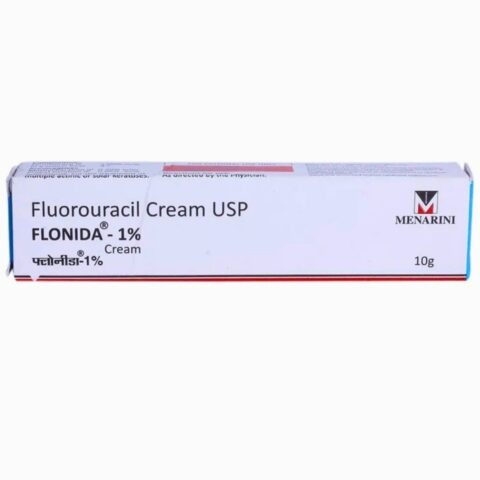
Fluorouracil Cream 1% is a prescription topical medicine containing fluorouracil (5-FU), an antimetabolite that interferes with DNA and RNA synthesis in rapidly dividing cells. It is used topically for selected precancerous and superficial skin lesions, with approved uses and strengths varying by country and product.
In the United States, FLUOROPLEX® Cream is a branded 1% fluorouracil topical cream, while generic fluorouracil products and other strengths are marketed separately. The U.S. FDA labeling identifies FLUOROPLEX 1% as fluorouracil topical cream for dermatologic use.
Fluorouracil is the generic medicine name; it is not itself a brand. Brand names such as FLUOROPLEX® and Efudix®/Efudex® are market-specific branded products. Product strength, approved indications, manufacturer and brand availability differ between the USA, UK, UAE/Dubai, Australia, Singapore, Thailand, China and Russia.
The FDA-approved U.S. label describes FLUOROPLEX as fluorouracil 1% topical cream and specifies dermatologic use only.
Fluorouracil cream is used for selected precancerous and superficial skin conditions.
Depending on the exact formulation and jurisdiction, topical fluorouracil may be prescribed for conditions including:
The approved indication should always be checked against the specific formulation. For example, UK fluorouracil 5% cream information includes superficial premalignant and malignant skin lesions, including keratoses, Bowen’s disease and superficial basal-cell carcinoma.
Fluorouracil 1% cream for actinic keratosis is an important commercial and informational search term.
Actinic keratoses are abnormal areas of sun-damaged skin that can contain dysplastic or precancerous keratinocytes. Fluorouracil targets rapidly dividing abnormal cells and can cause the treated area to become red, inflamed, scaly, crusted or eroded as the abnormal cells respond.
The precise strength, application schedule and treatment duration depend on the specific fluorouracil product and the treatment area.
Topical fluorouracil can be prescribed to treat areas of sun-damaged skin containing actinic keratoses or other eligible abnormal lesions.
An important feature of topical 5-FU treatment is that previously subtle or clinically less visible abnormal areas may become inflamed during treatment. This inflammatory response can be part of the expected pharmacological effect rather than evidence that the medicine is simply damaging healthy skin.
Fluorouracil is a pyrimidine analogue antimetabolite.
After entering cells, fluorouracil is converted into active metabolites that interfere with nucleic-acid metabolism. One important mechanism involves inhibition of thymidylate synthase, reducing the availability of thymidine required for DNA synthesis.
Fluorouracil also affects RNA synthesis. Because rapidly dividing abnormal cells have a high requirement for DNA and RNA synthesis, they are particularly susceptible to the effects of 5-FU.
The FDA describes fluorouracil as interfering with DNA synthesis and, to a lesser extent, RNA formation.
Fluorouracil cream should be applied only according to the instructions provided by the prescribing healthcare professional and the specific product’s prescribing information.
Application schedules differ according to:
For example, the U.S. FLUOROPLEX labeling describes application to affected areas and notes that treatment periods can vary by location and response.
Patients should not increase the amount or frequency of application without medical advice.
A local inflammatory response is commonly associated with topical fluorouracil treatment.
Depending on the product and treatment regimen, patients may experience:
These reactions reflect the activity of 5-FU against susceptible abnormal cells and should be monitored by the prescribing clinician.
The degree of reaction can vary considerably between patients and treatment areas.
Potential adverse effects of topical fluorouracil include:
The FDA labeling for topical fluorouracil reports pain, pruritus, burning, irritation, inflammation, allergic contact dermatitis and telangiectasia among reported adverse reactions.
Severe or unexpected reactions should be reported promptly to a healthcare professional.
Fluorouracil cream is intended for external dermatologic use.
Avoid unintended contact with:
Hands should be washed thoroughly after application unless the hands themselves are the prescribed treatment area.
The cream should not be applied to open cuts or significantly damaged skin unless specifically instructed by a healthcare professional. Damaged skin may increase absorption and the potential for systemic toxicity.
Fluorouracil is metabolized partly through the dihydropyrimidine dehydrogenase (DPD) pathway.
Patients with markedly reduced DPD activity can be at increased risk of fluorouracil toxicity. UK prescribing information specifically warns that systemic toxicity is more likely when the skin barrier is impaired and in individuals with DPD deficiency.
Patients should inform their healthcare professional about any known DPD deficiency or previous severe reaction to fluoropyrimidine medicines.
An important drug-interaction consideration is brivudine and related antiviral nucleoside medicines.
UK prescribing information states that concomitant administration of fluorouracil with antiviral nucleoside drugs such as brivudine can substantially increase fluorouracil exposure and toxicity and is contraindicated.
Patients should provide their doctor and pharmacist with a complete list of current and recently used medicines before starting topical fluorouracil.
Both products contain the same active medicine, fluorouracil, but at different concentrations.
They should not be treated as interchangeable strengths.
The concentration, formulation, approved indications and treatment regimen can differ between products and countries. Current UK medicines information, for example, lists Fluorouracil 5% Cream and other fluorouracil-containing topical products, while the U.S. FDA label identifies FLUOROPLEX as a 1% formulation.
FLUOROPLEX® is a branded U.S. product containing fluorouracil 1% topical cream.
Therefore:
Fluorouracil 1% = generic medicine/ingredient description
FLUOROPLEX® 1% = specific branded product
Do not describe generic Fluorouracil 1% Cream as FLUOROPLEX® unless the actual product being sold is the authorized FLUOROPLEX product.
The FDA label identifies FLUOROPLEX as a trademarked 1% fluorouracil cream manufactured for the U.S. market.
Efudix and Efudex are brand names associated with fluorouracil topical products in particular markets.
They should not automatically be used as synonyms for every generic fluorouracil cream because:
For example, Australia’s TGA currently lists EFUDIX fluorouracil 5% w/w cream as a registered prescription medicine, demonstrating that a branded fluorouracil product in one market may have a different strength from a U.S. 1% product.
Fluorouracil Cream 1% has strong commercial relevance because patients and healthcare professionals search for the active medicine, strength, topical formulation and branded equivalents.
High-intent searches include:
Fluorouracil Cream 1%, Fluorouracil 1% Cream, 5-Fluorouracil 1% Cream, 5-FU Cream 1%, Generic Fluorouracil 1% Cream, Fluorouracil 1% Topical Cream, Fluorouracil 1% for Actinic Keratosis, Fluorouracil Cream for Sun Damage, Fluoroplex 1% Generic, Fluorouracil 1% Price and Buy Fluorouracil 1% Cream.
Because regulatory status differs between jurisdictions, product descriptions should identify the actual manufacturer, strength, formulation and authorization status rather than implying that all fluorouracil 1% products are the same.
For international ecommerce, availability and prescription requirements should be checked for the USA, UK, UAE/Dubai, Australia, Singapore, Thailand, China and Russia before offering a product for sale or shipment.
Fluorouracil Cream 1% is a topical medicine containing 1% fluorouracil (5-FU). It is used for selected abnormal or precancerous skin lesions according to the approved indication of the specific product.
Topical fluorouracil is used for selected skin lesions, particularly actinic keratoses and certain superficial lesions, depending on the product and country-specific authorization.
Yes. 5-FU is an abbreviation for 5-fluorouracil, the active pharmaceutical ingredient in fluorouracil topical cream.
Yes. Fluorouracil is the generic name of the active medicine. Individual products may have different brand names and manufacturers.
FLUOROPLEX® is a branded product containing fluorouracil 1% cream in the United States. Generic fluorouracil products contain the same active ingredient, but the actual formulation and regulatory status must be verified for the specific product.
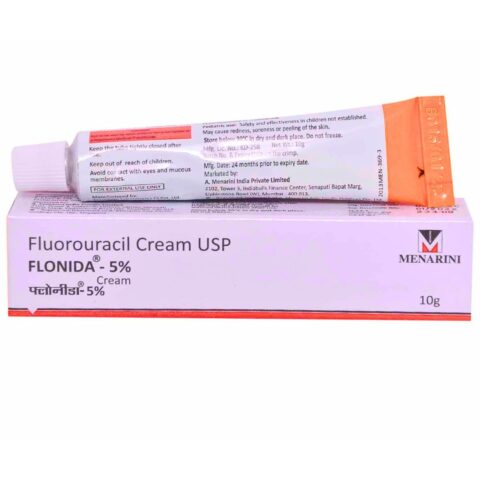
No. Both contain fluorouracil, but 1% and 5% represent different concentrations. They should not be substituted for one another without professional advice.
Yes. Topical fluorouracil is an established treatment for actinic keratosis in appropriate patients and formulations.
Redness, inflammation, scaling, crusting and irritation can occur during topical fluorouracil treatment. The expected reaction varies according to the product and treatment regimen.
Fluorouracil is an antimetabolite with antineoplastic activity. Topical formulations are used for selected precancerous and superficial skin lesions, while systemic fluorouracil is used in oncology for different indications.
Topical fluorouracil may be prescribed for appropriate facial skin lesions, depending on the product and diagnosis. Treatment should only be used on the areas specified by the prescribing healthcare professional.
Fluorouracil is a prescription medicine in applicable markets. Online purchases should be made only through an appropriately licensed pharmacy or authorized medicine supplier and in accordance with the regulations of the destination country.
Yes. The U.S. FDA-approved FLUOROPLEX product is a 1% fluorouracil topical cream. Other fluorouracil formulations and strengths are also marketed in the U.S.
Yes. The UK medicines database currently lists fluorouracil topical products, including Fluorouracil 5% Cream and Tolak 40mg/g cream. Product strengths and indications differ by product.
Yes. The Australian Register of Therapeutic Goods lists several prescription fluorouracil 5% creams, including generic and branded products.
Medical Disclaimer: This product information is provided for educational and informational purposes only and is not a substitute for professional medical advice, diagnosis or treatment. Fluorouracil is a prescription medicine and topical 5-FU should be used only for an appropriate diagnosis and according to the prescribing information for the specific product and country. Strengths, indications, contraindications, interactions and application schedules vary by formulation and jurisdiction. A healthcare professional should determine whether fluorouracil is appropriate for an individual patient. Do not start, stop or change treatment without professional medical advice.
Last Updated: August 31, 2026
Orders ship from our India Head Office within 1–2 business days of confirmation. We include full customs documentation — HS codes, certificates of origin, and pharmaceutical export permits.
Estimated delivery: 3–7 business days to UK. 7–10 business days to UAE, Saudi Arabia and Gulf countries. 10–15 days for USA and Asian countries.
All packages arrive in plain, unmarked brown boxes. No pharmacy name or medication details on the outside.
Only logged in customers who have purchased this product may leave a review.

Reviews
There are no reviews yet.