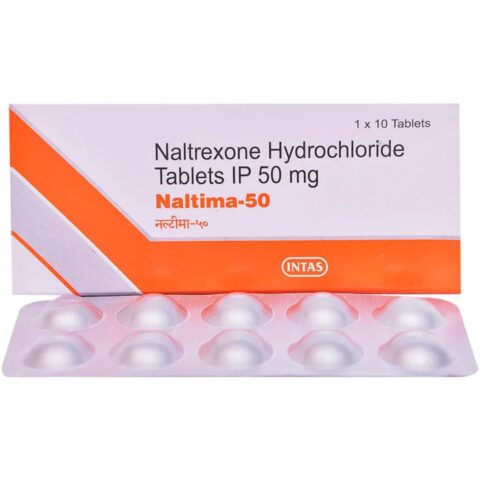
Naltrexone 50mg Tablet is a prescription opioid antagonist used as part of a comprehensive treatment program for alcohol dependence and for blocking the effects of externally administered opioids in appropriately selected patients. It works by binding to opioid receptors and reducing or blocking the effects produced by opioid medicines and other opioids.
ReVia® is the reference brand associated with oral naltrexone 50mg. Authorized generic naltrexone hydrochloride tablets contain the same active pharmaceutical ingredient, although manufacturers, excipients, packaging and regulatory status vary between markets. Current regulatory records continue to list generic naltrexone 50mg products.
Naltrexone is a pure opioid antagonist. Unlike opioid agonists, it does not activate opioid receptors to produce opioid effects. Instead, it blocks opioid receptor activity and can substantially reduce or prevent the effects of administered opioids.
Oral naltrexone 50mg is used within an overall treatment plan for alcohol dependence and opioid dependence. Medication alone is not considered a complete treatment for substance-use disorders; behavioral, psychosocial and other supportive interventions may form part of the treatment plan.
Naltrexone 50mg is used for:
The precise indication and regulatory labeling vary between countries.
Naltrexone may be prescribed as part of a comprehensive treatment program for alcohol dependence.
Clinical labeling describes oral naltrexone 50mg once daily as the standard studied regimen for most patients, alongside appropriate psychosocial and compliance-support measures.
Naltrexone is not a treatment for acute alcohol withdrawal. Medical assessment is important before treatment begins.
Naltrexone can be used as medication-assisted treatment for alcohol use disorder (AUD) in appropriately selected patients.
It works differently from medicines that produce aversion to alcohol. Naltrexone acts primarily through opioid receptor blockade and can reduce the reinforcing effects associated with alcohol.
Treatment should form part of a broader alcohol-use-disorder management program.
Naltrexone may be used after appropriate opioid detoxification to block the effects of exogenously administered opioids.
It does not treat acute opioid withdrawal and must not be started while a person is opioid-dependent or currently using opioid analgesics. Starting naltrexone too soon can precipitate severe opioid withdrawal.
Naltrexone primarily blocks mu-opioid receptors and other opioid receptor activity.
When an opioid attempts to activate these receptors, naltrexone reduces or blocks the resulting pharmacological effects. This opioid-receptor blockade is the basis for its use in opioid dependence treatment and its role in alcohol-dependence treatment.
Naltrexone does not function like methadone or buprenorphine and does not produce opioid agonist effects.
The appropriate dosage depends on the indication and the patient’s medical history.
For alcohol dependence, current U.S. prescribing information describes 50mg once daily as the recommended dose for most patients. For opioid dependence, labeling describes initiation with an initial 25mg dose followed by 50mg daily when clinically appropriate.
Naltrexone must only be started after appropriate assessment of recent opioid exposure and dependence status.
Do not self-adjust the dose or begin treatment without a prescription and medical assessment.
A critical safety issue is recent opioid use.
Patients who are opioid-dependent, receiving opioid analgesics, or experiencing acute opioid withdrawal should not receive naltrexone because it can precipitate severe withdrawal. Current prescribing information specifically identifies opioid analgesics, opioid dependence, acute withdrawal and a positive opioid screen among contraindications.
The required opioid-free interval depends on the opioid used and the individual patient’s circumstances. A healthcare professional should determine whether it is safe to begin treatment.
Possible side effects include:
Naltrexone can also cause clinically important liver-related adverse effects, particularly at higher exposures. Appropriate patient selection and medical monitoring are therefore important.
Naltrexone is metabolized by the liver and requires caution in patients with liver disease.
Healthcare professionals may evaluate liver function before and during treatment depending on the patient’s medical history and clinical circumstances.
Patients should report symptoms such as unusual fatigue, abdominal pain, dark urine or yellowing of the skin or eyes promptly to their healthcare professional.
Important interactions include:
Because naltrexone blocks opioid receptors, it can interfere with opioid pain treatment and complicate emergency pain management.
Tell healthcare professionals that you are taking naltrexone before receiving medical treatment, surgery or emergency pain medication.
Naltrexone can block the effects of opioid analgesics.
Patients taking naltrexone should inform healthcare professionals before surgery or procedures where opioid pain relief might be required. Emergency pain management may require specialist planning and non-opioid alternatives.
Do not attempt to overcome opioid blockade by taking progressively larger opioid doses. This can create a serious risk of overdose.
After stopping naltrexone, opioid tolerance may be reduced. This can increase vulnerability to opioid overdose if a person returns to opioid use.
Trying to overcome naltrexone’s opioid blockade by taking higher opioid doses can also result in potentially fatal overdose.
ReVia® is the reference brand associated with oral naltrexone hydrochloride 50mg.
Generic naltrexone 50mg products contain the same active pharmaceutical ingredient when appropriately authorized. The manufacturer, excipients, packaging and availability may differ between countries.
Naltrexone is available in different formulations.
Oral naltrexone 50mg is supplied as a tablet, while Vivitrol® is a long-acting injectable formulation. They should not be treated as interchangeable products simply because they contain naltrexone.
Naltrexone 50mg Tablet is a prescription medicine supplied through appropriately licensed pharmacies and pharmaceutical suppliers.
Commercial search intent includes Naltrexone 50mg Tablet, Naltrexone Hydrochloride 50mg, Generic Naltrexone 50mg, Generic ReVia 50mg, ReVia 50mg Alternative, Naltrexone for Alcohol Dependence, Naltrexone for Alcohol Use Disorder, Naltrexone for Opioid Dependence, Naltrexone Opioid Antagonist, Naltrexone 50mg Price, Buy Naltrexone 50mg, Buy Naltrexone Online and Naltrexone 50mg Online Pharmacy.
Availability, prescription requirements, approved indications and import regulations vary across the USA, UK, UAE/Dubai, Australia, Singapore, Thailand, China and Russia.
Naltrexone 50mg is used as part of a comprehensive treatment program for alcohol dependence and for blocking the effects of externally administered opioids in appropriately selected patients.
The active ingredient in ReVia is naltrexone hydrochloride.
ReVia is a reference brand containing naltrexone hydrochloride. An appropriately authorized generic naltrexone 50mg tablet contains the same active pharmaceutical ingredient.
No. Naltrexone is an opioid antagonist, not an opioid agonist. It blocks opioid receptor activity rather than producing opioid effects.
Yes. Oral naltrexone is indicated as part of an appropriate treatment program for alcohol dependence.
Yes. It can be used to block the effects of exogenously administered opioids after appropriate detoxification and medical assessment.
Naltrexone is contraindicated in patients receiving opioid analgesics. Patients should inform their healthcare professional about all opioid medicines before starting treatment.
Yes. If administered to someone who is physically dependent on opioids, naltrexone can precipitate potentially severe withdrawal.
Naltrexone is not associated with the development of physical or psychological dependence in the way opioid agonists are.
Naltrexone is a prescription medicine. It should be obtained through an appropriately licensed pharmacy or authorized pharmaceutical supplier and used under medical supervision.
Naltrexone products are marketed in multiple countries, but brand names, formulations, approved indications and prescription requirements vary by market.
Medical Disclaimer: This product information is provided for educational and informational purposes only and is not a substitute for professional medical advice, diagnosis or treatment. Naltrexone is a prescription opioid antagonist that requires careful assessment before treatment, particularly regarding recent opioid exposure, opioid dependence and liver health. Starting naltrexone while opioids are present in the body can precipitate severe withdrawal, and attempting to overcome its opioid blockade can increase overdose risk. Always consult a qualified healthcare professional before starting, stopping or changing naltrexone treatment.
Last Updated: August 24, 2026
Orders ship from our India Head Office within 1–2 business days of confirmation. We include full customs documentation — HS codes, certificates of origin, and pharmaceutical export permits.
Estimated delivery: 3–7 business days to UK. 7–10 business days to UAE, Saudi Arabia and Gulf countries. 10–15 days for USA and Asian countries.
All packages arrive in plain, unmarked brown boxes. No pharmacy name or medication details on the outside.
Only logged in customers who have purchased this product may leave a review.


Reviews
There are no reviews yet.