Medically reviewed by a qualified transplant physician or nephrologist | Last updated: April 2026 Prescription-only medicine | Narrow therapeutic index drug — requires mandatory blood level monitoring | Initiated and supervised by a transplant specialist only
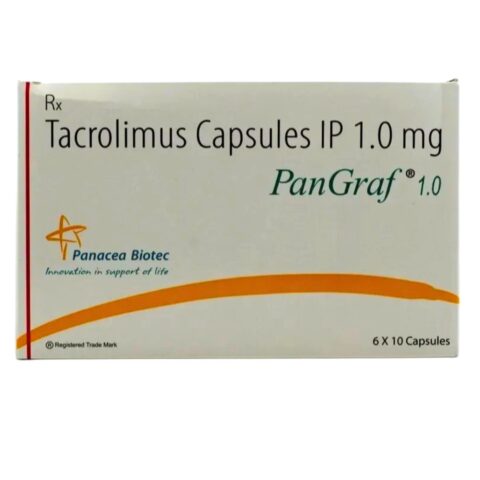
Pangraf 1mg Capsule is an oral calcineurin inhibitor (CNI) immunosuppressant manufactured by Panacea Biotec Ltd (Malpur, Baddi, Dist. Solan, Himachal Pradesh — 173205, India). Each hard gelatin capsule contains Tacrolimus 1mg as the active substance.
Tacrolimus is the active molecule found in the originator brand Prograf® (Astellas Pharma, developed originally by Fujisawa Pharmaceutical, Japan). First approved by the FDA in April 1994, tacrolimus rapidly became — and remains today — the most widely prescribed immunosuppressant in solid organ transplantation worldwide. It is used by an estimated 72% of all kidney transplant recipients and 89% of all liver transplant recipients globally, making it the undisputed cornerstone of modern transplant immunosuppression.
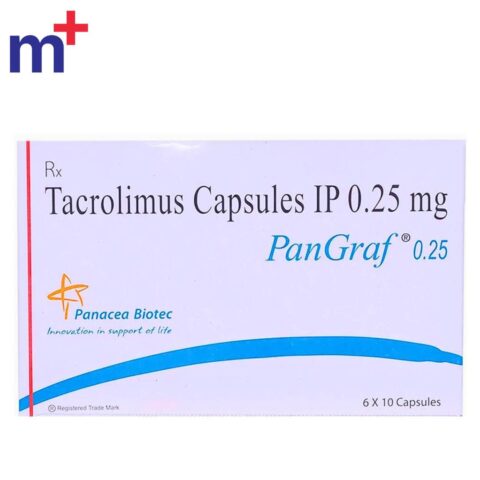
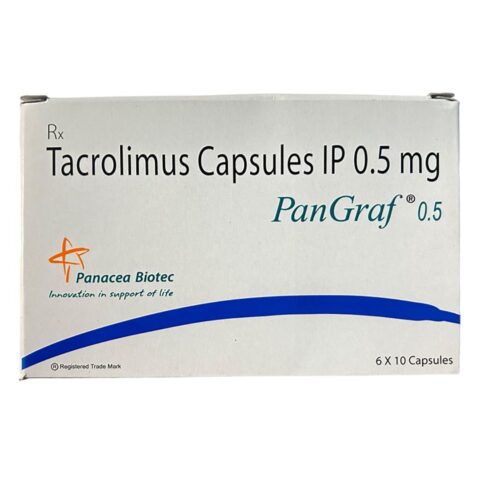
Pangraf is available in multiple strengths — 0.25mg, 0.5mg, 1mg, 2mg, and 5mg capsules — covering the full dosing range required from transplant induction through long-term maintenance, and including dose minimisation regimens in stable patients.
Key Facts at a Glance
Active substance: Tacrolimus 1mg per hard gelatin capsule. Drug class: Calcineurin inhibitor (CNI) immunosuppressant. Originator brand: Prograf® (Astellas Pharma). Formulation: Immediate-release (IR) hard gelatin capsule. Administration: Oral, twice daily, on an empty stomach, approximately 12 hours apart. Manufacturer: Panacea Biotec Ltd, Baddi, Himachal Pradesh, India. Storage: Below 25°C, dry place, original packaging, protect from moisture and light. Prescription: Required. Blood level monitoring: Mandatory — whole blood tacrolimus trough concentrations must be monitored throughout treatment. Not interchangeable: Do not switch between tacrolimus formulations (immediate-release, modified-release) or brands without transplant physician supervision.
Tacrolimus has been the first-line immunosuppressant in solid organ transplantation for over three decades — and its clinical dominance continues to strengthen. The KDIGO (Kidney Disease: Improving Global Outcomes) Clinical Practice Guidelines for Kidney Transplant Recipients recommend tacrolimus as the Grade 2A first-line CNI over cyclosporine, citing its superior ability to reduce acute rejection rates, improve long-term graft survival, and lower the incidence of hyperlipidaemia compared to cyclosporine.
The most recent SRTR (Scientific Registry of Transplant Recipients) data confirms that the triple regimen of tacrolimus + mycophenolate mofetil (MMF)/mycophenolic acid (MPA) + prednisone is the most common maintenance immunosuppression regimen at discharge across 59–75% of kidney, liver, lung, heart, heart-lung, kidney-pancreas, and pancreas-after-kidney transplants in the USA — the global reference standard that Pangraf 1mg supports.
Compared to the previous generation CNI cyclosporine, tacrolimus has demonstrated:
Lower acute rejection rates and graft loss in kidney and liver transplants. Improved long-term allograft survival. Lower LDL cholesterol and total cholesterol. No cosmetic side effects (no gingival overgrowth, no hirsutism — major quality-of-life advantages for patients, particularly women). Lower blood pressure impact.
Pangraf 1mg is indicated as part of combination immunosuppression for the prophylaxis of allograft rejection in de novo and established kidney (renal) transplant recipients. Tacrolimus prevents T-cell-mediated rejection — the most common form of acute rejection — by inhibiting calcineurin and blocking the production of interleukin-2 (IL-2) and other cytokines required for T-cell activation and proliferation.
Target trough blood concentrations (whole blood by immunoassay) are typically: 10–15 ng/mL in the first 3 months post-transplant; 5–10 ng/mL from 3–12 months; 5–8 ng/mL after 12 months, based on rejection risk and individual patient tolerability.
Pangraf 1mg is the first-line immunosuppressant for liver transplant recipients — used in 89% of liver transplant patients globally. The triple regimen of tacrolimus plus mycophenolate mofetil plus corticosteroids is standard induction and maintenance therapy following orthotopic liver transplantation.
Target trough concentrations: typically 10–20 ng/mL in the early post-transplant period; 5–10 ng/mL during maintenance. Tacrolimus absorption is not affected by bile — an important advantage in liver transplant patients where bile flow may be disrupted in the early post-operative period, unlike cyclosporine which requires bile for normal absorption.
Pangraf 1mg is used in combination immunosuppression for the prevention of cardiac allograft rejection following orthotopic heart transplantation. Target trough concentrations are typically 10–15 ng/mL in the first 6 months, reducing to 5–12 ng/mL thereafter, based on rejection risk stratification and individual tolerability.
Tacrolimus immediate-release formulation (Pangraf) received FDA approval for lung transplantation based on real-world evidence of effectiveness — an additional transplant indication expanding its clinical role beyond the classic triad of kidney, liver, and heart.
Tacrolimus is used off-label for the prevention and treatment of graft-versus-host disease (GvHD) following allogeneic haematopoietic stem cell transplantation (bone marrow or peripheral blood stem cell transplant). Tacrolimus combined with methotrexate is a widely used GvHD prophylaxis regimen in haematological transplant settings.
Tacrolimus is used off-label in autoimmune hepatitis refractory to standard first-line therapy (corticosteroids plus azathioprine), and in other autoimmune liver conditions where calcineurin inhibition provides additional immunosuppressive benefit.
Tacrolimus is used off-label in lupus nephritis — particularly in Asian patient populations where clinical trial data (predominantly from Japan, China, and South Korea) has demonstrated its efficacy as an alternative to or in combination with mycophenolate mofetil for induction and maintenance of renal remission. It is also investigated in other refractory autoimmune conditions including uveitis, inflammatory bowel disease, and myasthenia gravis under specialist supervision.
Tacrolimus in Pangraf 1mg exerts its immunosuppressive effect through a precisely defined molecular mechanism targeting the central pathway of T-cell activation:
Step 1 — FKBP12 binding: After oral absorption and entry into T lymphocytes, tacrolimus binds with high affinity to the cytoplasmic immunophilin protein FK506-binding protein 12 (FKBP12), forming a binary complex.
Step 2 — Calcineurin inhibition: The tacrolimus-FKBP12 complex binds to and inhibits calcineurin — a calcium-dependent phosphatase that is the master regulator of T-cell activation signalling. This inhibition prevents calcineurin from dephosphorylating the nuclear factor of activated T cells (NFAT), blocking NFAT translocation into the nucleus.
Step 3 — Cytokine transcription blockade: Without nuclear NFAT, the transcription of key pro-inflammatory cytokines — critically interleukin-2 (IL-2), but also IL-3, IL-4, IL-5, TNF-α, and interferon-gamma — is blocked. IL-2 is the principal T-cell growth factor responsible for clonal expansion of activated T cells targeting the transplanted organ.
Result: Without IL-2 signalling, donor antigen-specific T cells cannot proliferate and mount a rejection response. The transplanted organ is protected from T-cell mediated immune attack.
Important: Tacrolimus is approximately 10–100 times more potent than cyclosporine on a weight basis in inhibiting calcineurin-dependent T-cell activation, which explains its effectiveness at much lower doses and its superior rejection prevention profile.
Tacrolimus absorption pharmacokinetics: Tacrolimus is absorbed primarily in the duodenum and jejunum. Oral bioavailability is variable (4–93%, mean approximately 25%) due to extensive first-pass metabolism by intestinal and hepatic CYP3A4 and CYP3A5 enzymes, and efflux by P-glycoprotein. This variability is the pharmacokinetic basis for mandatory whole blood trough concentration monitoring in all patients. Peak blood concentrations (Cmax) are typically achieved 1–3 hours after immediate-release capsule ingestion. Absorption is significantly reduced by food — particularly high-fat meals — requiring consistent administration on an empty stomach.
Pangraf 1mg is initiated only by a qualified transplant physician. Never self-adjust the dose.
Critical administration rules — must be followed consistently:
Take on an empty stomach — at least 1 hour before a meal or 2–3 hours after a meal. Food, particularly high-fat and high-carbohydrate meals, significantly reduces tacrolimus bioavailability. Always take at the same time each day — approximately 12 hours apart (e.g., 8:00 AM and 8:00 PM). Swallow capsules whole — do not crush, open, or chew. If a dose is missed, take it as soon as possible unless it is close to the time of the next dose — then skip and continue regularly scheduled dosing. Never double-dose. Do not switch between tacrolimus brands or formulations (immediate-release vs. modified-release vs. LCP-tacrolimus) without transplant physician guidance — bioavailability differs between formulations and inadvertent dose changes can precipitate rejection or toxicity.
Avoid grapefruit and grapefruit juice throughout tacrolimus therapy — grapefruit significantly inhibits CYP3A4, unpredictably increasing tacrolimus blood levels and toxicity risk.
Standard initial doses (transplant physician to individualise based on whole blood levels):
Kidney transplant: 0.2–0.3 mg/kg/day orally in 2 divided doses (every 12 hours). Liver transplant: 0.1–0.2 mg/kg/day orally in 2 divided doses. Heart transplant: 0.075 mg/kg/day orally in 2 divided doses. All doses are weight-based starting doses — subsequent doses are adjusted entirely based on whole blood trough concentrations and clinical response.
Trough level monitoring — mandatory at all times:
Trough concentrations are measured from whole blood collected immediately before a dose (12-hour trough). Frequency: daily to every 2 days early post-transplant; weekly to monthly during stable maintenance. Target trough ranges vary by organ, time since transplant, rejection risk, and centre protocol — transplant physician specifies all target ranges.
Acute rejection rate: Tacrolimus demonstrates significantly lower acute rejection rates in kidney and liver transplantation compared to cyclosporine — the primary basis for the KDIGO Grade 2A first-line recommendation.
Long-term graft survival: Tacrolimus improves long-term kidney and liver allograft survival compared to cyclosporine.
Lipid profile: Cyclosporine significantly raises LDL cholesterol and total cholesterol — a major cardiovascular risk factor in transplant patients who already carry elevated cardiovascular risk. Tacrolimus has a significantly lower impact on lipid profiles.
Cosmetic side effects: Cyclosporine causes gingival overgrowth (gum swelling), hirsutism (excessive hair growth), and facial coarsening in a significant proportion of patients — severely impacting quality of life. Tacrolimus does not cause these effects. This is a decisive advantage for patient adherence and quality of life, particularly in paediatric and female transplant recipients.
Blood pressure: Both agents raise blood pressure, but cyclosporine has a more pronounced hypertensive effect.
New-onset diabetes after transplant (NODAT): Tacrolimus carries a higher risk of new-onset diabetes mellitus compared to cyclosporine — a clinically important trade-off that must be considered in individual patient risk assessment.
Nephrotoxicity: Both agents are nephrotoxic. Tacrolimus is generally considered less nephrotoxic than cyclosporine at clinical doses, but careful trough monitoring and dose management are essential for both.
Do not use if: you have known hypersensitivity to tacrolimus or any excipient; you have known hypersensitivity to macrolides (tacrolimus is a macrolide-derived compound).
Use under close transplant specialist supervision in: patients with pre-existing renal impairment — nephrotoxicity risk, dose adjustment may be required; patients with hepatic impairment — reduced tacrolimus clearance increases exposure, dose reduction and more frequent monitoring required; patients with pre-existing or risk factors for diabetes mellitus — NODAT risk; patients with QTc prolongation or arrhythmias — tacrolimus can prolong QTc interval; patients with pre-existing neurological conditions — neurotoxicity risk; patients with hyperkalaemia; pregnant women — use only if the benefit clearly outweighs risk; breastfeeding women — tacrolimus is excreted in breast milk, breastfeeding not recommended; elderly patients.
Pangraf 1mg Capsule is not interchangeable with Pangraf ointment (0.03%/0.1% topical tacrolimus) — the capsule is a systemic oral immunosuppressant; the ointment is a topical preparation for atopic dermatitis. Different indications, routes, and risk profiles.
Tacrolimus has one of the narrowest therapeutic indices of any medicine in clinical use. Too low a blood level risks acute or chronic allograft rejection — which can result in graft loss and return to dialysis or re-transplantation. Too high a blood level risks nephrotoxicity, neurotoxicity, infections, and metabolic complications. The difference between effective and toxic doses is small. Whole blood trough monitoring is not optional — it is the only way to safely manage tacrolimus therapy. Never adjust the dose without a current measured trough level and transplant physician review.
Increased risk of serious infections: Tacrolimus suppresses the immune system, increasing susceptibility to bacterial, viral, fungal, and opportunistic infections — including cytomegalovirus (CMV), BK polyomavirus (BKV) nephropathy in kidney transplant patients, Pneumocystis jirovecii pneumonia (PCP), and invasive fungal infections. CMV and BK virus monitoring is standard of care in kidney transplant recipients.
Increased risk of malignancy: Long-term immunosuppression with tacrolimus is associated with an increased risk of skin cancers (particularly squamous cell carcinoma) and lymphoproliferative disorders including post-transplant lymphoproliferative disease (PTLD). Sun protection and regular dermatological review are essential for all transplant patients on long-term tacrolimus.
Nephrotoxicity: Both acute (dose-dependent, reversible) and chronic (calcineurin inhibitor nephropathy, progressive) nephrotoxicity have been reported. Monitor serum creatinine and eGFR regularly. Avoid concurrent nephrotoxic drugs (NSAIDs, aminoglycosides, contrast agents) wherever possible.
Neurotoxicity: Tremor, headache, insomnia, and peripheral neuropathy are common. Severe neurotoxicity — including posterior reversible encephalopathy syndrome (PRES), seizures, and confusion — can occur, particularly with high trough levels or rapid escalation.
New-onset diabetes after transplant (NODAT): Tacrolimus inhibits pancreatic beta-cell function and reduces insulin secretion — leading to post-transplant diabetes mellitus in a significant proportion of patients, particularly in the first year. Monitor fasting glucose and HbA1c regularly. Manage with diet, oral antidiabetics, or insulin as clinically appropriate.
QTc prolongation: Tacrolimus can prolong the QTc interval. Use with caution in patients with pre-existing QTc prolongation or those taking other QTc-prolonging agents.
Hyperkalaemia: Tacrolimus reduces renal potassium excretion. Monitor serum potassium — avoid high-potassium foods and potassium-sparing diuretics without close monitoring.
Hypertension: Monitor blood pressure regularly throughout therapy.
Tacrolimus is metabolised by CYP3A4 and CYP3A5 enzymes and is a substrate of P-glycoprotein (P-gp). Any medicine that inhibits or induces CYP3A4/CYP3A5 or P-gp will significantly alter tacrolimus blood concentrations — requiring dose adjustment and more frequent trough monitoring.
Strong CYP3A4/CYP3A5 inhibitors — significantly increase tacrolimus levels: Azole antifungals: voriconazole, itraconazole, ketoconazole, fluconazole, posaconazole. Macrolide antibiotics: clarithromycin, erythromycin. HIV protease inhibitors: ritonavir, lopinavir, nelfinavir. Calcium channel blockers: diltiazem, nicardipine, verapamil. Others: amiodarone, bromocriptine, chloramphenicol, cimetidine, danazol, grapefruit juice. Monitor trough levels frequently and reduce tacrolimus dose accordingly.
Strong CYP3A4 inducers — significantly decrease tacrolimus levels: Rifampicin, rifabutin, rifapentine, carbamazepine, phenytoin, phenobarbital, St. John’s Wort (Hypericum perforatum). These agents can reduce tacrolimus blood levels dramatically, precipitating acute graft rejection. Monitor trough levels very frequently if co-administration is unavoidable and increase dose accordingly.
Nephrotoxic drugs: Concurrent use with NSAIDs, aminoglycoside antibiotics, amphotericin B, vancomycin, contrast dyes, and other nephrotoxic agents increases the risk of acute kidney injury in tacrolimus-treated patients.
Natalizumab: Long-term concurrent use may increase the risk of serious opportunistic CNS infections (including PML). Avoid combination.
Live vaccines: Do not administer live or live-attenuated vaccines during tacrolimus therapy — the immune response is suppressed and live vaccine safety cannot be ensured.
Potassium-sparing diuretics and ACE inhibitors/ARBs: Increase hyperkalaemia risk when combined with tacrolimus.
Domperidone: Do not co-administer — risk of QTc prolongation.
Very common: Tremor (a characteristic tacrolimus side effect — dose-dependent and typically worst early post-transplant). Headache. Insomnia and sleep disturbances. Hypertension. Diarrhoea, nausea, vomiting, and abdominal pain. Elevated serum creatinine and nephrotoxicity. Hyperglycaemia and new-onset diabetes. Hyperkalaemia. Elevated liver enzymes. Increased susceptibility to infection.
Common: Anaemia, leucopenia, thrombocytopenia. Peripheral oedema. Constipation. Fever. Back pain. Arthralgia. Depression and mood changes. Hypomagnesaemia. Decreased appetite and weight loss.
Serious — seek immediate transplant physician or emergency attention for: Signs of graft rejection — in kidney transplant: rising serum creatinine, reduced urine output, graft tenderness; in liver transplant: rising bilirubin and liver enzymes, jaundice; in heart transplant: fatigue, dyspnoea, arrhythmia. Signs of serious infection — high fever, rigors, productive cough, confusion. Signs of PRES or neurotoxicity — sudden severe headache, visual disturbances, seizure, altered consciousness. Persistent significant tremor worsening at high trough levels. Signs of PTLD — unexplained lymph node swelling, fever, night sweats, weight loss. Unexplained hyperglycaemia.
Monitoring required throughout therapy: Whole blood tacrolimus trough levels — frequency as per transplant centre protocol. Serum creatinine and eGFR. Full blood count. Fasting glucose and HbA1c. Serum potassium, magnesium, phosphate. Blood pressure. Liver function tests. CMV and BK virus monitoring in kidney transplant recipients. Annual dermatological review for skin cancer screening.
Store below 25°C in a cool, dry place, protected from moisture and light. Keep in the original blister packaging. Keep out of reach of children. Do not use after the expiry date printed on the packaging.
What is Pangraf 1mg used for? Pangraf 1mg is used to prevent rejection of transplanted organs — primarily kidney, liver, heart, and lung transplants. It is also used off-label for GvHD prevention after stem cell transplantation, autoimmune hepatitis, and lupus nephritis. It must be taken lifelong following organ transplantation as prescribed by a transplant specialist.
Is Pangraf 1mg the same as Prograf? Pangraf 1mg contains the identical active molecule — tacrolimus 1mg — found in branded Prograf (Astellas Pharma). Panacea Biotec manufactures Pangraf to GMP standards. Pangraf 1mg delivers the same immunosuppressive effect at a lower cost. However, tacrolimus formulations should never be switched between brands or types without transplant physician supervision due to the narrow therapeutic index.
Why is tacrolimus preferred over cyclosporine? KDIGO Grade 2A guidelines recommend tacrolimus as the first-line CNI because it produces lower acute rejection rates, better long-term graft survival, a more favourable lipid profile, and none of the cosmetic side effects (gingival overgrowth, hirsutism) associated with cyclosporine. Currently 72% of kidney and 89% of liver transplant recipients globally receive tacrolimus.
When should I take Pangraf capsules? On an empty stomach — at least 1 hour before or 2–3 hours after a meal. Take at the same time every day, approximately 12 hours apart. Avoid grapefruit and grapefruit juice entirely.
Why do I need blood tests with Pangraf? Tacrolimus has a narrow therapeutic index — the difference between effective and toxic concentrations is very small. Whole blood trough level monitoring ensures your dose keeps tacrolimus within the safe therapeutic range, protecting both you and your transplanted organ.
Can I stop taking Pangraf? Never stop taking Pangraf without consulting your transplant physician. Stopping immunosuppression — even briefly — carries a significant risk of acute graft rejection, which can be irreversible. Pangraf must typically be continued lifelong after organ transplantation.
Does Pangraf 1mg cause diabetes? Tacrolimus can cause new-onset diabetes after transplant (NODAT) — particularly in the first post-transplant year — by inhibiting pancreatic beta-cell insulin secretion. Fasting glucose and HbA1c are monitored regularly. Risk is higher in patients with family history of diabetes, high BMI, or African-American ethnicity.
Do you ship Pangraf 1mg internationally? Yes — discreet, secure shipping to USA, UK, UAE (Dubai, Abu Dhabi), Canada, Japan, Russia, China, Thailand, India, Saudi Arabia, and Australia.
Is a prescription required? Yes. Pangraf 1mg is a prescription-only narrow therapeutic index immunosuppressant. Always consult and follow the guidance of your transplant physician before starting, adjusting, or stopping tacrolimus therapy. Never self-adjust your dose.
Orders ship from our India Head Office within 1–2 business days of confirmation. We include full customs documentation — HS codes, certificates of origin, and pharmaceutical export permits.
Estimated delivery: 3–7 business days to UK. 7–10 business days to UAE, Saudi Arabia and Gulf countries. 10–15 days for USA and Asian countries.
All packages arrive in plain, unmarked brown boxes. No pharmacy name or medication details on the outside.
Only logged in customers who have purchased this product may leave a review.

Pradeep –
Original item at best price. Good service.
R K Trivedi –
Very easy to order online from milanmedicals.com Payment method upi. thank you