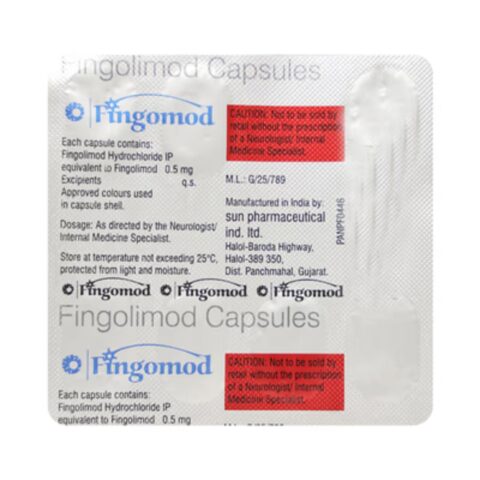
Fingolimod 0.5 mg Capsules are a generic form of Gilenya, containing fingolimod as the active ingredient. Fingolimod is an oral disease-modifying medicine used for eligible patients with relapsing forms of multiple sclerosis (MS), a chronic neurological condition involving immune-mediated damage to the central nervous system.
Fingolimod belongs to the sphingosine-1-phosphate (S1P) receptor modulator class. It changes the movement of certain lymphocytes, a type of white blood cell involved in immune responses. By reducing the circulation of selected lymphocytes and limiting their movement into the central nervous system, fingolimod can help reduce inflammatory disease activity associated with multiple sclerosis.
The 0.5 mg capsule is a commonly used adult strength. The appropriate product, dosage and treatment plan depend on the patient’s clinical circumstances and the approved prescribing information in the relevant country.
| Product attribute | Details |
|---|---|
| Product name | Fingolimod 0.5 mg Capsules |
| Generic relationship | Generic version of Gilenya |
| Active ingredient | Fingolimod |
| Strength | 0.5 mg per capsule |
| Dosage form | Oral capsule |
| Therapeutic class | Sphingosine-1-phosphate receptor modulator |
| Main treatment area | Relapsing forms of multiple sclerosis |
| Route of administration | Oral |
| Administration with food | With or without food, according to product instructions |
| Reference brand | Gilenya |
| Product type | Generic prescription medicine |
| Pack size | Depends on the supplied product |
| Manufacturer | Depends on the specific product supplied |
Fingolimod is used to treat eligible patients with relapsing forms of multiple sclerosis. The precise approved indication and minimum age depend on the national authorisation and product label.
Relapsing-remitting multiple sclerosis (RRMS) involves episodes of new or worsening neurological symptoms, known as relapses, followed by periods of partial or complete recovery. Fingolimod is a disease-modifying therapy used to reduce disease activity in eligible patients with this condition.
Secondary progressive multiple sclerosis (SPMS) can develop after an initial relapsing course. In active SPMS, relapses or other evidence of inflammatory disease activity may continue while disability progresses. Fingolimod may be indicated for certain patients under specific national product labels.
Clinically isolated syndrome (CIS) refers to a first clinical episode suggestive of inflammatory demyelination in the central nervous system. It is included within the US-labelled relapsing-MS indication for fingolimod. Whether it is an approved use in another country depends on that country’s product information.
Fingolimod is converted in the body to fingolimod phosphate, its active form. This active form interacts with specific sphingosine-1-phosphate receptors involved in lymphocyte movement.
The medicine alters lymphocyte trafficking, retaining certain lymphocytes in lymphoid tissues and reducing the number circulating in the blood. This limits the movement of selected immune cells into the central nervous system, where they can contribute to inflammatory damage associated with multiple sclerosis.
By modifying this immune-cell movement, fingolimod can reduce MS disease activity in appropriate patients. It is a disease-modifying treatment rather than a cure, and it does not reverse all existing neurological damage.
The appropriate fingolimod dose depends on age, body weight, the approved local regimen and the prescribing clinician’s assessment.
For the US-labelled regimen, adults and eligible paediatric patients aged 10 years and older who weigh more than 40 kg generally receive 0.5 mg orally once daily. The US label specifies a different dose for certain paediatric patients weighing 40 kg or less, so the 0.5 mg strength is not suitable for every patient.
Fingolimod may be taken with or without food, following the product-specific instructions.
Fingolimod may slow the heart rate and affect cardiac conduction after the first dose. Treatment initiation requires a structured monitoring procedure in an appropriate healthcare setting. Under the US label, this includes observation for at least six hours, pulse and blood pressure checks, and electrocardiograms before dosing and at the end of the observation period. Some patients require extended or overnight monitoring.
Restarting fingolimod after an interruption can require first-dose cardiac monitoring again. The monitoring requirement depends on how long treatment was interrupted, the point in treatment when the interruption occurred and the applicable product label.
Before fingolimod treatment begins, the prescribing team evaluates relevant medical history and baseline test results. Depending on the local product label and individual circumstances, assessments may include:
Monitoring during treatment depends on the current product information and the patient’s clinical circumstances.
Fingolimod may cause side effects, and their severity varies among patients. Reported effects include:
Significant visual changes, signs of serious infection, fainting, breathing difficulties or new neurological symptoms require prompt medical assessment.
Fingolimod can cause bradycardia and atrioventricular conduction abnormalities, especially after the first dose or following certain treatment interruptions. Cardiac screening and supervised first-dose monitoring are important elements of treatment.
Fingolimod changes immune-cell circulation and can increase susceptibility to infections. Assessment for active infection and review of blood counts are important before treatment. Infection monitoring may remain relevant after discontinuation, as described in the applicable product label.
Elevated liver enzymes and clinically significant liver injury have been reported. Liver function should be assessed before treatment and monitored during therapy as indicated.
Macular oedema has been associated with fingolimod. Eye examinations before treatment and during follow-up may be required, particularly for patients with diabetes or a history of uveitis.
Fingolimod may cause fetal harm. Pregnancy risks, contraception and treatment planning should be reviewed with the prescribing clinician where relevant. Discontinuation requires clinical planning because MS disease activity may increase after stopping treatment.
Severe worsening of multiple sclerosis has been reported after fingolimod is discontinued. Stopping treatment or transitioning to another disease-modifying therapy requires an appropriate clinical plan and follow-up.
Fingolimod is not appropriate for everyone. Under the US prescribing information, contraindications include certain recent major cardiovascular events, specific serious cardiac conduction disorders without a functioning pacemaker, a baseline QTc interval of 500 milliseconds or greater, certain arrhythmias requiring class Ia or class III antiarrhythmic treatment, and hypersensitivity to fingolimod or its ingredients.
Potential interactions include medicines that slow heart rate or atrioventricular conduction, drugs associated with QT prolongation, and treatments that suppress the immune system or alter immune responses. Live attenuated vaccines also require special consideration during and after treatment.
The exact contraindications and interactions should be checked against the current local product information and the patient’s medication list.
Gilenya is the reference brand containing fingolimod. Generic fingolimod capsules contain the same active ingredient and strength as the corresponding reference product when authorised as a generic equivalent.
The generic product may differ from the reference brand in manufacturer, capsule appearance, packaging and inactive ingredients. The supplied product’s label identifies the specific manufacturer, formulation, pack size and market authorisation.
Fingolimod is one of several disease-modifying therapies used for multiple sclerosis. Other medicines include dimethyl fumarate, teriflunomide, siponimod, ozanimod and other therapies with different mechanisms, indications and monitoring requirements.
These medicines are not interchangeable on a milligram-for-milligram basis. Selection depends on the type and activity of MS, previous treatment, medical history, safety considerations, pregnancy plans and local approvals.
Fingolimod 0.5 mg is used to treat eligible patients with relapsing forms of multiple sclerosis. Approved indications and age criteria depend on the local product label.
Yes. Fingolimod is the active ingredient in Gilenya, and generic fingolimod 0.5 mg capsule products are available in some markets.
The active ingredient in Gilenya is fingolimod.
Generic fingolimod capsules contain the same active ingredient and corresponding strength as the reference product when authorised as a generic equivalent. Manufacturer, packaging, appearance and inactive ingredients may differ.
Fingolimod modifies the movement of certain lymphocytes, reducing their circulation and entry into the central nervous system. This can help reduce inflammatory disease activity associated with MS.
For the US-labelled adult regimen and eligible patients weighing more than 40 kg, fingolimod is taken orally once daily. It may be taken with or without food, according to the product instructions and prescribed regimen.
Yes. Fingolimod can slow the heart rate after the first dose. The US label requires structured first-dose monitoring, including observation and electrocardiograms. Some patients need longer monitoring.
An interruption may mean first-dose monitoring is required again. The decision depends on the length of the interruption and the treatment circumstances, so the restart plan should be confirmed with the prescribing team.
Reported side effects include headache, cough, diarrhoea, back pain and elevated liver enzymes. More serious risks include infections, cardiac effects and macular oedema.
No. Suitability depends on the type and activity of MS, age, weight, medical history, other medicines, test results and local prescribing criteria.
Fingolimod modulates sphingosine-1-phosphate receptors and affects lymphocyte circulation. Dimethyl fumarate works through different biological pathways. Both are disease-modifying therapies for certain MS settings, but their indications, safety profiles and monitoring requirements differ.
The price varies according to the manufacturer, pack size, country, supplier and applicable prescription and dispensing requirements. The specific product listing determines the available price.
Generic fingolimod is available in some markets. Availability, approved manufacturers and product authorisations vary by country.
This product information is provided for general educational and product-description purposes. Fingolimod is a prescription medicine that requires appropriate clinical assessment and monitoring. The current product label and guidance from a qualified healthcare professional determine suitability, dosage, contraindications and monitoring requirements.
Orders ship from our India Head Office within 1–2 business days of confirmation. We include full customs documentation — HS codes, certificates of origin, and pharmaceutical export permits.
Estimated delivery: 3–7 business days to UK. 7–10 business days to UAE, Saudi Arabia and Gulf countries. 10–15 days for USA and Asian countries.
All packages arrive in plain, unmarked brown boxes. No pharmacy name or medication details on the outside.
Only logged in customers who have purchased this product may leave a review.

Reviews
There are no reviews yet.