Oncology · Targeted Therapy · Patient Guide 2026
Imatinib Tablet (100mg & 400mg): The Drug That Changed What Cancer Treatment Looks Like
How a targeted therapy transformed CML from a life-limiting disease into a manageable condition — and what patients need to know about both doses, how it works, and what to expect.
Informational guide · 8 minutes
In the 1990s, a diagnosis of chronic myeloid leukaemia (CML) carried a median survival of around three to five years. Bone marrow transplant was the only potentially curative option — and not everyone was eligible or survived it.
Then imatinib arrived. And changed everything.
Today, patients with CML on imatinib have a life expectancy approaching that of the general population. Some achieve such deep remission that treatment can eventually be stopped under careful monitoring. For a blood cancer, that is an extraordinary outcome — and it happened because imatinib was the first drug to specifically target the molecular defect driving the disease, rather than attacking all dividing cells indiscriminately the way chemotherapy does.
This is the complete guide to imatinib — what it is, how it works, what both tablet strengths are used for, and what patients and families need to understand before and during treatment.
Quick facts
Drug Class
Tyrosine Kinase Inhibitor (TKI)
Brand Name
Gleevec (USA) / Glivec (UK/EU)
Available Strengths
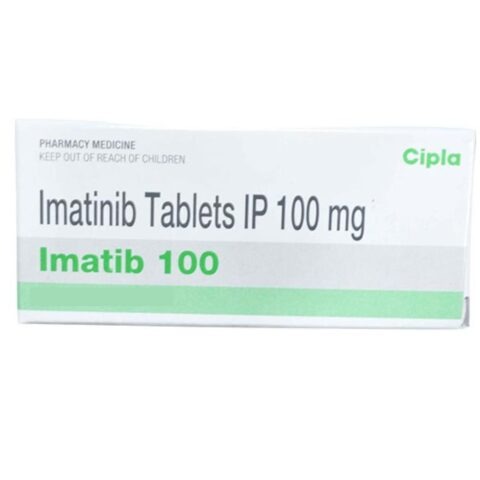
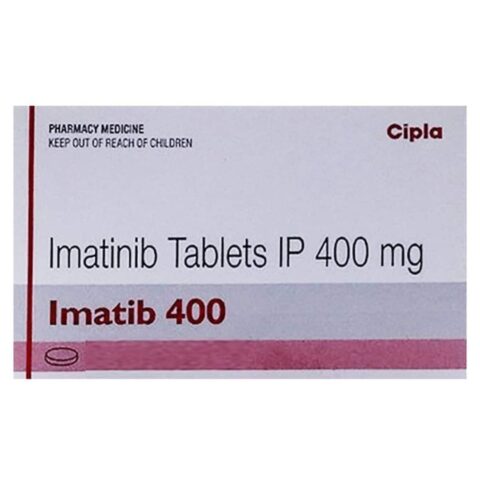
100mg and 400mg tablets
How Taken
Oral — once or twice daily with food
Primary Target
BCR-ABL tyrosine kinase
FDA Approval
2001 — over 25 years of data
Where it came from
The Drug That Proved Targeted Therapy Could Work
To understand why imatinib matters, you need to understand what it replaced.
For decades, cancer treatment meant chemotherapy — drugs that kill rapidly dividing cells, which includes cancer cells but also hair follicles, gut lining, bone marrow, and immune cells. Effective, but brutal. And for CML, not curative in most patients.
CML is driven by a very specific genetic abnormality: the Philadelphia chromosome. This chromosomal translocation creates a fusion gene called BCR-ABL, which produces an abnormal protein — a permanently active tyrosine kinase — that drives uncontrolled leukaemic cell proliferation. It’s a defined molecular target. The question was whether a drug could be designed to block it specifically.
Imatinib, developed at Novartis and approved by the FDA in 2001, was the answer. It was the first small-molecule drug specifically designed to inhibit BCR-ABL — and it worked with an effectiveness that stunned the oncology world. Clinical trial results in CML were so striking that the FDA granted accelerated approval after just two and a half months of review.
“Imatinib didn’t just treat CML. It proved the concept that you could target a cancer’s specific molecular driver — and that targeted therapy was the future of oncology.”
The science
How Imatinib Actually Works
Tyrosine kinases are enzymes that act as on/off switches in cell signalling — controlling growth, division, and survival. In healthy cells, these switches are tightly regulated. In CML, the BCR-ABL fusion protein is a permanently stuck “on” switch — cells receive a constant signal to proliferate.
Imatinib works by fitting precisely into the ATP-binding pocket of the BCR-ABL kinase — the site the enzyme needs to be active. By occupying that pocket, imatinib blocks the enzyme from functioning. The signal stops. Leukaemic cell proliferation slows and eventually triggers programmed cell death (apoptosis).
CHEMOTHERAPY
Kills all rapidly dividing cells. Cancer cells die — but so do healthy ones. Hair loss, nausea, immune suppression, bone marrow damage. Broad and toxic by design.
IMATINIB (TARGETED THERAPY)
Blocks only the specific molecular defect driving CML. Healthy cells without BCR-ABL are largely unaffected. A fundamentally more precise approach.
What else imatinib targets
Beyond BCR-ABL, imatinib also inhibits c-Kit and PDGFR (platelet-derived growth factor receptor) — kinases that drive other cancers including gastrointestinal stromal tumours (GIST) and certain rare leukaemias. This broader kinase profile explains why imatinib is effective across multiple cancer types, not just CML.
Approved uses
What Conditions Is Imatinib Used For?
| Condition | Molecular Target | Notes |
|---|---|---|
| Chronic Myeloid Leukaemia (CML) | BCR-ABL | First-line treatment for Ph+ CML in all phases — the primary indication |
| Gastrointestinal Stromal Tumour (GIST) | c-Kit / PDGFRA | Unresectable, metastatic, or post-surgery adjuvant treatment |
| Ph+ Acute Lymphoblastic Leukaemia (ALL) | BCR-ABL | Adults: relapsed/refractory; paediatric: newly diagnosed in combination with chemotherapy |
| Myelodysplastic / Myeloproliferative Disease (MDS/MPD) | PDGFR rearrangement | Requires confirmed PDGFR gene rearrangement prior to treatment |
| Aggressive Systemic Mastocytosis (ASM) | c-Kit | Without D816V c-Kit mutation or when mutation status unknown |
| Hypereosinophilic Syndrome (HES) / CEL | FIP1L1-PDGFRα | Lower starting dose (100mg/day) used when FIP1L1-PDGFRα fusion present |
| Dermatofibrosarcoma Protuberans (DFSP) | PDGFR | Unresectable, recurrent, or metastatic — a rare skin sarcoma |
Understanding the doses
100mg and 400mg — What Each Strength Is For
The two tablet strengths exist to give oncologists precise dosing flexibility. They are not interchangeable by assumption — the dose prescribed is based on the specific condition, disease phase, and patient response.
Precision dosing / low-dose indications
Primary uses:
- Hypereosinophilic Syndrome (HES) and Chronic Eosinophilic Leukaemia (CEL) with confirmed FIP1L1-PDGFRα fusion — starting dose 100mg/day
- Building blocks for dose escalation — combined with additional 100mg tablets when a patient’s dose falls between standard 400mg increments
- Paediatric dosing — children are dosed by body surface area (340 mg/m²/day) requiring flexible tablet combinations
- Dose reductions in patients experiencing side effects — stepping down from 400mg in manageable increments
Standard therapeutic dose
Primary uses:
- CML (chronic phase) — 400mg once daily is the standard first-line dose
- GIST — 400mg once daily for unresectable/metastatic or adjuvant post-resection
- Ph+ ALL — 400mg once daily in adult relapsed/refractory disease
- MDS/MPD, ASM, DFSP — 400mg/day is standard across these rarer indications
- Dose escalation to 800mg — given as two 400mg tablets (400mg twice daily) in CML blast crisis or accelerated phase when higher intensity is indicated
| Condition / Phase | Standard Dose | Frequency |
|---|---|---|
| CML — Chronic phase | 400mg | Once daily |
| CML — Accelerated phase or blast crisis | 600mg or 800mg | Once or twice daily |
| GIST — Unresectable / metastatic | 400mg | Once daily |
| Ph+ ALL (adults) | 600mg | Once daily |
| HES / CEL (FIP1L1-PDGFRα+) | 100mg | Once daily |
| MDS/MPD, ASM, DFSP | 400mg | Once daily |
| Paediatric CML | 340 mg/m² (max 600mg) | Once or twice daily |
Always take with food and water
Imatinib should be taken with a meal and a full glass of water. This significantly reduces nausea — the most common side effect — and improves tolerability. For patients who cannot swallow tablets, they can be dissolved in water or apple juice (50ml for 100mg; 200ml for 400mg) and taken immediately once dissolved.
What success looks like
How Treatment Response Is Measured in CML
Imatinib therapy in CML is assessed through a structured series of response milestones. These aren’t just clinical check-ins — they’re defined molecular targets that guide whether treatment is working, whether dose escalation is needed, or whether switching to a second-generation TKI is warranted.
Haematologic Response (3 months)
Normal blood counts restored. White cell count normalised. Spleen size reduced. This is the first evidence the drug is working.
Cytogenetic Response (6–12 months)
Reduction in the proportion of bone marrow cells carrying the Philadelphia chromosome. Complete cytogenetic response (CCyR) means no Ph+ cells detectable by conventional analysis.
Molecular Response (ongoing)
BCR-ABL transcripts measured by PCR. Major molecular response (MMR) means BCR-ABL is reduced 1,000-fold from baseline. Deep molecular response (MR4 or MR4.5) is the threshold at which treatment-free remission (stopping imatinib) may eventually be considered.
Treatment-Free Remission (selected patients)
Some patients who achieve sustained deep molecular response may attempt stopping imatinib under close PCR monitoring. Approximately 40–50% of appropriately selected patients maintain remission off treatment. This remains one of the most remarkable outcomes in modern oncology.
Honest information
Side Effects: What to Actually Expect
Imatinib’s targeted mechanism means its side effect profile is substantially different from — and generally milder than — chemotherapy. Most patients tolerate it well long-term. That said, it’s not side-effect free.
Common — most patients experience at least some of these:
- Nausea — the most frequently reported; almost always resolved by taking with food
- Fluid retention / oedema — particularly around the eyes (periorbital) and ankles; usually mild
- Muscle cramps — common, particularly at night; often managed with electrolytes or dose timing adjustments
- Fatigue — especially early in treatment
- Skin rash — manageable with antihistamines in most cases
- Diarrhoea
- Bone pain — more common in the early months
Less common — monitor and report:
- Liver enzyme elevation — monitored with regular blood tests; dose reduction or temporary hold if significant
- Neutropenia / thrombocytopenia — blood counts monitored throughout treatment
- Severe fluid retention — pleural effusion or ascites are rare but require prompt attention
- Cardiac effects — rare but baseline ECG and cardiac assessment recommended in at-risk patients
Drug interactions — tell your doctor everything you take
Imatinib is metabolised by the CYP3A4 enzyme system in the liver. Many common drugs — including certain antibiotics, antifungals, anticonvulsants, and even grapefruit juice — can significantly increase or decrease imatinib levels in the blood. Always give your oncologist and pharmacist a complete list of every medication, supplement, and herbal product you are taking.
Quick answers
Questions Patients and Families Ask
How long will I need to take imatinib?
For most CML patients, imatinib is a long-term — potentially lifelong — treatment. However, patients who achieve sustained deep molecular response (typically after 3+ years of therapy) may be candidates for a monitored treatment-free remission attempt. This is a specialist decision based on individual response data, not a standard step for all patients.
What’s the difference between Gleevec, Glivec, and generic imatinib?
All contain imatinib mesylate as the active ingredient. Gleevec is the US brand name; Glivec is used in Europe, Australia, and elsewhere. Generic imatinib — including Indian generics from FDA-approved manufacturers — is bioequivalent and clinically interchangeable. The cost difference is substantial, which is why generic versions have significantly improved global access to this treatment.
What if imatinib stops working?
Resistance to imatinib — usually from BCR-ABL mutations — occurs in some patients. Second-generation TKIs (dasatinib, nilotinib) and third-generation options (ponatinib, asciminib) are available for this situation. Regular PCR monitoring is designed to detect rising BCR-ABL levels early, allowing treatment switches before clinical relapse.
Can I miss a dose?
Take the missed dose as soon as you remember — unless it is close to your next scheduled dose, in which case skip it and continue normally. Never double-dose. Consistent daily adherence is critical in CML — intermittent dosing is associated with inferior molecular responses and increased resistance risk.
Is imatinib safe during pregnancy?
No — imatinib is teratogenic and must be avoided during pregnancy. Women of childbearing potential should use effective contraception throughout treatment. Men on imatinib who are planning to father children should discuss this with their oncologist. Fertility planning requires specialist input well in advance.
The bigger picture
What Imatinib Represents Beyond the Prescription
Imatinib is more than a treatment for CML. It’s the proof-of-concept that changed oncology’s direction. Before 2001, targeted therapy was a hypothesis. After imatinib, it became the framework for how we think about cancer drug development.
Every targeted therapy that followed — every kinase inhibitor, every antibody-drug conjugate designed around a specific molecular target — owes its existence in part to the clinical success of imatinib. It showed the field what was possible when you understood a cancer’s molecular driver well enough to block it precisely.
“A disease that once shortened lives by decades is now managed with a daily tablet. That is what understanding the molecular biology of cancer, and designing a drug to match it, looks like in practice.”
If you or someone you care for has been prescribed imatinib — understand the target, understand the milestones, understand the monitoring. This is a treatment that rewards adherence and informed engagement. The data behind it, built over 25 years, is among the strongest in oncology.
This article is for informational purposes only and does not constitute medical advice.
Imatinib is a prescription-only medicine. Dosing, monitoring, and treatment decisions must be made by a qualified oncologist or haematologist based on individual clinical circumstances.
Information reflects published clinical guidelines and literature as of 2026.
📢 Why do we show ads?
We work hard to keep the prices of products listed on our site
as low as possible, while continuing to provide a
quality service.
Running and maintaining the website, servers, database, and other
services comes with ongoing costs. Ads are one of the ways we help
cover these expenses.
Don’t worry — our ads are minimal and are designed
to have as little impact on your browsing experience as possible.
By allowing these small ads, you help us keep the website running,
maintain our services, and continue offering products at competitive prices.
Thank you for your support!