Sirolimus Tablets: Uses, Strengths, How They Work & What Patients Should Know
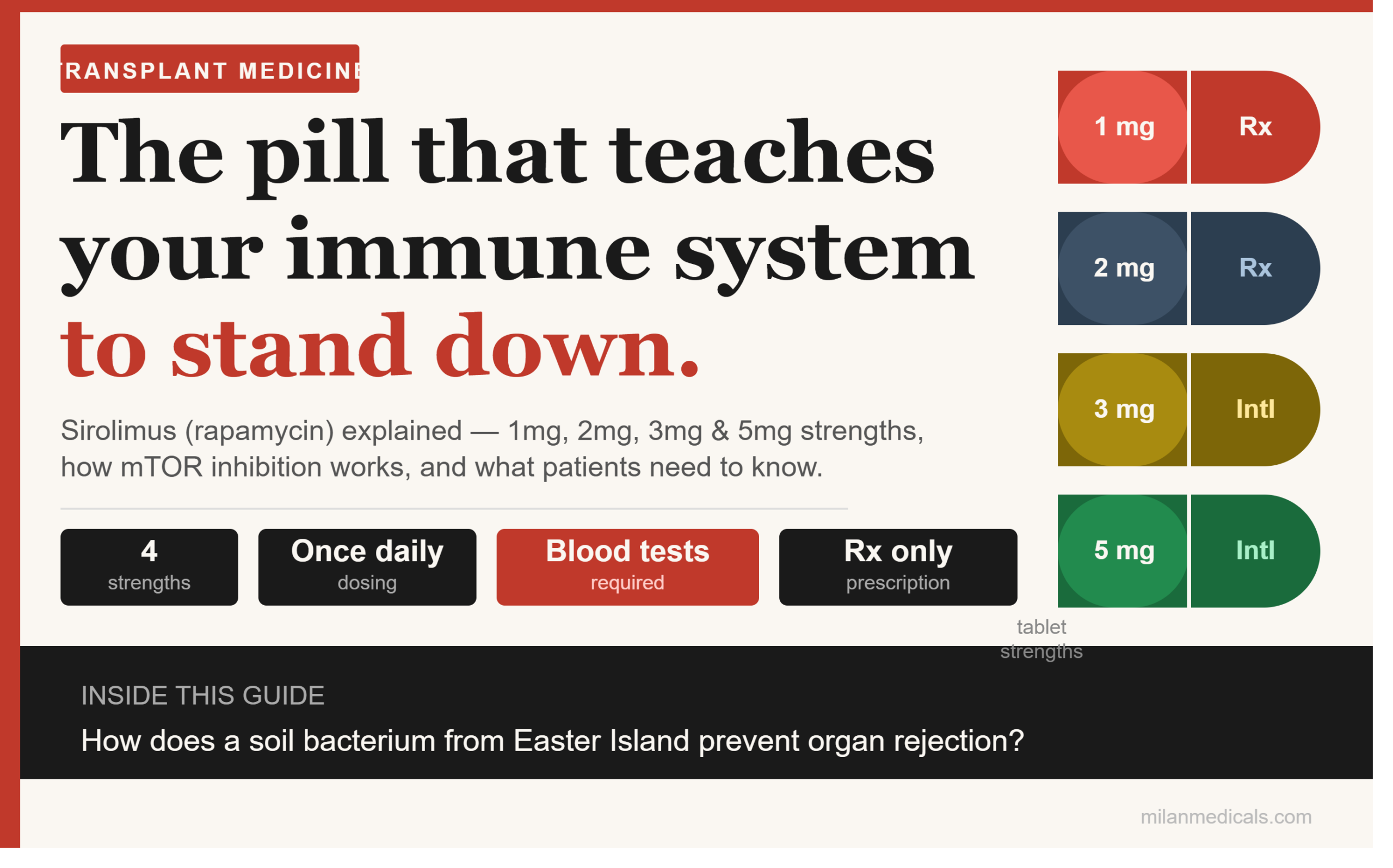
A practical guide to sirolimus tablets, including 1 mg, 2 mg, 3 mg and 5 mg strengths, transplant medicine, lymphangioleiomyomatosis, mTOR inhibition, monitoring, safety and important precautions.
When a patient receives a kidney transplant, one of the biggest challenges begins after the surgery itself.
The immune system is designed to recognize foreign tissue. That is useful when the body is fighting an infection, but it becomes a problem when the “foreign” tissue is a transplanted organ.
This is where immunosuppressive medicines become essential.
Sirolimus is one of the medicines used in specialist transplant medicine to reduce immune activity and help prevent rejection of a transplanted kidney. It belongs to a distinctive group of medicines known as mTOR inhibitors. It is also an approved treatment for lymphangioleiomyomatosis (LAM) in the United States.
But sirolimus is not simply another general-purpose immunosuppressant.
Its mechanism, dosing, blood-level monitoring, interactions and safety considerations make it a medicine that requires careful medical supervision.
And because sirolimus tablets are available in different strengths, another question often comes up:
Let’s break it down.
First — What Is Sirolimus?
Sirolimus is an immunosuppressive medicine and an mTOR inhibitor.
It is also commonly known as rapamycin.
The medicine works inside immune cells by binding to a protein called FKBP-12 and inhibiting the mTORC1 signaling pathway. This pathway plays an important role in cellular growth, metabolism and T-cell activation and proliferation. By interfering with this signaling, sirolimus reduces certain immune responses involved in transplant rejection.
That mechanism is different from calcineurin inhibitors such as tacrolimus and cyclosporine.
This difference is one reason sirolimus has remained an important option in specialist immunosuppressive therapy.
Quick Facts About Sirolimus
- Generic name: Sirolimus
- Also known as: Rapamycin
- Drug class: Immunosuppressant; mTOR inhibitor
- Dosage form: Oral tablet
- Major U.S. uses: Prevention of rejection in certain renal-transplant patients and treatment of lymphangioleiomyomatosis
- Administration: Once daily in the approved tablet regimen
- Monitoring: Therapeutic drug monitoring is recommended
- Prescription status: Prescription medicine
What Is Sirolimus Used For?
Sirolimus has two important FDA-labeled roles in the United States.
1. Prevention of Kidney Transplant Rejection
Sirolimus is indicated for the prophylaxis of organ rejection in patients aged 13 years and older receiving renal transplants, under specified immunologic-risk and combination-therapy conditions.
The medicine may be incorporated into a broader immunosuppressive regimen that can include cyclosporine and corticosteroids.
The exact regimen depends on factors such as transplant history, immunologic risk, other medicines, kidney and liver function, and measured sirolimus blood concentrations.
2. Lymphangioleiomyomatosis
Sirolimus is also indicated for the treatment of lymphangioleiomyomatosis (LAM), a rare disease involving abnormal growth of smooth-muscle-like cells that can affect the lungs and other organs.
For LAM, the current U.S. prescribing information recommends once-daily administration and therapeutic drug monitoring, with dosing adjusted according to sirolimus trough concentrations.
How Does Sirolimus Work?
To understand sirolimus, it helps to understand what happens when T cells become activated.
T cells are an important part of the immune system. Following activation, they can proliferate and contribute to an immune response against tissue recognized as foreign.
Sirolimus works further down this signaling pathway.
After binding to FKBP-12, sirolimus inhibits mTORC1 signaling. This interferes with cellular processes involved in T-cell proliferation. The result is suppression of an immune response that could otherwise contribute to transplant rejection.
This mechanism makes sirolimus pharmacologically different from drugs that primarily act through calcineurin inhibition.
Sirolimus vs Tacrolimus: Why the Difference Matters
Both sirolimus and tacrolimus can be used in transplant medicine, but they belong to different drug classes and act through different intracellular pathways.
| Feature | Sirolimus | Tacrolimus |
|---|---|---|
| Drug class | mTOR inhibitor | Calcineurin inhibitor |
| Main molecular target | mTORC1 pathway | Calcineurin pathway |
| Effect on immune response | Reduces T-cell proliferation | Suppresses T-cell activation signaling |
| Therapeutic monitoring | Yes | Yes |
These medicines are not interchangeable, and decisions about which immunosuppressive regimen is appropriate belong to the transplant or specialist medical team.
Sirolimus Tablet Strengths: 1 mg, 2 mg, 3 mg and 5 mg
Sirolimus tablets can be found in different strengths depending on the manufacturer and market.
The Milan Medicals product range currently lists Sirolimus 1 mg, 2 mg, 3 mg and 5 mg tablets, each as prescription products containing sirolimus.
However, there is an important regulatory distinction.
Current U.S. labeling identifies tablet strengths of 0.5 mg, 1 mg and 2 mg. Therefore, a 3 mg or 5 mg tablet available in another market should not automatically be described as a U.S.-approved tablet strength or assumed to be interchangeable with a particular U.S. product without checking the specific manufacturer’s regulatory documentation.
| Strength | What to Know |
|---|---|
| 1 mg | A listed sirolimus tablet strength; commonly used as part of individualized treatment regimens. |
| 2 mg | An established tablet strength and the recommended initial daily dose for LAM in current U.S. labeling. |
| 3 mg | Listed by Milan Medicals, but this strength should be verified against the specific manufacturer’s market authorization. |
| 5 mg | Listed by Milan Medicals; should be evaluated according to the specific product, market and prescribing regimen rather than assumed to be a standard U.S. tablet strength. |
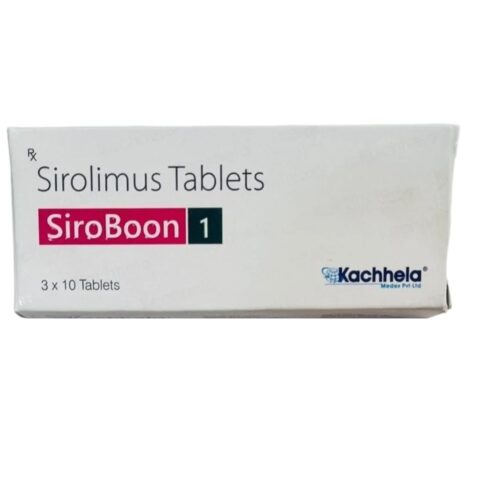
Sirolimus 1 mg Tablet
Sirolimus 1 mg Tablet contains sirolimus as its active ingredient and is listed by Milan Medicals as a prescription oral tablet, with 30 tablets per box.
The 1 mg strength may be relevant when a clinician is tailoring the total daily dose to a patient’s therapeutic target and clinical circumstances.
Importantly, tablet strength does not tell you what dose an individual patient should take.
Sirolimus dosing is individualized, and blood concentrations are monitored in appropriate patients.
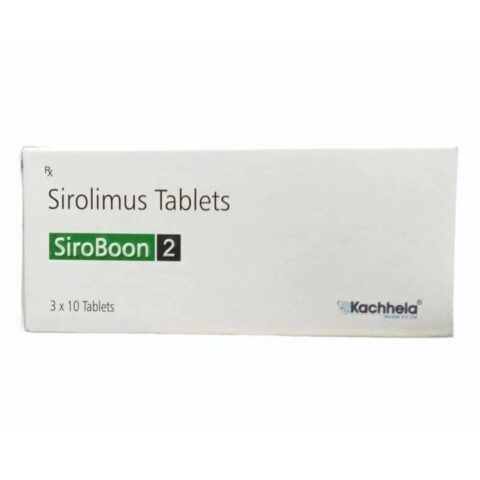
Sirolimus 2 mg Tablet
Sirolimus 2 mg Tablet is another commonly encountered strength.
Milan Medicals lists its 2 mg product as a prescription immunosuppressant containing sirolimus and identifies its primary specialist use as prevention of organ rejection following kidney transplantation.
The current U.S. prescribing information also identifies 2 mg as an established tablet strength. For patients with LAM, the recommended initial dose in U.S. labeling is 2 mg once daily, with subsequent adjustment based on sirolimus trough concentrations.
That does not mean that everyone with LAM or a transplant should take 2 mg. The appropriate dose depends on the medical indication and the prescribing specialist’s treatment plan.
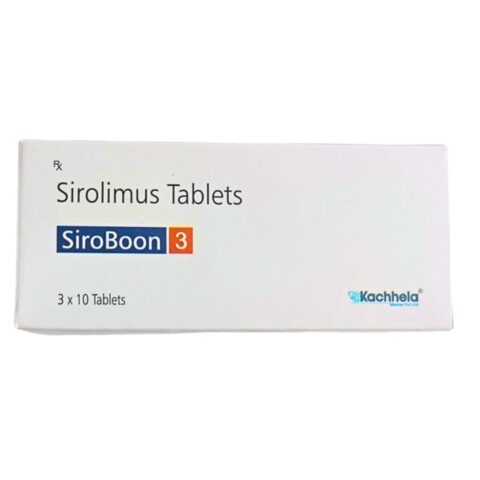
Sirolimus 3 mg Tablet
Milan Medicals lists Sirolimus 3 mg Tablet as a prescription product containing sirolimus.
There is, however, an important point for readers comparing international products with U.S. medicines.
Current U.S. labeling identifies 0.5 mg, 1 mg and 2 mg as sirolimus tablet strengths. A 3 mg product should therefore be evaluated according to its specific manufacturer, country of authorization, packaging and regulatory documentation.
In other words, don’t assume that the number printed on the tablet automatically tells you its U.S. regulatory status.
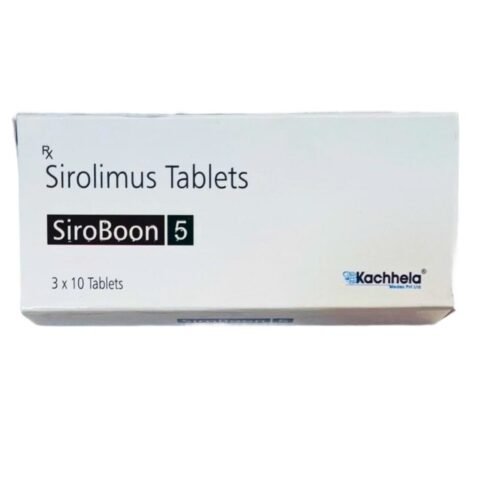
Sirolimus 5 mg Tablet
Sirolimus 5 mg Tablet is also listed by Milan Medicals as a prescription sirolimus product. The product page identifies it as containing sirolimus, also known as rapamycin, and describes its use in specialist immunosuppressive care.
Again, strength availability varies between markets.
Current U.S. labeling does not identify a 5 mg tablet as one of the standard U.S. tablet strengths. The U.S. prescribing information instead describes 0.5 mg, 1 mg and 2 mg tablets.
Therefore, patients using a 5 mg international formulation should follow the prescribing information applicable to that specific product and the instructions of their healthcare professional.
Why Blood-Level Monitoring Matters With Sirolimus
One of the most important things to understand about sirolimus is that treatment is not simply about choosing a tablet strength.
Therapeutic drug monitoring is an important part of treatment.
The amount of sirolimus in the bloodstream can be influenced by factors including other medicines, liver function, food intake and individual differences in drug metabolism.
For this reason, clinicians may measure sirolimus trough concentrations and adjust the maintenance dose accordingly. Current U.S. labeling recommends therapeutic drug monitoring for patients receiving sirolimus.
A higher-strength tablet is not automatically “better,” and changing from one strength to another without medical supervision can lead to excessive or inadequate drug exposure.
How Should Sirolimus Tablets Be Taken?
Current U.S. labeling instructs patients to take sirolimus tablets once daily and consistently either with food or without food. Switching repeatedly between fed and fasting administration can change exposure to the medicine.
The tablets should be swallowed according to the product instructions. Current U.S. labeling states that sirolimus tablets should not be crushed, chewed or split.
Patients should also follow the specific instructions provided with their prescription because formulations and approved labeling can differ by market.
Why Grapefruit Can Matter
Grapefruit and grapefruit juice can affect the metabolism of sirolimus and may increase drug exposure.
This is important because sirolimus has a relatively narrow therapeutic range, meaning that changes in blood concentrations can have clinical consequences.
Patients taking sirolimus should discuss grapefruit and other dietary or supplement interactions with their healthcare professional rather than assuming that a food or supplement is harmless.
Important Sirolimus Safety Considerations
Sirolimus is a powerful immunosuppressive medicine. Its benefits need to be balanced against potentially serious adverse effects.
The current U.S. prescribing information includes warnings concerning:
- Increased susceptibility to infections
- Possible development of lymphoma and other malignancies
- Hypersensitivity reactions
- Angioedema
- Fluid accumulation
- Impaired wound healing
- Hyperlipidemia
- Decline in renal function
- Proteinuria
- Latent viral infections
- Interstitial lung disease or non-infectious pneumonitis
- Pregnancy-related fetal risk
- Potential effects on fertility
These risks are why sirolimus should be managed by clinicians experienced with the medicine and the condition being treated.
Sirolimus and Infection Risk
Immunosuppression is central to how sirolimus works — but it is also central to one of its major risks.
By suppressing aspects of immune function, sirolimus can increase susceptibility to infections.
Patients should tell their healthcare provider about symptoms such as persistent fever, unusual infections, respiratory symptoms or other signs of illness.
People receiving sirolimus should also discuss vaccinations with their healthcare team. Current U.S. labeling specifically warns against live vaccines during treatment.
Sirolimus and Wound Healing
Another important consideration is wound healing.
Sirolimus can interfere with wound-healing processes, which is particularly relevant around surgical procedures and transplantation.
This is one reason patients should always tell surgeons and other healthcare professionals that they are taking sirolimus before undergoing a procedure.
Sirolimus and Cholesterol
Changes in blood lipids are another recognized concern.
Sirolimus can contribute to elevated cholesterol and triglyceride levels, and lipid monitoring may therefore form part of ongoing care.
Depending on the patient’s overall health and treatment plan, clinicians may recommend laboratory testing and additional management.
Can Sirolimus Affect Kidney Function?
Sirolimus is used in kidney-transplant medicine, but that does not mean it has no potential renal effects.
The prescribing information includes warnings concerning decline in renal function and proteinuria.
For transplant recipients, kidney function is already a major part of clinical follow-up, making regular laboratory monitoring especially important.
Sirolimus and Pregnancy
Sirolimus requires particular attention in people who are pregnant or planning pregnancy.
Current U.S. labeling warns that sirolimus can cause fetal harm based on animal data and recommends highly effective contraception for females of reproductive potential during treatment and for a specified period after the final dose. The labeling also notes potential effects on fertility in both females and males.
Anyone who is pregnant, planning pregnancy, breastfeeding or considering fertility treatment should discuss sirolimus with their healthcare professional before making changes to treatment.
Sirolimus Drug Interactions: Why the Medication List Matters
Sirolimus is metabolized through pathways that are affected by a number of medicines.
Strong inhibitors or inducers of CYP3A4 and P-glycoprotein can significantly alter sirolimus concentrations.
This means patients should provide their healthcare team with a complete list of:
- Prescription medicines
- Over-the-counter medicines
- Vitamins
- Herbal products
- Dietary supplements
- Other immunosuppressants
Do not start or stop another medicine without checking for potential interactions when taking sirolimus.
Sirolimus vs Rapamune: Are They the Same?
This is a common source of confusion.
Sirolimus is the generic name of the active drug.
Rapamune is a branded product containing sirolimus.
Generic sirolimus products can be available from different manufacturers and in different markets, but a specific product should not automatically be assumed to have the same regulatory status, labeling or formulation as a branded product without checking the applicable authorization.
The Milan Medicals product pages identify their listed products as sirolimus tablets and identify Kachhela as the manufacturer/trademark on the pages reviewed.
Where Do the 1 mg, 2 mg, 3 mg and 5 mg Products Fit?
It is tempting to think of tablet strengths as a simple ladder:
1 mg → 2 mg → 3 mg → 5 mg = increasingly stronger treatment.
But that is not how sirolimus therapy should be understood.
The correct dose depends on the clinical indication, therapeutic target, blood concentration, other medicines, organ function and individual patient factors.
A 5 mg tablet is not inherently “better” than a 1 mg tablet. It simply contains a different amount of the active ingredient.
For transplant patients in particular, dosing is guided by therapeutic drug monitoring rather than by the strength that sounds strongest.
Frequently Asked Questions About Sirolimus Tablets
What is sirolimus tablet used for?
In current U.S. labeling, sirolimus tablets are indicated for prevention of organ rejection in certain patients receiving renal transplants and for treatment of lymphangioleiomyomatosis.
Is sirolimus the same as rapamycin?
Yes. Rapamycin is another name for sirolimus.
Is sirolimus an immunosuppressant?
Yes. Sirolimus suppresses aspects of immune activity and belongs to the mTOR inhibitor class of immunosuppressants.
What is the difference between sirolimus 1 mg and 2 mg?
The tablets contain different amounts of the same active ingredient. The appropriate strength depends on the prescribed regimen and therapeutic drug monitoring; patients should not change strengths on their own.
What is sirolimus 3 mg used for?
Milan Medicals lists a 3 mg sirolimus tablet, but current U.S. labeling does not identify 3 mg as a standard U.S. tablet strength. The specific product, manufacturer and market authorization should therefore be verified before discussing its use as a particular approved formulation.
What is sirolimus 5 mg used for?
Milan Medicals lists a 5 mg sirolimus tablet. Current U.S. labeling identifies 0.5 mg, 1 mg and 2 mg tablets, so a 5 mg product should be evaluated according to its specific market authorization and prescribing information rather than assumed to be a standard U.S. tablet strength.
Does sirolimus require blood tests?
Therapeutic drug monitoring is recommended for patients receiving sirolimus, with dosing adjusted according to blood concentrations and clinical circumstances.
Can I change from 1 mg to 2 mg myself?
No. Sirolimus dosing should be determined by the prescribing clinician. Changing the dose can alter blood concentrations and the balance between effectiveness and toxicity.
Can sirolimus be used without medical supervision?
No. Sirolimus is a prescription immunosuppressant with potentially serious adverse effects, clinically important interactions and a need for therapeutic drug monitoring.
The Bigger Picture: Why Sirolimus Remains Important
Sirolimus has an unusual place in modern medicine.
It is an established immunosuppressant with a well-defined role in kidney transplantation and an important treatment option for lymphangioleiomyomatosis.
At the same time, its mTOR mechanism has generated extensive scientific interest in areas beyond its established indications.
That research is worth watching — but research interest should not be confused with approved clinical use.
For patients, the most important point remains straightforward:
The Takeaway
Sirolimus tablets are an important part of specialist medicine, particularly in renal-transplant immunosuppression and the treatment of lymphangioleiomyomatosis.
Its distinctive mechanism as an mTOR inhibitor separates it from traditional calcineurin inhibitors and helps explain why it continues to have an important role in selected patients.
Milan Medicals currently lists sirolimus tablets in 1 mg, 2 mg, 3 mg and 5 mg strengths. However, tablet strengths vary by market, and current U.S. labeling identifies 0.5 mg, 1 mg and 2 mg tablets. The 3 mg and 5 mg products should therefore be evaluated based on their specific manufacturer and regulatory authorization rather than assumed to be U.S.-approved strengths.
Most importantly, sirolimus treatment depends on individualized dosing, therapeutic drug monitoring, interaction management and regular medical follow-up.
The goal is not simply to find the highest or lowest tablet strength.
The goal is to use the appropriate formulation and dose for the specific medical situation — safely and under qualified medical supervision.
Medical Disclaimer:
This article is for general educational purposes and does not replace medical advice, diagnosis or treatment from a qualified healthcare professional. Sirolimus is a prescription immunosuppressive medicine that can cause serious adverse effects and interact with other medicines. Do not start, stop or change your sirolimus dose without guidance from your prescribing clinician. Product availability, formulations, indications and regulatory status can vary by country.