Most skin creams try to give colour back. This one takes the rest away. Monobenzone is a prescription depigmenting medicine: a cream that permanently removes pigment from healthy skin, used in one very specific situation, when vitiligo has already taken most of a person’s colour and the patches that remain are the part that stands out. It is not a lightener, not a “glow” product, and not something you can undo.
If you have landed here, you have probably seen the word next to “whitening” or “bleaching” and wondered what you were looking at. Fair enough. It is one of the most misunderstood creams in dermatology, so let’s go through it the way you would in a doctor’s waiting room: one blunt question at a time. I will put the facts on the table, say the uncomfortable parts out loud, and explain what the 20%, 40% and 60% strengths actually mean.
Key takeaways
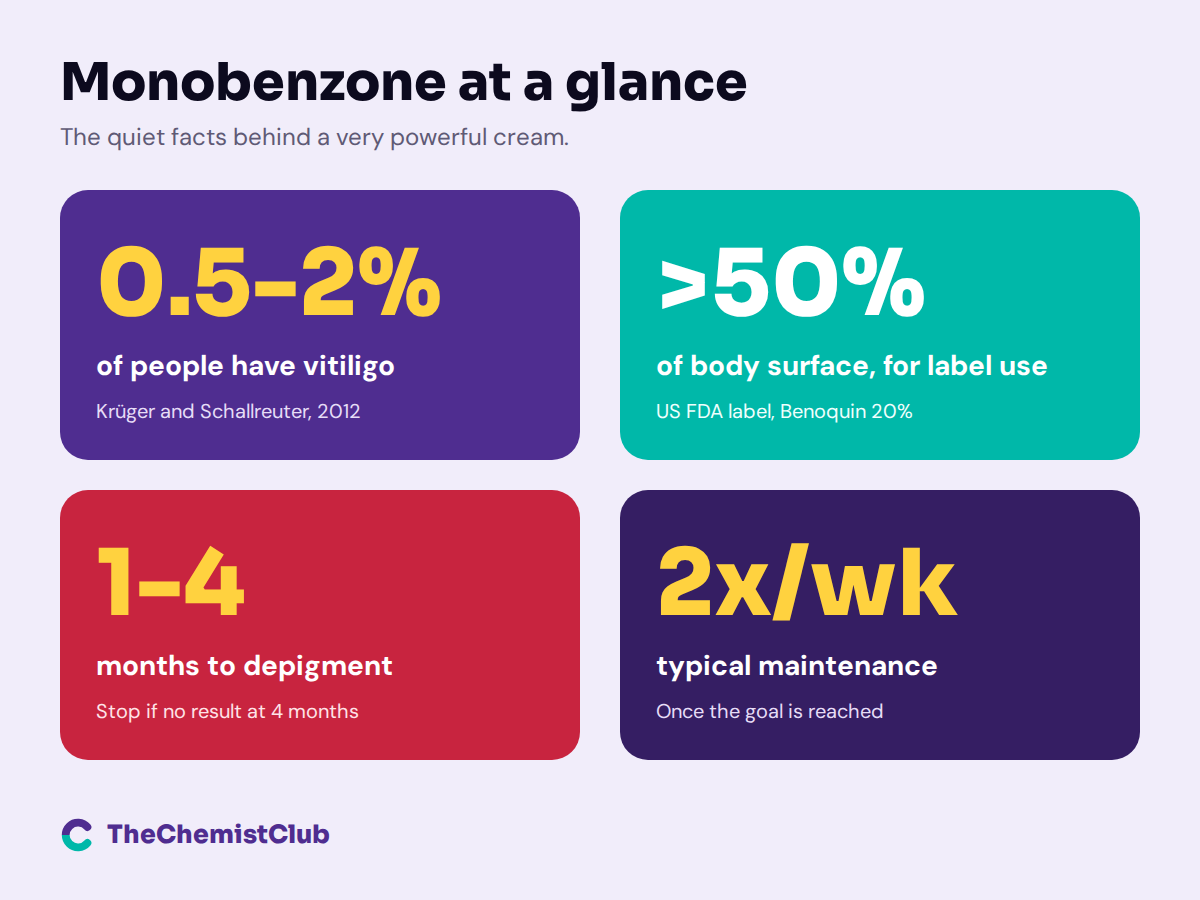
Monobenzone is used to permanently depigment the remaining normal skin in people with extensive vitiligo, usually more than 50% of the body surface (US FDA label). It works by destroying pigment cells, so the result is generally irreversible. The FDA-labelled strength is 20%; 40% and 60% are used in some countries under specialist direction, with far less published evidence. It is not a cosmetic skin bleach. Use it only under a dermatologist’s guidance.
In this article
- Is monobenzone a skin whitener?
- So who is it actually for?
- What is the cream actually doing to your skin?
- 20%, 40% or 60%: does a stronger cream mean a better result?
- How long until you see a change, and when does it stop?
- What can go wrong?
- Is choosing to lose your colour a loss, or a relief?
- How do you use monobenzone safely?
- Can you just order it online?
- Quick answers to the questions people ask most
- The bottom line
Is monobenzone a skin whitener?
Let’s start with the question most people arrive with, because the answer matters more than anything else in this article: no, it is not.
The US label for the original 20% brand, Benoquin, calls it a potent depigmenting agent and says plainly that it is not a cosmetic skin bleach. Chemically, monobenzone is the monobenzyl ether of hydroquinone. A lightening cream slows down pigment production for a while. Monobenzone goes further: it is thought to destroy the pigment-making cells (melanocytes) in the skin it touches. Under the microscope, the skin that results looks like vitiligo skin, with a normal epidermis and no identifiable melanocytes.
It is not a new idea either. A published case report notes that the US FDA has approved it since 1952 for permanent depigmentation in extensive vitiligo. It has stayed in use for seventy years for one reason: for some people, it is the only option left.
Did you know? Some countries restrict it heavily. The Netherlands, for example, has limited its use since 1990, because the effect is permanent.
So who is it actually for?
Almost always, one group of people: adults with widespread vitiligo.
Vitiligo is an autoimmune condition in which the body destroys its own melanocytes, leaving white patches. Reviews put worldwide prevalence at roughly 0.5% to 2% of people (Krüger and Schallreuter, International Journal of Dermatology, 2012). Most people with vitiligo have patches they can treat or live with. A smaller group has lost so much colour that the remaining normal skin is now the odd patch out.
For that group, the logic flips. Once more than about half the body is affected, restoring pigment becomes very difficult, so the aim changes: instead of putting colour back, you even out the skin tone by removing the rest. Your doctor will usually want you to try the repigmentation route first, with strong topical steroids, calcineurin inhibitors such as tacrolimus, and light therapy. Even the usual first choice, strong topical steroids, repigments only about 50% to 75% of the time according to one published review. Depigmentation tends to come into the conversation when those options have failed or are no longer realistic.
Warning: The label says monobenzone is contraindicated in any condition other than disseminated vitiligo. It must not be used for melasma, dark spots, freckles, uneven tone or general skin lightening. It must not be used as a substitute for hydroquinone, because monobenzone often causes irreversible loss of colour.
What is the cream actually doing to your skin?
Here is the short version. Melanocytes use an enzyme called tyrosinase to make pigment. Monobenzone is converted by that same enzyme into reactive compounds that damage the cell from the inside. Researchers describe oxidative stress, the breakdown of the cell’s pigment-making machinery, and an immune response aimed at melanocytes.
In some people, the effect does not stay where the cream was applied. That is where the surprises come from, and we will get to them in the side effects section.
You also should not expect overnight results. The label notes that the effect is erratic and usually takes one to four months, because the existing pigment has to be shed with the normal turnover of the top layer of skin before the change becomes visible.
20%, 40% or 60%: does a stronger cream mean a better result?
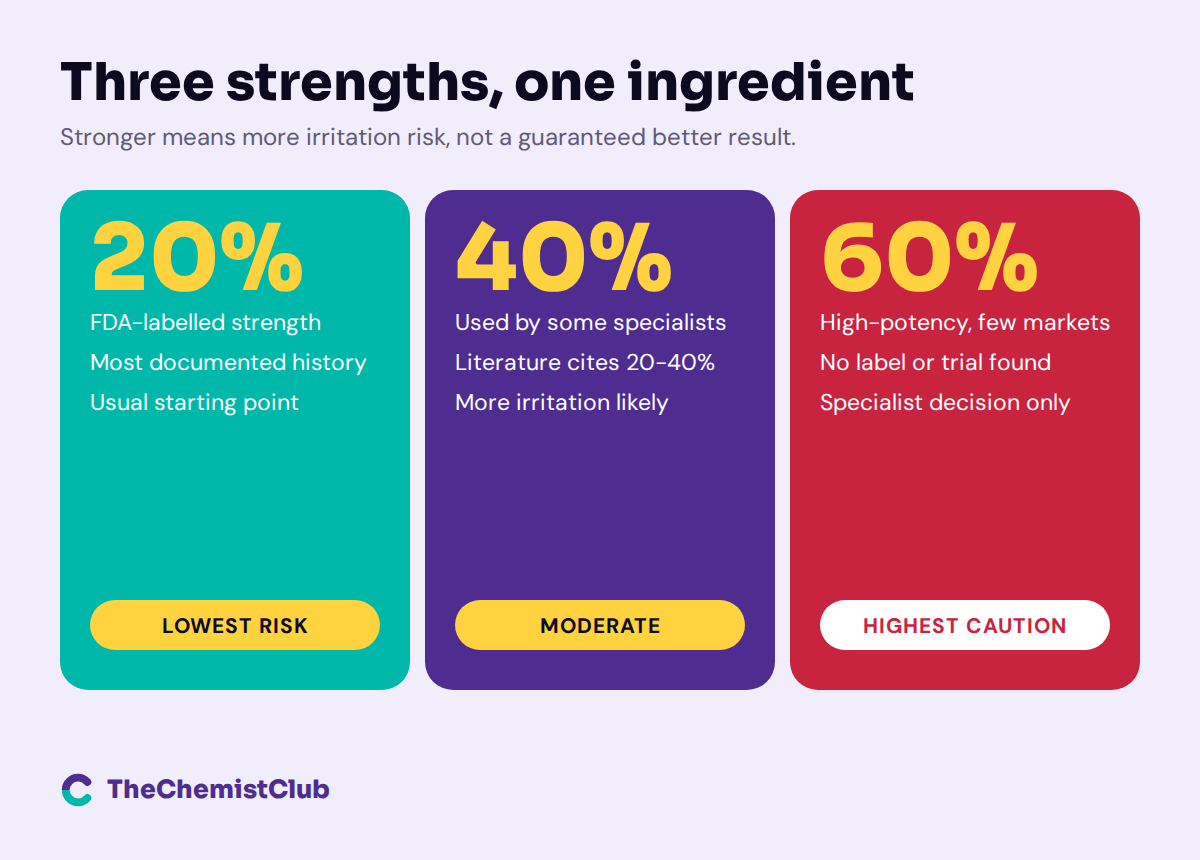
Not automatically. Stronger is faster and rougher, not better. Here is the honest picture of each:
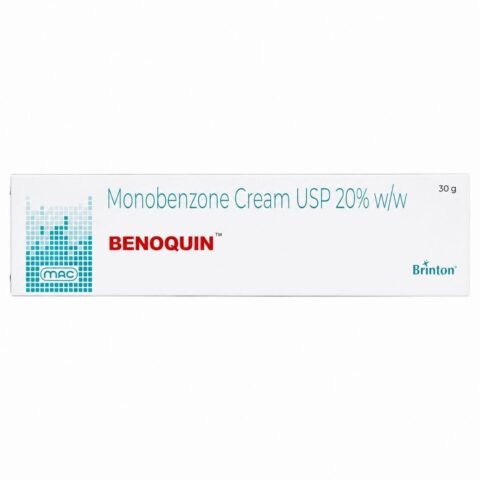
- 20%: the strength on the original FDA label and the one with the most documented history. It is the usual starting point. Monobenzone 20% cream
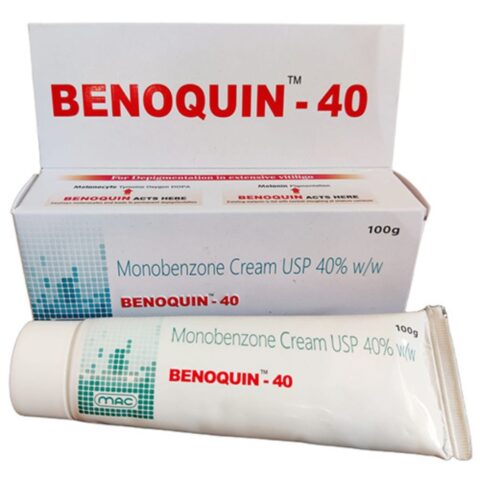
- 40%: used by some specialists, and literature on depigmentation describes concentrations of 20% to 40% in practice. Expect a higher chance of irritation and redness. Monobenzone 40% cream
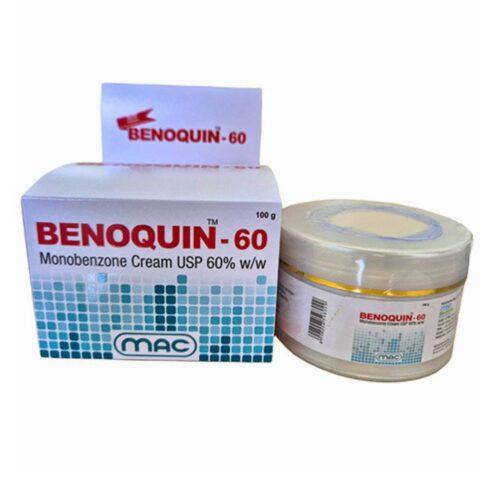
- 60%: a high-potency preparation sold in some markets. I could not find an FDA label or published clinical trial that supports 60% as a standard dose, so this is a specialist decision, not a starting point. Monobenzone 60% cream
Note: Even the clinical literature admits a gap. A case-based review in a dermatology journal points out that there are few recent studies comparing monobenzone concentrations, and an earlier large study found responses to be erratic. If anyone tells you a particular strength is “best”, they are guessing.
How long until you see a change, and when does it stop?
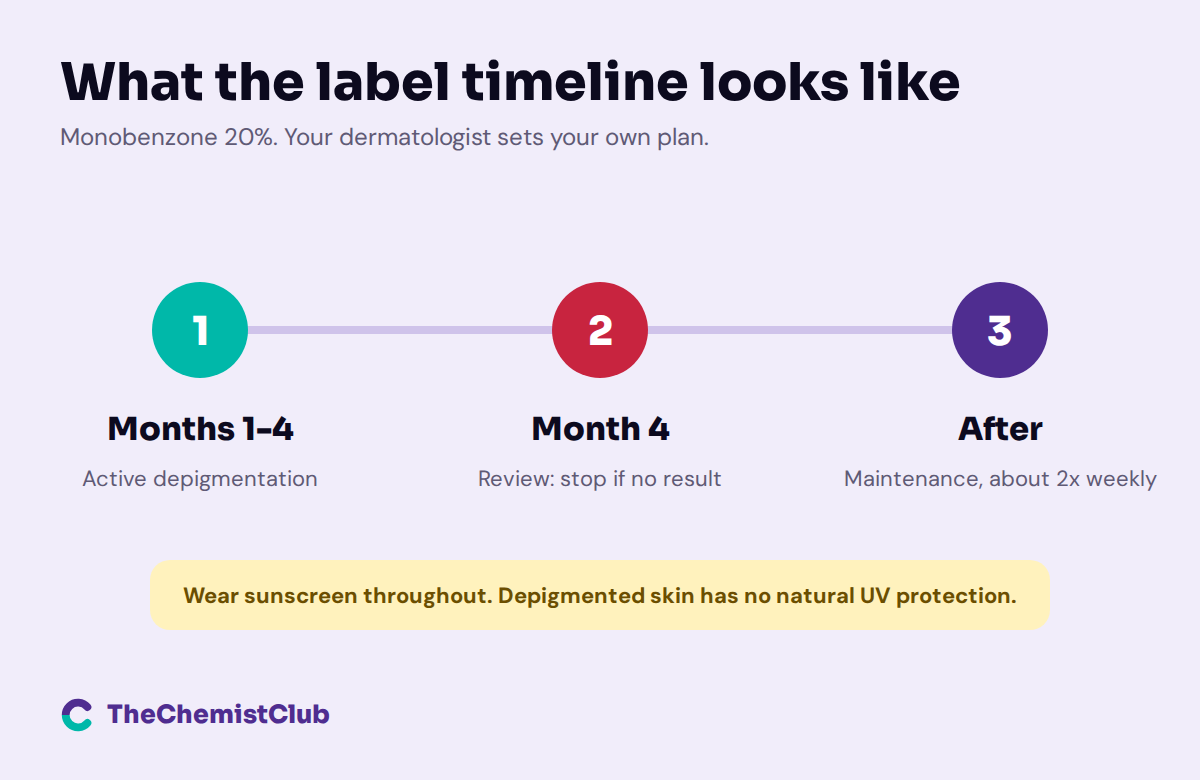
Using the US label as the reference, this is what the treatment usually looks like. Your doctor may give you a different schedule, and theirs is the one to follow.
- Application: a thin layer rubbed into the pigmented area, two or three times a day, or as directed.
- Time to effect: depigmentation is usually achieved within one to four months.
- The cut-off: if results are not satisfactory after four months, the label says to stop.
- Maintenance: once you reach the result you wanted, you apply the cream only as often as needed to maintain it, usually about twice a week.
Tip: Before you start, ask your doctor what “success” will look like for you and when the two of you will review progress. Agreeing the finish line in advance is the best protection against over-treating.
What can go wrong?
Quite a lot, which is exactly why this is a specialist medicine. You should know the full list before you begin, not after.
- Irritation and dermatitis: burning, redness or eczema-like reactions. The label says to discontinue if irritation, burning or dermatitis occurs.
- Depigmentation away from where you applied it: the label warns that areas of normal skin distant from the application site may lose colour, sometimes irregularly and permanently.
- Permanence: the change is considered irreversible. Spontaneous repigmentation of vitiligo patches can still happen, which can mean further treatment cycles.
- Sun sensitivity: depigmented skin has no pigment defence. The label says to avoid sun exposure or use sunscreen during treatment, and many dermatologists recommend a broad-spectrum SPF 30+ indefinitely afterwards.
- Other reported effects: reviews also list ocular side effects and exogenous ochronosis (a bluish-black discolouration).
- Contact with other people: because the cream can depigment skin it touches, careful handwashing and avoiding prolonged skin-to-skin contact with the treated area, especially with children, is standard advice. Ask your doctor for specifics.
- Unknown long-term cancer risk: the label states that no long-term studies have been done to evaluate carcinogenic potential.
Remember: Monobenzone is also a known cause of “chemical vitiligo” when people are exposed to it by accident, for example through certain products. That is how powerful the effect is.
Is choosing to lose your colour a loss, or a relief?
This is the part of the story that the data cannot settle for you, and sincere people land on opposite sides.
Many dermatologists, and many patients with extensive vitiligo, describe depigmentation as the first treatment that gave them an even, predictable appearance after years of patchy skin. For them it was a way out of daily camouflage make-up. Patient advocates and some clinicians make the other case: that a medicine whose effect cannot be reversed deserves a longer cooling-off period, proper counselling, and an honest conversation about identity, especially for people of colour, for whom skin tone is part of how they see themselves. Some people regret it. Many do not.
My own position is simple. It is a legitimate and valuable option when the alternatives have run out, and it should be a slow, informed decision, never an impulse. The right answer is the one you will still be comfortable with in five years.
How do you use monobenzone safely?
If you and your dermatologist decide to go ahead, these are the steps that protect you most:
- See a dermatologist first. Get the diagnosis confirmed and the extent of your vitiligo measured. Treatments that restore colour usually come first.
- Ask about a patch test. Trying it on a small area first is common practice, and it reveals sensitivity before you commit.
- Follow the schedule exactly. More cream does not mean faster results, only more irritation.
- Protect your skin from the sun. Sunscreen daily, hats, shade.
- Keep the cream away from other people and from your eyes and mouth. Wash your hands after use.
- Stop and call your doctor if you have blistering, severe burning or an unexpected spread of white patches.
- Keep your follow-ups. Review at the point your doctor chooses, and no later than the label’s four-month mark.
Can you just order it online?
Only through a licensed pharmacy, with a valid prescription, and from a seller who will tell you where the product comes from. This is a potent drug and plenty of look-alike creams exist: the WHO estimates that around 1 in 10 medical products in low- and middle-income countries is substandard or falsified.
So before you accept a tube, check that the strength printed on it matches what your doctor prescribed (20%, 40% or 60%), that the packaging is sealed, and that the expiry date and batch number are visible. Be wary of any site that sells it as a “whitening cream” or never asks you for a prescription.
Our pharmacists can check your prescription and help you compare options. You can upload your prescription, explore the Patient Assistance Program, or talk to a pharmacist. To see the strengths, open 20%, 40% or 60%.
Quick answers to the questions people ask most
Is monobenzone the same as hydroquinone?
No. Hydroquinone is a lightener that generally fades pigment temporarily. Monobenzone, a chemical relative, can destroy melanocytes and cause permanent loss of colour, which is why it must never be used as a hydroquinone substitute.
Is the depigmentation permanent?
It is considered irreversible in the treated skin, because the pigment cells are destroyed. Vitiligo patches can sometimes repigment on their own, so some people need further treatment.
Can I use monobenzone for dark spots or melasma?
No. The label contraindicates it for any condition other than disseminated vitiligo, and using it on dark spots can leave you with permanent white patches.
How long does monobenzone take to work?
Usually one to four months. The US label says to stop if results are not satisfactory after four months.
Is 40% or 60% better than 20%?
Not necessarily. Higher strengths may act faster but they raise the risk of irritation, and published evidence is strongest for 20%. Start with the strength your doctor chooses.
Can monobenzone spread to other people?
It can. Skin contact with treated areas may transfer enough medicine to affect another person’s skin, particularly a child’s. Wash your hands and ask your doctor how to avoid contact.
Does it cause skin cancer?
The label states that no long-term carcinogenicity studies have been done, so the risk is not established. Depigmented skin is more vulnerable to UV damage, which is why sun protection matters.
The bottom line
Monobenzone is a powerful, honest tool for a narrow job. If you have extensive vitiligo, it can end years of patchiness. If you do not, it is a quick route to permanent, unwanted white skin. What separates the two outcomes is a diagnosis, a conversation with a dermatologist, and patience.
Key takeaways
Confirm your diagnosis. Exhaust repigmentation options first. Start with the lowest effective strength. Protect your skin from the sun for life. Never use it as a whitening cream. Buy only genuine product from a licensed pharmacy, with a prescription.
Now it’s your turn. Have you used a depigmenting treatment, or are you weighing one right now? Tell us your story and, with your permission, we may feature it in a future piece.
General information only. This article is for education and is not medical advice. Monobenzone should only be used under the direction of a dermatologist or other qualified doctor.
Sources and further reading
- US FDA, Benoquin Cream 20% (monobenzone) prescribing label, accessdata.fda.gov
- Drugs.com, Benoquin professional monograph, drugs.com/pro/benoquin.html
- AHFS Drug Information, Monobenzone monograph (American Society of Health-System Pharmacists)
- Krüger C, Schallreuter KU, “A review of the worldwide prevalence of vitiligo in children/adolescents and adults,” International Journal of Dermatology (2012)
- Rordam OM, Lenouvel EW, Maalo M, “Successful Treatment of Extensive Vitiligo with Monobenzone,” Journal of Clinical and Aesthetic Dermatology
- Monobenzone case report and review, PubMed Central, PMC3533321
- “Depigmentation therapy in vitiligo,” IntechOpen, open access chapter 69638
- Al Qassimi Hospital, “Monobenzone is still the main culprit of chemical vitiligo,” Journal of Pakistan Association of Dermatologists (2023)
- World Health Organization, substandard and falsified medical products fact sheet, who.int