Dapagliflozin 5 mg vs 10 mg: What’s the Difference?
A practical guide to dapagliflozin tablets, SGLT2 inhibition, diabetes, heart failure, kidney disease, dosing, and important safety considerations.
When people hear dapagliflozin, they may immediately think of diabetes. But this medicine has become an important part of treatment discussions involving much more than blood glucose alone.
Dapagliflozin belongs to a class of medicines called sodium-glucose cotransporter 2 (SGLT2) inhibitors. By changing how the kidneys handle glucose and sodium, it can influence blood glucose, fluid balance, heart-failure outcomes, and kidney-disease outcomes.
That also raises an important question: what is the difference between dapagliflozin 5 mg and 10 mg?
The answer is not simply that 10 mg is “stronger.” The appropriate strength depends on the indication, the patient’s kidney function, and the prescribing information applicable to that patient.
Quick Facts About Dapagliflozin
- Generic name: Dapagliflozin
- Drug class: SGLT2 inhibitor
- Dosage form: Oral tablet
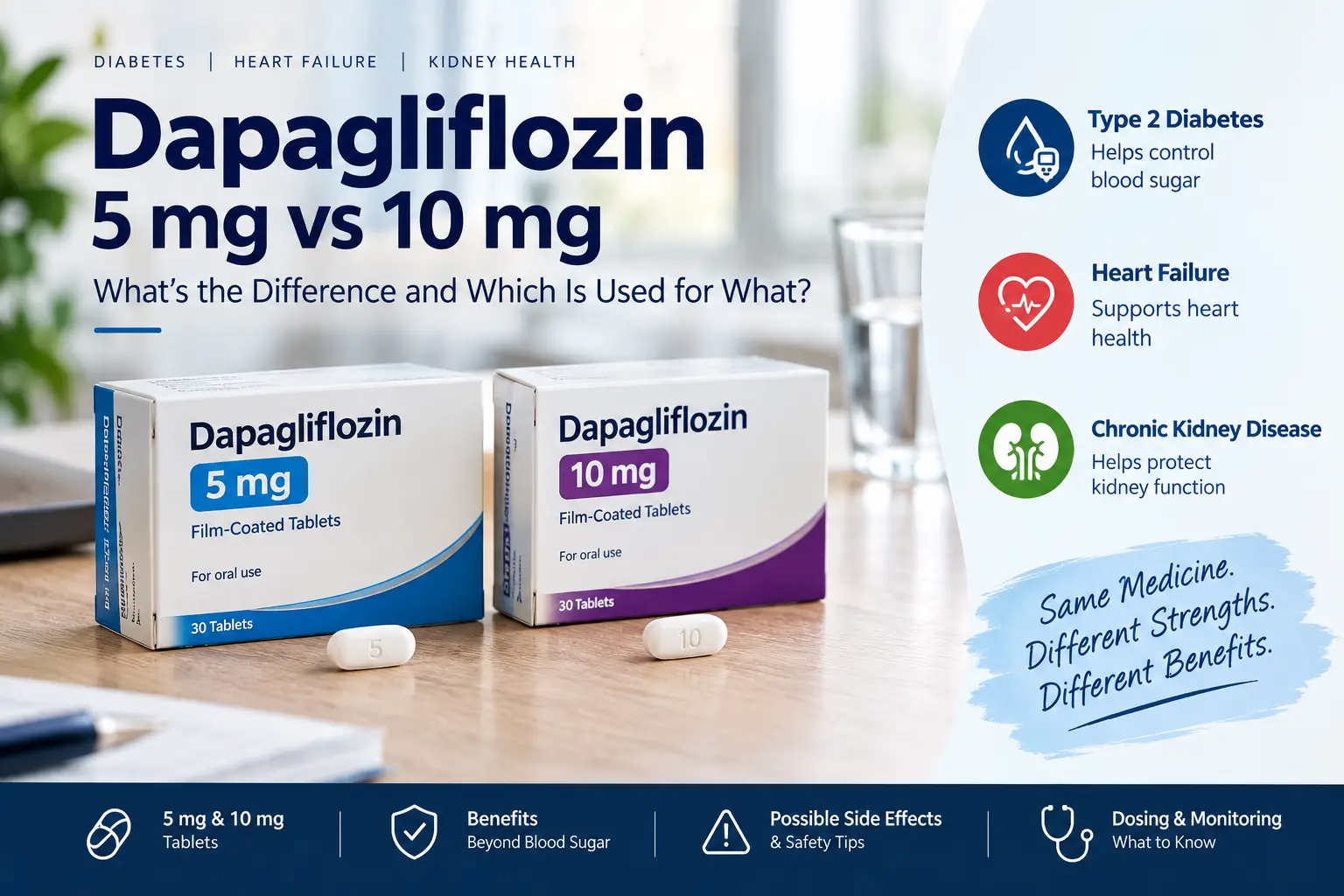
- Common tablet strengths: 5 mg and 10 mg
- Administration: Once daily
- Major therapeutic areas: Type 2 diabetes, heart failure, and chronic kidney disease
- Prescription status: Prescription medicine
Current U.S. prescribing information lists dapagliflozin tablets in 5 mg and 10 mg strengths. For glycemic control, the recommended starting dose is 5 mg once daily, with an increase to 10 mg once daily when additional glycemic control is needed. For the other adult indications described in the label, the recommended dose is 10 mg once daily.
What Is Dapagliflozin?
Dapagliflozin is an oral medication that inhibits SGLT2, a protein responsible for reabsorbing glucose and sodium in the kidneys.
Normally, the kidneys filter glucose from the blood and then reabsorb much of it. Dapagliflozin reduces SGLT2-mediated reabsorption, increasing urinary glucose excretion.
This mechanism helps explain why dapagliflozin can lower blood glucose in people with type 2 diabetes while also producing effects relevant to fluid balance and kidney physiology.
The current FDA label describes dapagliflozin as an SGLT2 inhibitor indicated for several adult cardiovascular and kidney outcomes, as well as glycemic control in adults and pediatric patients aged 10 years and older with type 2 diabetes.
What Is Dapagliflozin Used For?
1. Type 2 Diabetes
Dapagliflozin can be used alongside diet and exercise to improve glycemic control in people with type 2 diabetes.
Under current U.S. labeling, the starting dose for glycemic control is 5 mg once daily. If additional glycemic control is required, the dose may be increased to 10 mg once daily.
It is important to remember that dapagliflozin is not intended to replace an individualized diabetes-management plan. Diet, physical activity, other diabetes medicines, kidney function, and cardiovascular risk can all influence treatment decisions.
2. Heart Failure
Dapagliflozin is also used in adults with heart failure. Current FDA labeling states that dapagliflozin can reduce the risk of cardiovascular death, hospitalization for heart failure, and urgent heart-failure visits in adults with heart failure.
This is one reason SGLT2 inhibitors have become important in modern heart-failure management: their role extends beyond glucose lowering.
3. Chronic Kidney Disease
Dapagliflozin has an established role in adults with chronic kidney disease who are at risk of progression.
According to the current FDA label, dapagliflozin is indicated to reduce the risk of sustained eGFR decline, end-stage kidney disease, cardiovascular death, and hospitalization for heart failure in adults with chronic kidney disease at risk of progression.
However, not every person with reduced kidney function should automatically take dapagliflozin. The indication, eGFR, underlying kidney condition, and other clinical factors need to be considered.
Dapagliflozin 5 mg vs 10 mg: What’s the Difference?
This is one of the most common questions surrounding dapagliflozin tablets.
| Strength | Typical role in current U.S. labeling | Important point |
|---|---|---|
| 5 mg | Starting dose for glycemic control in type 2 diabetes | May be increased to 10 mg when additional glycemic control is needed |
| 10 mg | Glycemic control when additional effect is needed; recommended dose for several adult heart-failure and CKD indications | Not simply a “better” version of 5 mg; indication matters |
Current FDA labeling specifies 10 mg once daily for the adult heart-failure and chronic-kidney-disease indications described above, while 5 mg is the starting dose for glycemic control.
The right dapagliflozin dose is determined by what the medicine is being prescribed to treat—not simply by choosing the highest available tablet strength.
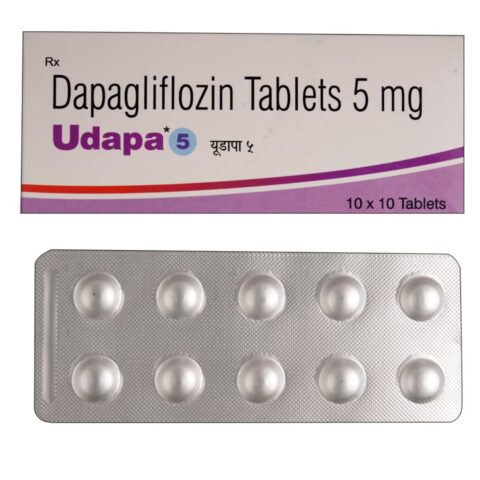
Dapagliflozin 5 mg Tablet
Dapagliflozin 5 mg is the lower of the two commonly marketed tablet strengths.
For glycemic control in adults and pediatric patients aged 10 years and older with type 2 diabetes, current U.S. labeling recommends 5 mg once daily as the starting dosage. If additional glycemic control is required, the dosage can be increased to 10 mg once daily.
The 5 mg strength may therefore be particularly relevant when treatment is being initiated for glycemic control and the prescriber wants to begin at the labeled starting dose.
It should not, however, be assumed that 5 mg is the appropriate dose for every indication. For several adult heart-failure and CKD indications, the labeled dose is 10 mg once daily.
Product reference: Dapagliflozin 5 mg Tablet from the supplied Milan Medicals product range.
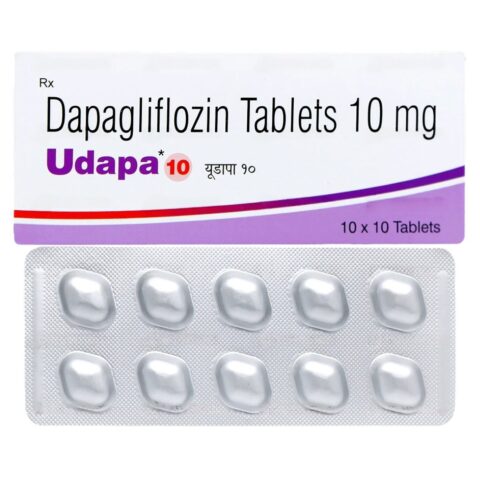
Dapagliflozin 10 mg Tablet
Dapagliflozin 10 mg is the higher commonly available tablet strength.
For type 2 diabetes, it may be used when additional glycemic control is required after the 5 mg starting dose. The 10 mg dose is also the recommended adult dose in current U.S. labeling for the specified heart-failure and chronic-kidney-disease indications.
That distinction is important because a patient taking 10 mg may not necessarily be taking it simply because their blood glucose requires more treatment. The medication may instead be prescribed for a cardiovascular or renal indication.
Product reference: Dapagliflozin 10 mg Tablet from the supplied Milan Medicals product range.
How Does Dapagliflozin Work?
Dapagliflozin targets SGLT2 in the kidney’s proximal tubule.
Blocking SGLT2 reduces the reabsorption of filtered glucose and sodium. More glucose is therefore eliminated through urine.
The resulting physiological effects go beyond glucose excretion. Changes in sodium handling and fluid balance are part of the reason SGLT2 inhibitors have clinical relevance in heart failure and chronic kidney disease as well as diabetes.
The mechanism also explains some of the medicine’s safety considerations. Increased urinary glucose excretion can contribute to genital fungal infections and urinary tract infections, while fluid losses can contribute to volume depletion or hypotension in susceptible patients.
Does Dapagliflozin Lower Blood Sugar?
Yes. Dapagliflozin can improve glycemic control in people with type 2 diabetes by increasing urinary glucose excretion.
However, its glucose-lowering effect depends partly on kidney function. Current U.S. labeling states that dapagliflozin is not recommended for improving glycemic control in type 2 diabetes when eGFR is below 45 mL/min/1.73 m² because it is likely to be ineffective for this purpose based on its mechanism.
This does not mean that dapagliflozin has no role in people with reduced kidney function. Its approved kidney and heart-failure indications have separate dosing considerations.
Dapagliflozin and Kidney Health
The relationship between dapagliflozin and the kidneys can initially seem confusing.
The medicine acts in the kidney, yet it is also used to help reduce the risk of important kidney outcomes in selected patients with chronic kidney disease.
Current FDA labeling specifically recognizes a role for dapagliflozin in reducing the risk of sustained eGFR decline and end-stage kidney disease, along with cardiovascular death and hospitalization for heart failure, in adults with CKD at risk of progression.
There are nevertheless important limitations. The current label does not recommend dapagliflozin for CKD associated with polycystic kidney disease or for patients requiring or recently receiving immunosuppressive therapy for treatment of kidney disease because it is not expected to be effective in those populations.
Important Dapagliflozin Safety Considerations
Diabetic Ketoacidosis
One of the most important warnings associated with SGLT2 inhibitors is ketoacidosis.
Dapagliflozin is not recommended for glycemic control in type 1 diabetes because of the increased risk of diabetic ketoacidosis. Importantly, ketoacidosis can occur even when blood glucose is not extremely high.
Symptoms can include nausea, vomiting, abdominal pain, generalized malaise, and shortness of breath. Anyone experiencing concerning symptoms should seek urgent medical assessment.
Volume Depletion
Because dapagliflozin increases urinary glucose and sodium excretion, it can contribute to volume depletion.
This may manifest as dizziness, low blood pressure, or changes in kidney function. Older adults, people with impaired renal function, people with low blood pressure, and those taking certain diuretics may require particular attention.
Genital and Urinary Infections
Increased glucose in the urine can increase the risk of genital mycotic infections and urinary tract infections.
More serious genitourinary infections, including urosepsis, pyelonephritis, and rare necrotizing infections of the perineum, have also been reported with SGLT2 inhibitors.
Hypoglycemia
Dapagliflozin itself does not carry the same hypoglycemia profile as insulin or insulin-secretagogue medicines. However, the risk of hypoglycemia can increase when dapagliflozin is used together with insulin or an insulin secretagogue such as a sulfonylurea.
In those circumstances, the prescriber may need to adjust the dose of the other glucose-lowering medicine.
What Are the Common Side Effects?
Side effects vary from person to person and depend on the clinical setting.
In adult placebo-controlled trials for glycemic control, commonly reported adverse reactions included female genital mycotic infections, nasopharyngitis, urinary tract infections, increased urination, male genital mycotic infections, nausea, and other events.
Increased urination can be an expected pharmacological effect because the medicine promotes urinary glucose excretion. However, new or severe symptoms should not simply be attributed to the medication without medical evaluation.
What Should Patients Know Before Taking Dapagliflozin?
Before starting treatment, clinicians generally consider several factors, including:
- Kidney function and eGFR
- Hydration and volume status
- Other diabetes medicines
- Use of insulin or sulfonylureas
- History of urinary or genital infections
- Risk factors for ketoacidosis
- Other medical conditions
- Pregnancy or plans for pregnancy
- Upcoming surgery or prolonged fasting
The current label recommends assessing renal function and volume status before initiation. It also advises withholding dapagliflozin for at least 3 days, if possible, before surgery or procedures associated with prolonged fasting, with resumption once the patient is clinically stable and has resumed oral intake.
Dapagliflozin and Pregnancy
Pregnancy requires particular consideration with dapagliflozin.
Current FDA labeling advises that the potential fetal risk should be considered, particularly during the second and third trimesters. The label also states that dapagliflozin is not recommended during breastfeeding.
Anyone who is pregnant, planning pregnancy, or breastfeeding should discuss dapagliflozin treatment with a qualified healthcare professional rather than changing therapy independently.
Dapagliflozin vs Other SGLT2 Inhibitors
Dapagliflozin belongs to the same broad drug class as other SGLT2 inhibitors, but individual medicines have their own approved indications, dosing recommendations, formulations, and labeling.
That means it is not appropriate to assume that two SGLT2 inhibitors are interchangeable on a milligram-for-milligram basis.
| Feature | Dapagliflozin |
|---|---|
| Drug class | SGLT2 inhibitor |
| Administration | Oral, once daily |
| Common strengths | 5 mg and 10 mg |
| Key therapeutic areas | Type 2 diabetes, heart failure, chronic kidney disease |
Why Are Both 5 mg and 10 mg Tablets Available?
Having multiple strengths allows treatment to be individualized according to the indication and the patient’s clinical situation.
For glycemic control, 5 mg provides the labeled starting dose, while 10 mg may be used when additional glycemic control is required. For the specified adult heart-failure and CKD indications, the recommended dose is 10 mg once daily.
This is why comparing 5 mg and 10 mg purely as “low dose versus high dose” misses an important part of the clinical picture.
Dapagliflozin Tablets: Product Options
Dapagliflozin 5 mg
A 5 mg dapagliflozin tablet option supplied in the product range referenced for this article.
Dapagliflozin 10 mg
A 10 mg dapagliflozin tablet option supplied in the product range referenced for this article.
Dapagliflozin Collection
The supplied composition page provides the dapagliflozin product category and related tablet options.
Product listings describe availability and product presentation; they should not by themselves be interpreted as evidence of regulatory approval in a particular country. Always verify the applicable manufacturer information, prescription requirements, and local regulatory status.
Frequently Asked Questions About Dapagliflozin
What is dapagliflozin 5 mg used for?
Dapagliflozin 5 mg is used as the recommended starting dose for glycemic control in adults and pediatric patients aged 10 years and older with type 2 diabetes under current U.S. labeling. The dose may be increased to 10 mg for additional glycemic control.
What is dapagliflozin 10 mg used for?
Dapagliflozin 10 mg may be used for glycemic control when additional treatment is needed. It is also the recommended adult dose for the specified heart-failure and chronic-kidney-disease indications in current U.S. labeling.
Can dapagliflozin be used for kidney disease?
Yes. Dapagliflozin has an FDA-approved indication to reduce the risk of important kidney and cardiovascular outcomes in adults with chronic kidney disease who are at risk of progression. The suitability of treatment depends on the specific kidney condition and renal function.
Is dapagliflozin only a diabetes medicine?
No. Although dapagliflozin is used to improve glycemic control in type 2 diabetes, its current approved uses also include specified heart-failure and chronic-kidney-disease indications in adults.
Does dapagliflozin cause more urination?
It can. Increased urinary glucose and sodium excretion is part of its mechanism of action, and increased urination has been reported among adverse reactions in clinical trials.
Can dapagliflozin cause low blood sugar?
Dapagliflozin can contribute to hypoglycemia particularly when combined with insulin or an insulin secretagogue. The risk should be assessed as part of the complete diabetes treatment regimen.
Can dapagliflozin be used in type 1 diabetes?
Current U.S. labeling does not recommend dapagliflozin for improving glycemic control in type 1 diabetes because of the increased risk of diabetic ketoacidosis.
Should dapagliflozin be stopped before surgery?
The current FDA label recommends withholding dapagliflozin for at least 3 days, if possible, before surgery or procedures associated with prolonged fasting. Treatment can be resumed when the patient is clinically stable and has resumed oral intake.
The Bigger Picture: Why Dapagliflozin Matters
Dapagliflozin illustrates how modern medicines are increasingly understood through more than one therapeutic endpoint.
Its pharmacological action begins in the kidney, but the clinical consequences can extend to blood glucose management, fluid balance, heart failure, and kidney disease.
At the same time, the medicine’s benefits have to be considered alongside clinically important risks such as ketoacidosis, volume depletion, and genitourinary infections.
That is why choosing between dapagliflozin 5 mg and 10 mg should not be approached as a simple question of which tablet is “stronger.” The indication, kidney function, concurrent medicines, and individual patient factors all matter.
The Takeaway
Dapagliflozin is an SGLT2 inhibitor with established roles in type 2 diabetes, heart failure, and chronic kidney disease.
Both 5 mg and 10 mg tablets are important strengths, but they do not represent a simple “better versus weaker” choice. Under current U.S. labeling, 5 mg is the starting dose for glycemic control, while 10 mg is used when additional glycemic control is needed and is the recommended adult dose for several heart-failure and CKD indications.
Because dapagliflozin affects kidney glucose and sodium handling, renal function, hydration, infection risk, ketoacidosis risk, and other medicines should all be considered as part of treatment.
Medical Disclaimer
This article is intended for general educational and informational purposes only. It does not replace professional medical advice, diagnosis, or treatment. Dapagliflozin is a prescription medicine and should be used only under the direction of a qualified healthcare professional. Dosing and approved indications may differ by country, product, patient age, kidney function, and regulatory labeling. Do not start, stop, or change dapagliflozin without discussing the decision with your healthcare professional.