
Oncology · Gynaecology · Hormone Therapy · 2026
Leuprolide Acetate Injection: The Complete Guide to Doses, Uses, and How It Works
From prostate cancer to endometriosis — how this GnRH agonist works, what each dose is used for, and what patients and families need to understand before treatment begins.
Informational guide · 8 minutes
Leuprolide acetate is one of the most widely used hormonal medicines in the world. It appears across oncology, gynaecology, and paediatric medicine — treating conditions as different as prostate cancer, endometriosis, uterine fibroids, and precocious puberty. Yet most patients prescribed it have only a partial picture of what it actually does and why.
This guide is the complete picture. How leuprolide works, what each dose strength is designed for, what to expect during treatment, and what the important side effects and monitoring requirements look like. Whether you’re a patient, a caregiver, or someone doing their research — this is the information that matters.
Quick facts
Drug Class
GnRH Agonist
Brand Names
Lupron Depot, Eligard
Administration
IM or subcutaneous injection
Dosing Intervals
Monthly, 3-month, 4-month, 6-month
Primary Effect
Suppresses sex hormone production
Prescription Status
Prescription only
Understanding the drug
What Is Leuprolide Acetate?
Leuprolide acetate is a GnRH agonist — a synthetic version of gonadotropin-releasing hormone, a natural hormone produced in the brain. It was first approved by the FDA in 1985 and remains one of the most clinically important hormonal agents in modern medicine.
It comes as a depot injection — a slow-release formulation that dissolves gradually at the injection site, releasing the drug steadily over weeks or months. This eliminates the need for daily dosing and maintains consistent therapeutic drug levels throughout the treatment interval.
What “depot” means
A depot injection is not a standard injection. The formulation contains microspheres — tiny biodegradable particles loaded with leuprolide — that form a slow-release reservoir at the injection site. The drug is released gradually over the entire dosing interval, maintaining consistent hormone suppression without repeated injections.
The mechanism
How Does Leuprolide Actually Work?
This is where leuprolide’s mechanism becomes genuinely counterintuitive — and important to understand.
GnRH is released naturally from the hypothalamus in pulses. These pulses tell the pituitary to release LH and FSH, which in turn stimulate the gonads to produce sex hormones — testosterone in men, oestrogen in women.
Leuprolide mimics GnRH — but instead of pulsing, it delivers a continuous, sustained signal. And that constant stimulation does something paradoxical: it causes the pituitary’s GnRH receptors to become desensitised and downregulated. The pituitary stops responding. LH and FSH levels fall. And without those signals, the gonads stop producing sex hormones.
Week 1 — Initial flare
In the first 1–2 weeks, leuprolide briefly stimulates hormone production before suppression kicks in. Testosterone or oestrogen levels rise temporarily. This is called the “flare effect” and is clinically managed — particularly important in prostate cancer, where anti-androgens are often co-prescribed for the first few weeks.
Weeks 2–4 — Suppression begins
Pituitary receptors downregulate. LH and FSH decline. Testosterone falls to castrate levels in men; oestrogen falls to post-menopausal levels in women.
Ongoing — Medical castration maintained
As long as treatment continues, hormone suppression is maintained. Many hormone-sensitive cancers depend on sex hormones for growth — removing them slows or stops progression. In non-cancer conditions, removing the hormonal driver relieves symptoms.
“The paradox of leuprolide is that it works by overstimulating the system until it switches off. More signal, ultimately, means less hormone.”
Approved uses
What Conditions Is Leuprolide Used For?
Leuprolide’s ability to suppress sex hormone production makes it therapeutically relevant across a range of hormone-dependent conditions — in both men and women.
| Condition | Who It Affects | Why Leuprolide Helps |
|---|---|---|
| Advanced Prostate Cancer | Men | Prostate cancer cells are fuelled by testosterone. Suppressing testosterone starves tumour growth. |
| Endometriosis | Women | Endometrial tissue outside the uterus is driven by oestrogen. Suppressing oestrogen reduces lesions and pain. |
| Uterine Fibroids | Women | Fibroids depend on oestrogen for growth. Leuprolide shrinks fibroids — often used pre-surgically. |
| Central Precocious Puberty (CPP) | Children | Puberty beginning abnormally early. Leuprolide pauses the hormonal axis until an appropriate age. |
| Breast Cancer | Women (premenopausal) | Hormone receptor-positive breast cancer requires oestrogen to grow. Ovarian suppression reduces this driver. |
| Gender-Affirming Care | Adolescents / adults | Used as puberty suppression in gender-dysphoric adolescents under specialist supervision. |
Understanding the doses
3.75mg, 11.25mg, 22.5mg, 45mg — What Each Dose Is For
The dose of leuprolide isn’t about strength in the conventional sense — it’s about the duration of release. Higher doses contain more drug to sustain the same level of hormone suppression over a longer interval. The clinical effect is equivalent across doses when matched to the right interval.
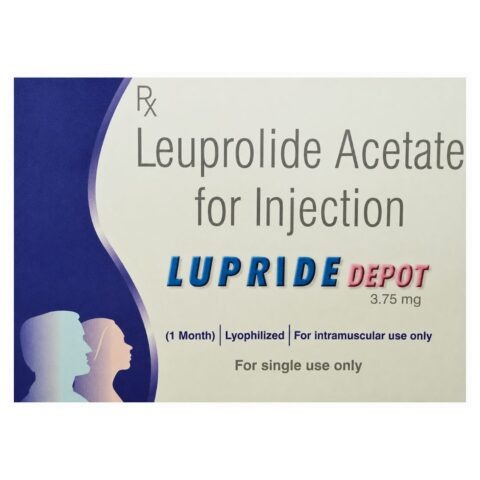
Monthly injection
Used for: Endometriosis (up to 6 months), uterine fibroids (up to 3 months, often pre-surgery), and as a starting dose in some prostate cancer protocols.
This is the most frequently used dose in gynaecological conditions. Monthly administration allows dose adjustments and closer monitoring, which is particularly useful early in treatment or when treatment duration is limited.
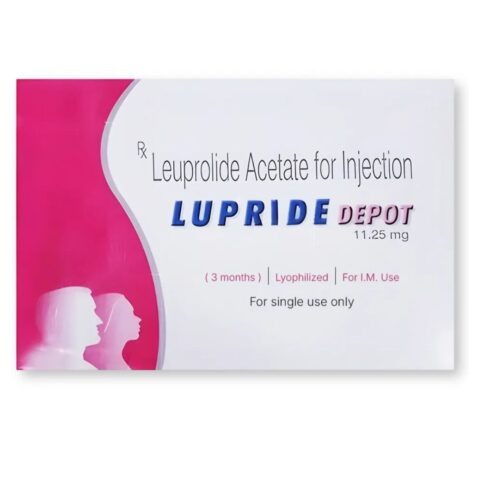
3-month injection
Used for: Endometriosis, uterine fibroids (single dose), and central precocious puberty in children.
The 3-month formulation reduces clinic visits while maintaining the same hormonal suppression as the monthly dose. For patients with endometriosis or fibroids whose treatment is planned for several months, this offers significant convenience without compromising efficacy.
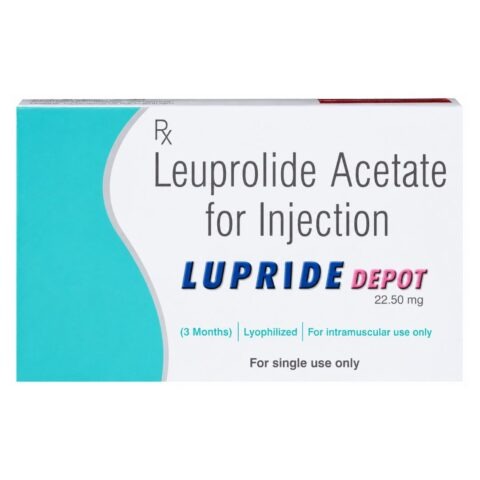
3-month injection
Used for: Advanced prostate cancer — the most common dose used in androgen deprivation therapy (ADT).
This is the workhorse dose in prostate cancer treatment. A 3-month depot formulation suits the long-term nature of ADT — many prostate cancer patients remain on leuprolide for years. Quarterly injections maintain consistent castrate-level testosterone suppression with minimal disruption to daily life.
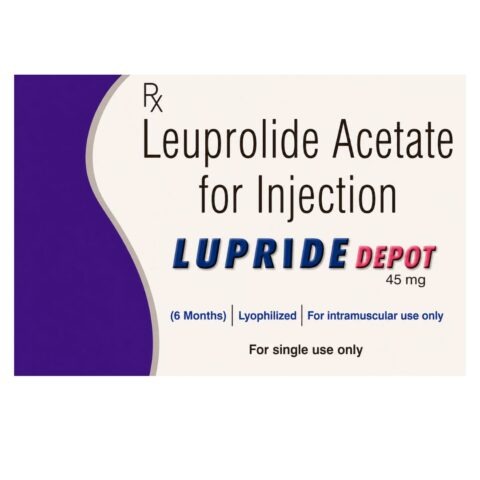
6-month injection
Used for: Advanced prostate cancer in patients on long-term androgen deprivation therapy.
The 6-month formulation is the longest-interval option — two injections per year. For stable prostate cancer patients on established ADT, this offers maximum convenience and consistency. It is clinically equivalent to shorter-interval formulations in maintaining testosterone suppression.
| Dose | Interval | Primary Uses | Injections / Year |
|---|---|---|---|
| 3.75mg | Monthly | Endometriosis, fibroids | 12 |
| 11.25mg | Every 3 months | Endometriosis, fibroids, CPP | 4 |
| 22.5mg | Every 3 months | Prostate cancer (ADT) | 4 |
| 45mg | Every 6 months | Prostate cancer (long-term ADT) | 2 |
What to expect
Side Effects: Honest and Complete
Because leuprolide suppresses sex hormones, its side effects are essentially the consequences of a medically induced low-hormone state. They are predictable, well-documented, and manageable — but they need to be understood before treatment begins.
In men (prostate cancer / ADT):
- Hot flashes — the most frequently reported; usually mild to moderate
- Reduced libido and sexual function — a direct consequence of testosterone suppression
- Fatigue — common, particularly in the early months
- Bone density loss — with long-term use; calcium and vitamin D supplementation and bone density monitoring are standard
- Muscle mass reduction — exercise is strongly recommended throughout treatment
- Mood changes — depression has been reported; monitoring is important
- Metabolic changes — increased fat, potential insulin resistance with long-term ADT
In women (endometriosis / fibroids):
- Hot flashes and night sweats — menopausal-like symptoms are common
- Vaginal dryness
- Mood changes — including low mood and irritability
- Bone density loss — which is why treatment is typically limited to 6 months in gynaecological use
- Headaches
The testosterone flare — important for prostate cancer patients
In the first 1–2 weeks of treatment, leuprolide causes a temporary rise in testosterone before suppression begins. In prostate cancer patients, this can briefly worsen symptoms — bone pain, urinary symptoms, or tumour flare. Anti-androgens (such as bicalutamide) are often prescribed alongside leuprolide for the first 2–4 weeks specifically to manage this. Do not start leuprolide without discussing this risk with your oncologist.
During treatment
What Gets Monitored — and Why
Leuprolide treatment requires regular clinical monitoring. What’s tracked depends on the condition being treated, but these are the standard parameters:
| What’s Monitored | In Whom | Why |
|---|---|---|
| Testosterone levels | Men on ADT | Confirm castrate-level suppression is maintained |
| PSA | Men with prostate cancer | Track treatment response and monitor for progression |
| Bone density (DEXA scan) | Long-term treatment patients | Detect and manage bone loss before fracture risk increases |
| Blood glucose / lipids | Men on long-term ADT | Monitor for metabolic syndrome risk |
| Oestrogen levels | Women on treatment | Confirm suppression and guide add-back therapy decisions |
| Bone age (X-ray) | Children with CPP | Confirm puberty suppression is appropriate and effective |
Quick answers
Questions Patients and Families Ask
Does leuprolide cure prostate cancer?
No — it is not a curative treatment in most settings. Androgen deprivation therapy controls hormone-sensitive prostate cancer by removing its fuel source. It slows progression and reduces tumour burden, often significantly, and is frequently combined with other treatments. Your oncologist will define the goals of treatment for your specific case.
Will fertility return after stopping leuprolide?
In women treated for endometriosis or fibroids, hormonal function and fertility typically return after stopping — one of the reasons it is used in patients planning future pregnancies. In men on long-term ADT, testosterone recovery is variable and often incomplete. This should be discussed in detail with your specialist before starting.
Why is the dose so different for prostate cancer vs endometriosis?
The doses reflect the intended treatment duration, not potency. Endometriosis treatment is typically limited to months (due to bone loss risk) using monthly or 3-month formulations. Prostate cancer treatment often spans years — so longer-interval formulations (3-month 22.5mg or 6-month 45mg) are used for patient convenience and adherence.
Can it be used alongside other cancer treatments?
Yes — leuprolide is commonly combined with other agents. In prostate cancer, anti-androgens, chemotherapy, or newer AR-targeted therapies are frequently co-prescribed. In breast cancer, it is often used alongside tamoxifen or aromatase inhibitors. Combination protocols are determined by your oncologist based on disease staging and molecular profile.
What is “add-back therapy” in endometriosis treatment?
Because leuprolide causes a low-oestrogen state, some women are prescribed low-dose oestrogen and progesterone alongside it — enough to reduce hot flashes and protect bone density, without restimulating endometrial tissue. This allows longer treatment courses while managing side effects. It is a clinician-guided decision, not a standard protocol for all patients.
Putting it together
What You Need to Take Into Your Next Appointment
Leuprolide is a serious medicine with a well-established clinical record spanning four decades. It works. It is widely used precisely because the evidence behind it is strong and consistent across the conditions it treats.
But it also changes how the body functions at a fundamental hormonal level — and understanding that is not optional. The side effects are predictable. The monitoring requirements are clear. The dosing logic makes sense once you understand the mechanism.
“A patient who understands their treatment tolerates it better, adheres to it longer, and has better conversations with their clinical team. That’s not a soft benefit — it’s a clinical one.”
Know which dose you’ve been prescribed and why. Understand the monitoring schedule. Ask about bone protection, the flare effect if you have prostate cancer, and what the exit plan looks like. The more informed you are walking in, the better the treatment experience walking out.
This article is for informational purposes only and does not constitute medical advice.
Leuprolide acetate is a prescription-only medicine administered under specialist medical supervision.
Always consult your oncologist, gynaecologist, or treating physician regarding dosing, monitoring, and the goals of your specific treatment protocol.
📢 Why do we show ads?
We keep our product prices as low as possible while maintaining a quality service.
Ads help us cover the costs of servers, database, and website maintenance.
Our ads are minimal and won’t affect your experience.
❤️ By supporting our ads, you help us keep the site running and prices low.
Thank you!