Azelaic Acid Gel: Understanding 10%, 15%, and 20% Strengths
A practical guide to azelaic acid gel, its uses for acne and other skin concerns, and the differences between 10%, 15%, and 20% formulations.
Acne can be frustrating enough on its own.
But when breakouts are accompanied by redness, uneven skin tone, or dark marks left behind after pimples heal, finding a suitable topical treatment can become more complicated.
This is where azelaic acid has attracted considerable attention.
Azelaic acid is a topical dermatological ingredient used in products for acne-prone skin and other skin concerns. It is available in different strengths, including 10%, 15%, and 20%, and can be formulated in different vehicles such as gels and creams.
But there is an important point to understand:
A higher percentage does not automatically mean a better treatment.
The concentration, formulation, intended use, regulatory status, skin condition, and individual tolerance all matter.
Quick facts about azelaic acid
What is azelaic acid?
Azelaic acid is a naturally occurring dicarboxylic acid used in topical dermatological and skincare formulations.
What is it used for?
Depending on the formulation, azelaic acid is used for acne-prone skin, blemishes, redness, uneven pigmentation, and certain inflammatory skin conditions.
What strengths are available?
10%, 15%, and 20% formulations are commonly encountered, although their indications and regulatory status can differ.
Gel or cream?
Both are topical vehicles, but they are not automatically interchangeable. The exact formulation matters.
What exactly is azelaic acid?
Azelaic acid is a saturated dicarboxylic acid that has been used in topical dermatology for many years.
It is sometimes grouped broadly with “acids” used in skincare, but its dermatological role is different from that of common exfoliating acids.
Azelaic acid has antimicrobial and keratinization-modulating properties. Established 20% formulations, for example, have prescription use in acne vulgaris and act against factors involved in acne, including abnormal follicular keratinization.
You can learn more about the active ingredient and its pharmaceutical context through the Azelaic Acid composition page.
Azelaic acid is the active ingredient. The percentage and dosage form describe a particular formulation, but they do not by themselves establish that two products are therapeutically interchangeable.
Why is azelaic acid used for acne?
Acne is influenced by several processes, including abnormal follicular keratinization, microbial activity, and inflammation.
Azelaic acid is useful in dermatological formulations because it has properties that can address more than one aspect of acne-prone skin.
Established 20% azelaic-acid products have prescription use for topical treatment of acne vulgaris. The DrugsGeneral 20% product page describes its formulation as a topical gel containing 20% azelaic acid and identifies acne vulgaris as its primary dermatological use.
For people researching acne treatments, you can also explore the broader Acne treatment category.
Azelaic acid and post-acne marks
A pimple may disappear in a few days, but the mark it leaves behind can remain much longer.
These post-inflammatory marks are particularly frustrating because the skin may look uneven even after active acne has improved.
Azelaic acid is commonly used in skincare and dermatological formulations targeting uneven pigmentation and the appearance of post-acne marks. The DrugsGeneral 10% product information, for example, describes use in products targeting post-acne marks, dark spots, and uneven-looking skin tone.
However, pigmentation has many possible causes. Persistent, changing, or unusual pigmentation should be evaluated by a dermatologist rather than automatically assumed to be an acne mark.
Azelaic Acid 10% Gel: a lower-strength option
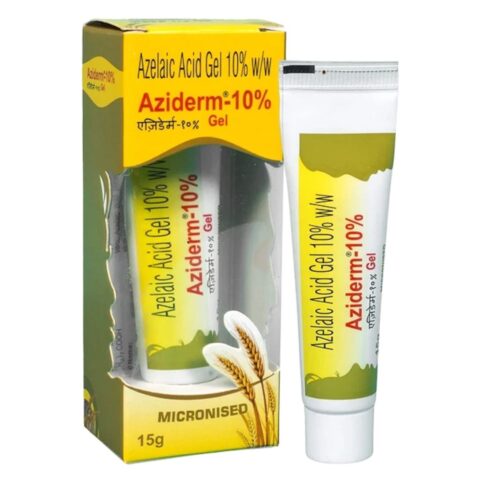
Azelaic Acid 10% Gel is a topical formulation containing 10% azelaic acid.
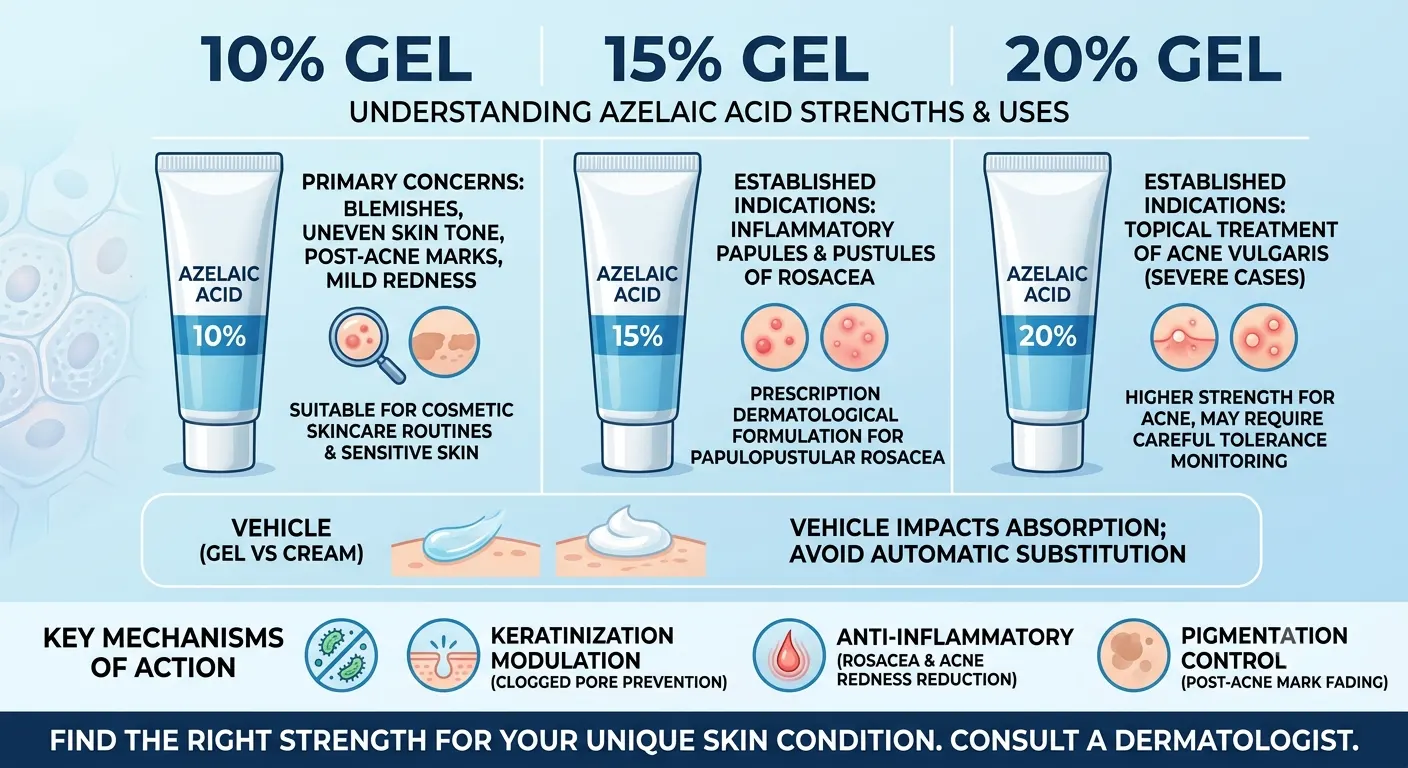
10% formulations are commonly encountered in skincare products aimed at concerns such as blemishes, acne-prone skin, visible redness, uneven skin tone, and post-acne marks.
Because the regulatory status and intended use of 10% azelaic acid can vary between products and countries, it is important to look at the specific product rather than assuming that every 10% formulation has the same medical indication.
Product reference: Azelaic Acid 10% Gel
10% does not mean “ineffective.”
Concentration is only one part of a topical product. The vehicle, supporting ingredients, application frequency, skin concern, and individual tolerance can all influence the experience and outcome.
Azelaic Acid 15% Gel: a dermatological formulation
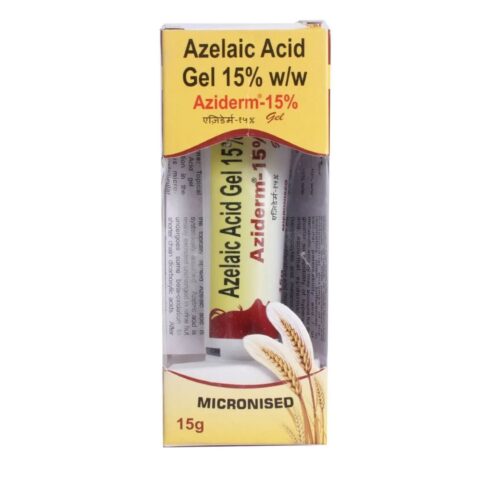
Azelaic Acid 15% Gel occupies an important place in topical dermatology.
Prescription 15% azelaic acid gel is an established treatment for inflammatory papules and pustules associated with mild-to-moderate rosacea in the United States. Depending on the market and specific product, 15% azelaic acid may also be used in acne treatment.
The DrugsGeneral 15% product page describes its Azelaic Acid 15% Gel as a prescription topical product used in the context of rosacea, acne, facial redness, and post-acne marks.
Product reference: Azelaic Acid 15% Gel
The exact approved indication, formulation, and prescription status should always be checked for the specific product and country.
Azelaic Acid 20% Gel: a higher-strength formulation
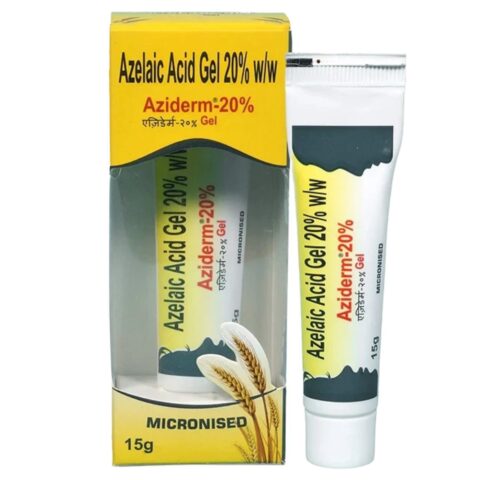
Azelaic Acid 20% Gel contains 20% azelaic acid by weight and is presented as a topical gel formulation.
Twenty percent azelaic acid has established prescription use for acne vulgaris in specific medicinal formulations. However, an important distinction is necessary: established 20% medicines such as Skinoren 20% Cream and Azelex 20% Cream are specific branded formulations, and a separate 20% gel should not automatically be described as their generic equivalent simply because it contains the same active ingredient and concentration.
Product reference: Azelaic Acid 20% Gel
It contains a higher concentration of azelaic acid than a 10% or 15% product, but concentration alone does not establish therapeutic equivalence, suitability, or superiority.
10% vs 15% vs 20% azelaic acid
| Strength | Formulation | General context |
|---|---|---|
| 10% | Gel and other skincare formulations | Commonly marketed for blemishes, acne-prone skin, uneven tone, redness, and post-acne marks |
| 15% | Gel | Established prescription dermatological formulation; U.S. 15% gel indication includes papulopustular rosacea |
| 20% | Gel and established cream formulations | Established prescription use for acne vulgaris in specific medicinal formulations |
The table is a starting point—not a treatment ladder.
A 10% product should not automatically be treated as a weaker prescription medicine, and a 20% product should not automatically be considered the best choice for every person.
Gel vs cream: why the vehicle matters
When discussing azelaic acid, people often focus on the percentage and overlook the formulation.
But gel and cream are different vehicles.
A gel may have a lighter feel and different application characteristics, while a cream may provide a different sensory experience and formulation profile.
More importantly, the exact product formulation can affect how the active ingredient is delivered to the skin.
This is why a 20% gel should not automatically be described as equivalent to a 20% cream simply because both contain 20% azelaic acid. The DrugsGeneral 20% page specifically notes that established 20% products such as Skinoren and Azelex are creams and should not automatically be treated as equivalent to every 20% gel.
How does azelaic acid work?
Azelaic acid has several properties relevant to dermatological treatment.
- It has antimicrobial activity.
- It influences abnormal follicular keratinization.
- It has anti-inflammatory properties.
- It is used in formulations targeting uneven pigmentation.
In established 20% formulations, its acne activity is associated with antimicrobial effects and modulation of follicular hyperkeratosis.
This multi-target profile helps explain why azelaic acid is used across several dermatological and skincare contexts.
Azelaic acid and rosacea
Rosacea can be particularly challenging because redness and inflammatory lesions can occur together.
Prescription azelaic acid 15% gel has an established indication for inflammatory papules and pustules associated with mild-to-moderate rosacea in U.S. labeling.
The DrugsGeneral 15% product information similarly highlights rosacea, inflammatory lesions, redness, and acne-related concerns.
However, not every azelaic acid product should be assumed to have the same rosacea indication. A 10% cosmetic formulation, for example, should not automatically be advertised as equivalent to a prescription 15% rosacea medicine.
Azelaic acid for acne-prone skin
Azelaic acid can be particularly interesting for people whose skin concerns overlap.
Someone may have active acne while also dealing with redness and post-acne marks. In such situations, a topical ingredient with multiple dermatological properties may be considered as part of an overall treatment strategy.
The appropriate strength depends on the product, the condition being treated, and professional guidance when the product is a prescription medicine.
For additional acne-focused options, visit the Milan Medicals Acne category.
Azelaic acid and pigmentation
Dark marks after acne are often referred to as post-inflammatory hyperpigmentation, or PIH.
Azelaic acid is commonly incorporated into skincare and dermatological routines that target uneven pigmentation and the appearance of post-acne marks.
But pigmentation takes time to change.
It is also important to remember that sunscreen and controlling the underlying inflammation are important parts of managing pigmentation concerns.
What happens when you first start azelaic acid?
Not every skin type responds in exactly the same way.
Topical azelaic acid can cause local reactions including burning, stinging, itching, dryness, redness, or irritation. These effects can be particularly noticeable when a new active ingredient is introduced or when several potentially irritating products are used together.
For that reason, it is useful to keep the rest of the skincare routine relatively simple when introducing a new azelaic acid product.
Azelaic acid is for topical use. Avoid contact with the eyes and other sensitive mucous membranes. If significant or persistent irritation occurs, stop using the product and seek advice from a healthcare professional.
Can azelaic acid be combined with other skincare products?
Azelaic acid can be used alongside other skincare products, but combining multiple strong active ingredients can increase the overall irritation burden.
Retinoids, exfoliating acids, benzoyl peroxide, and other acne treatments can all affect skin tolerance.
If you are using prescription acne or rosacea treatment, it is better to follow the treatment plan provided by your healthcare professional rather than adding several new active ingredients at once.
Why concentration is not the whole story
It is tempting to look at azelaic acid like this:
10% → 15% → 20% = mild → medium → strong.
But clinical dermatology is more complicated than that.
Concentration is important, but so are:
- The dosage form
- The vehicle
- The treatment indication
- The application schedule
- The regulatory status
- The patient’s skin sensitivity
- Other products being used
For example, the DrugsGeneral 10% page describes its product as a topical gel for acne-prone skin and cosmetic/dermatological concerns, while the 15% and 20% pages describe higher-strength formulations with different medical contexts.
Which azelaic acid strength should you choose?
There is no universal answer.
The better question is: What skin problem are you trying to treat, and what formulation is appropriate for that problem?
A 10% product may be relevant for someone looking for a lower-concentration skincare formulation. A prescription 15% gel may be appropriate for a diagnosed dermatological condition such as papulopustular rosacea. A 20% formulation may be considered for acne when clinically appropriate.
The choice should be based on the specific product and treatment objective—not simply on the largest number on the label.
Azelaic Acid products from DrugsGeneral
Azelaic Acid 10% Gel
Topical 10% azelaic acid gel for acne-prone skin, blemishes, uneven tone, redness, and post-acne marks.
Azelaic Acid 15% Gel
Higher-strength topical gel used in dermatological treatment, including established use for papulopustular rosacea.
Azelaic Acid 20% Gel
20% topical azelaic acid gel formulation for dermatological use, with established 20% azelaic-acid medicines used for acne.
For ingredient information, see the Azelaic Acid composition page.
For other acne-focused products, explore the Acne product category.
Frequently asked questions
What is azelaic acid gel used for?
Depending on the concentration and specific formulation, azelaic acid gel may be used for acne-prone skin, blemishes, uneven pigmentation, redness, or diagnosed dermatological conditions such as papulopustular rosacea.
Is 10% azelaic acid good for acne?
10% azelaic acid products are commonly marketed for acne-prone skin and blemishes. However, the approved indication depends on the specific formulation and country.
What is 15% azelaic acid gel used for?
Prescription 15% azelaic acid gel has an established U.S. indication for inflammatory papules and pustules associated with mild-to-moderate rosacea. Specific products in other markets may have additional indications.
Is 20% azelaic acid stronger than 10%?
Yes, in terms of concentration, 20% contains twice the azelaic acid concentration of a 10% formulation. However, this does not mean the products are therapeutically interchangeable or that 20% is automatically better for every person.
Is 20% azelaic acid the same as Skinoren 20%?
Not necessarily. Skinoren 20% Cream is a specific branded formulation. A separate 20% azelaic acid gel can contain the same active ingredient and concentration while having a different vehicle, manufacturer, and regulatory status.
Is azelaic acid 20% the same as Azelex?
No. Azelex is a specific branded 20% azelaic acid cream. A separate 20% gel should not automatically be described as Azelex or its generic equivalent.
Can azelaic acid help with acne marks?
Azelaic acid is used in products targeting post-acne marks and uneven pigmentation. However, deep acne scars are different from pigmentation and generally require a different treatment approach.
Can azelaic acid cause irritation?
Yes. Burning, stinging, itching, dryness, redness, and irritation can occur with topical azelaic acid. If irritation is significant or persistent, seek professional advice.
The bigger conversation around azelaic acid
Azelaic acid is interesting because it can fit into conversations about several overlapping skin concerns.
Acne may leave pigmentation. Rosacea may involve both redness and inflammatory lesions. Sensitive skin may make some aggressive acne treatments difficult to tolerate.
Azelaic acid therefore occupies a useful position in dermatological skincare—but the product still matters.
Instead of asking only, “Which percentage is strongest?”, a better set of questions is:
- What skin condition am I treating?
- Is this a cosmetic or prescription formulation?
- Is a gel or cream appropriate?
- Which concentration is supported for my treatment goal?
- How sensitive is my skin?
- What other active ingredients am I already using?
That approach is much more useful than choosing a percentage based solely on the number printed on the tube.
The takeaway
Azelaic acid is a versatile topical ingredient available in different concentrations and formulations.
10% gels are commonly encountered in skincare products targeting blemishes, uneven tone, redness, and post-acne marks. Prescription 15% gel formulations have established use for inflammatory papules and pustules associated with mild-to-moderate rosacea in the U.S., while specific 20% azelaic-acid medicinal formulations have established use for acne vulgaris.
The most important lesson is that 10%, 15%, and 20% are not simply three levels of the same treatment.
The concentration, vehicle, indication, regulatory status, and individual skin needs all matter.
Whether you are researching azelaic acid 10%, 15%, or 20%, look beyond the percentage. Understanding the formulation and intended use is just as important as understanding the strength.
Medical disclaimer: This article is intended for educational and informational purposes only. It does not replace professional medical advice, diagnosis, or treatment. Azelaic acid products can differ in formulation, strength, approved indications, prescription status, and regulatory classification between countries. Always check the labeling for the specific product and consult a qualified healthcare professional when using azelaic acid to treat a medical skin condition.
📢 Why do we show ads?
We work hard to keep the prices of products listed on our site
as low as possible, while continuing to provide a
quality service.
Running and maintaining the website, servers, database, and other
services comes with ongoing costs. Ads are one of the ways we help
cover these expenses.
Don’t worry — our ads are minimal and are designed
to have as little impact on your browsing experience as possible.
By allowing these small ads, you help us keep the website running,
maintain our services, and continue offering products at competitive prices.
Thank you for your support!