
Oncology · Immunotherapy · Patient Guide
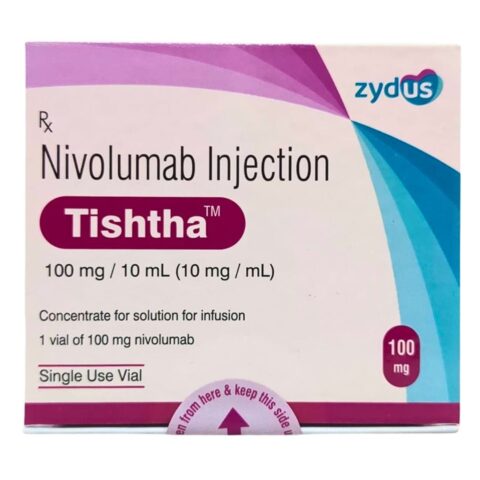
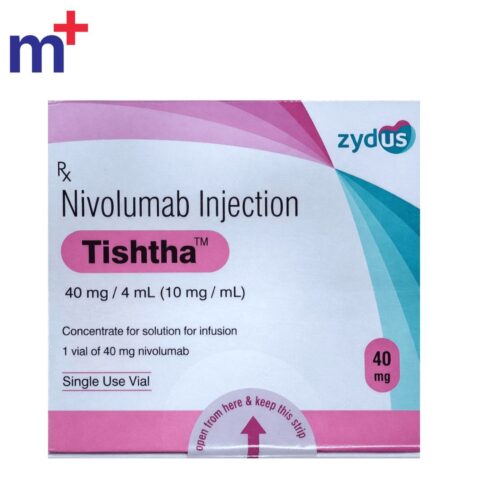
Tishtha 40mg Injection (Nivolumab)
Generic Opdivo Immunotherapy for Cancer Treatment
What it is, how it works, what cancers it treats — and why it’s opening the door to immunotherapy for patients who couldn’t afford the reference brand.
Informational guide · 7 minutes
If you or someone you love has just been handed the words “immunotherapy” and “Nivolumab” by an oncologist, you’re likely doing what most people do: searching for every piece of information you can find. This guide is written for you.
Tishtha 40mg Injection contains Nivolumab — the same active molecule as Opdivo®, the reference brand developed by Bristol-Myers Squibb. As a generic equivalent, it brings the same immunotherapy mechanism to patients at a significantly lower cost. That distinction matters enormously when treatment runs for months or years.
This is not medical advice. It is a clear, honest explanation of what this drug is, how it works, and what the science says — so you can walk into your next oncology appointment better prepared.
Understanding the drug
What Is Tishtha 40mg Injection?
Tishtha is a monoclonal antibody — a highly specific protein engineered to lock onto a single target in the body. Its target is the PD-1 receptor (Programmed Death-1), a checkpoint protein found on immune cells called T-cells.
The drug class it belongs to — PD-1 inhibitors — represents one of the most significant advances in cancer medicine in decades. It doesn’t attack cancer directly the way chemotherapy does. It does something more elegant: it removes the brakes from your own immune system and lets it do its job.
Active ingredient: Nivolumab. Drug class: PD-1 immune checkpoint inhibitor. Therapeutically equivalent to Opdivo® (Bristol-Myers Squibb). Administered as an intravenous infusion in a hospital or oncology centre — always under specialist supervision.
The science, clearly explained
How Does Nivolumab Actually Work?
Cancer is clever. One of its most effective survival strategies is hijacking the immune system’s own off-switch.
Here’s how that happens: Your T-cells — the immune system’s frontline fighters — carry a receptor called PD-1. When PD-1 binds to a protein called PD-L1, it receives a signal to stand down. It’s a normal mechanism that prevents the immune system from attacking the body’s own healthy tissue.
Cancer cells exploit this. Many tumours express PD-L1 specifically to trigger that “stand down” signal — effectively making themselves invisible to your immune system.
Nivolumab blocks the PD-1 receptor. With that brake line cut, T-cells can no longer be silenced by the tumour. They recognise the cancer cells for what they are — and attack.
Attacks all rapidly dividing cells — cancer and healthy tissue alike. Broad, toxic, systemic. Effective but often at significant cost to the body.
Removes immune suppression. Lets the body’s own T-cells identify and destroy tumour cells. Targeted. Fewer systemic toxic effects.
“Nivolumab doesn’t poison cancer. It lifts the disguise cancer wears to hide from your immune system — and then gets out of the way.”
Approved indications
Which Cancers Is It Used For?
Nivolumab has one of the broadest approved indication profiles of any immunotherapy drug. It is used — often in combination with other agents — across multiple advanced and metastatic cancers:
| Cancer Type | Setting | Notes |
|---|---|---|
| Non-Small Cell Lung Cancer (NSCLC) | Advanced / metastatic | One of the most widely used indications |
| Melanoma | Advanced / unresectable | Often combined with ipilimumab |
| Renal Cell Carcinoma | Advanced | First-line in combination regimens |
| Classical Hodgkin Lymphoma | Relapsed / refractory | After prior treatment failure |
| Head & Neck Squamous Cell Carcinoma | Recurrent / metastatic | Post-platinum therapy |
| Urothelial (Bladder) Cancer | Advanced | Post-platinum chemotherapy |
| Hepatocellular Carcinoma | Advanced liver cancer | After sorafenib |
| Colorectal Cancer (MSI-H / dMMR) | Metastatic | Biomarker selection required |
Treatment is always initiated and monitored by a qualified oncologist. Indication, dosing, and combination regimens are determined individually.
Generic vs reference brand
Tishtha vs Opdivo®: What’s Actually Different?
This is the question most patients and families ask first. The honest answer is straightforward.
| Factor | Tishtha 40mg | Opdivo® (BMS) |
|---|---|---|
| Active Ingredient | Nivolumab | Nivolumab |
| Drug Class | PD-1 Inhibitor | PD-1 Inhibitor |
| Mechanism | Identical | Reference standard |
| Clinical Indications | Same | Same |
| Cost | Significantly lower | High — often prohibitive for long-term use |
| Administration | IV infusion, oncology centre | IV infusion, oncology centre |
Nivolumab treatment isn’t a short course — it often runs for many months or longer. At Opdivo® pricing, that cost is out of reach for the vast majority of patients globally. A therapeutically equivalent generic changes who can actually access treatment. That’s a clinical reality, not just a financial one.
Honest information
Side Effects: What to Know and Watch For
Because Nivolumab amplifies immune activity, its side effects are fundamentally different from chemotherapy. Instead of hair loss and nausea, you’re watching for immune-related adverse events — the body’s immune system becoming overactive in organs it shouldn’t be targeting.
Common and generally manageable:
- Fatigue
- Skin rash or itching
- Diarrhoea
- Decreased appetite
- Nausea
Immune-related — require prompt reporting to your oncologist:
- Pneumonitis — inflammation of the lungs (breathlessness, cough)
- Colitis — inflammation of the bowel (persistent diarrhoea, abdominal pain)
- Hepatitis — liver inflammation (yellowing skin/eyes, dark urine)
- Thyroid disorders — fatigue, weight changes, temperature sensitivity
- Endocrinopathies — adrenal or pituitary gland involvement
Immune-related side effects can occur at any point during treatment — sometimes weeks after an infusion. Most are manageable when caught early, but early reporting is everything. Never wait for symptoms to resolve on their own. Contact your oncology team immediately if you notice anything new or worsening.
Regular blood monitoring throughout treatment is standard practice and non-negotiable. Your oncology team will define the schedule based on your individual protocol.
How it’s given
Dosage & Administration
Tishtha is administered as an intravenous (IV) infusion — meaning it is given directly into a vein, typically over 30–60 minutes, in a hospital or accredited oncology infusion centre.
There is no fixed universal dose. Your oncologist will determine the schedule based on:
- The type and stage of cancer being treated
- Your body weight
- Whether Nivolumab is being used alone or in combination with another agent (such as ipilimumab or chemotherapy)
- Your response to previous treatments
Common schedules include every 2 weeks, every 4 weeks, or every 6 weeks — but your protocol will be specific to your case. Do not adjust or skip doses without oncologist guidance.
Quick answers
Questions Patients and Families Ask
Both contain Nivolumab as the active molecule and work through the same PD-1 inhibition mechanism. As a biosimilar-equivalent generic, Tishtha is considered therapeutically equivalent. Your oncologist is the right person to confirm suitability for your specific protocol.
Chemotherapy attacks all rapidly dividing cells. Nivolumab works by restoring your immune system’s ability to recognise and target cancer cells specifically. Different mechanism, different side effect profile, and in many cancers, significantly different outcomes.
It varies considerably by cancer type, response, and protocol. Some patients receive treatment for a defined number of cycles; others continue as long as they are responding and tolerating it well. Your oncologist will review this regularly.
Yes — Nivolumab is frequently used in combination regimens, most notably with ipilimumab (another checkpoint inhibitor), and in some settings alongside chemotherapy. Combination therapy is determined entirely by your oncologist based on your cancer type and staging.
Contact your oncology team immediately. Do not attempt to adjust your schedule independently. Timing of infusions is part of the clinical protocol and changes should always be managed by your treating team.
Yes, significantly. Nivolumab is a biological agent that requires refrigerated storage (2–8°C) and proper cold-chain handling throughout transport and storage. Always ensure the product you receive comes through a verified, compliant pharmaceutical supply chain.
Final word
What This Drug Represents
Immunotherapy changed what was possible in oncology. PD-1 inhibitors like Nivolumab extended survival in cancers that previously had very limited options. The science is not in question.
What was in question — for most of the world — was access. When a course of treatment costs tens of thousands of dollars, survival becomes something only some patients can afford. Generic equivalents like Tishtha exist to change that equation.
“The medicine that changed the science of cancer treatment should not be available only to those who can afford the branded version. Generic equivalents are not a compromise — they are the point.”
If you or a family member is exploring Nivolumab as part of a treatment plan, bring this information to your oncologist. Ask about the protocol, the combination regimen, the monitoring schedule — and whether Tishtha fits within the framework your oncologist is recommending.
Knowledge doesn’t replace medical guidance. But it makes the conversation better.
This article is for informational purposes only and does not constitute medical advice.
Nivolumab (Tishtha / Opdivo®) is a prescription-only medicine administered under specialist oncology supervision.
Always consult your oncologist regarding treatment suitability, dosing, and monitoring for your specific condition.