Men’s Health · Honest Conversation
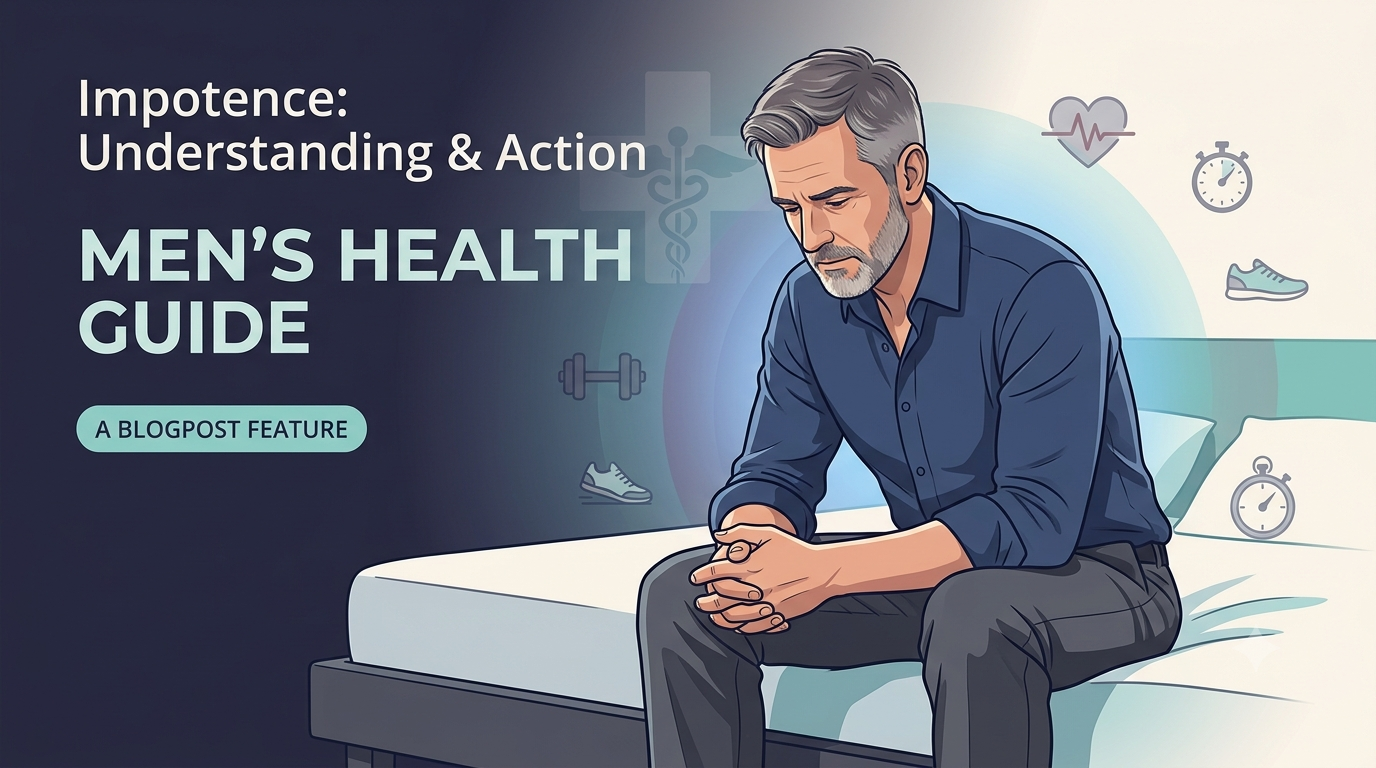
Impotence in Men: How to Identify It, Understand It, and Actually Do Something About It
It’s more common than most men admit. It’s more treatable than most men realise. And it’s more important to address than most men are willing to acknowledge — until it affects them.
A proper read · 8 minutes
Let’s start by naming the thing directly. Impotence — or erectile dysfunction — is the inability to get or keep an erection firm enough for sex. Not once. Not occasionally. But consistently, over weeks or months, in a way that starts to affect your life.
Most men experience it at some point. Stress, alcohol, exhaustion — a single bad experience is not erectile dysfunction. But when it becomes a pattern, when the anxiety around sex starts to compound the problem, when intimacy starts to feel like something to dread rather than desire — that’s when it matters and that’s when it needs to be addressed.
The good news, which gets buried under the embarrassment: ED is one of the most treatable conditions in men’s health. Highly treatable. At any age. And often, it’s pointing to something else in your health that’s worth knowing about.
Defining it clearly
What Impotence Actually Is
Impotence and erectile dysfunction describe the same thing: a persistent difficulty achieving or maintaining an erection sufficient for sexual activity. The clinical threshold is roughly three months of consistent difficulty — but if it’s happening regularly and it’s affecting your confidence, your relationship, or your avoidance behaviour around sex, it deserves attention regardless of how long it’s been going on.
It becomes more common with age — significantly more so after 40 — but it is not an inevitable part of getting older. That framing has caused too many men to accept a treatable condition as an unavoidable one.
“Too many men treat ED as a sentence rather than a symptom. It’s almost always a symptom. And symptoms have causes. Causes have treatments.”
What’s actually behind it
What Causes Impotence — Physical, Psychological, and Lifestyle
This is where it gets important. ED is rarely one-dimensional. In most men over 40, there’s a physical component. In most men under 40, there’s a stronger psychological component. In many men, it’s both — physical factors that reduce capacity, and psychological factors that then amplify every incident into a pattern.
Physical causes
Erections depend on blood flow, nerve signalling, and hormones working together. Any condition that disrupts that chain can cause ED.
| Physical Factor | How It Affects ED |
|---|---|
| Cardiovascular disease | Reduced blood flow to the penis — often the first sign of wider vascular problems |
| Diabetes | Damages blood vessels and nerves — ED is present in up to 75% of diabetic men |
| High blood pressure | Stiffens and narrows vessels; some antihypertensive medications also contribute |
| Low testosterone | Reduces sexual desire and can affect the quality of erectile response |
| Obesity | Contributes to vascular disease, insulin resistance, and low testosterone simultaneously |
| Neurological conditions | MS, Parkinson’s, spinal cord injury — disrupts the nerve signals that initiate erection |
| Smoking | Directly damages penile blood vessels — one of the most modifiable risk factors |
| Certain medications | Antidepressants, antihypertensives, antiandrogens — always check with your prescriber |
Research consistently shows that erectile dysfunction can precede cardiovascular disease by 3–5 years. The penile arteries are small — they show vascular damage earlier than the coronary arteries. For any man with ED and cardiovascular risk factors, a full cardiovascular assessment is genuinely important, not optional.
Psychological causes
The brain initiates every erection. A thought, an emotion, an anxiety — all of it runs through the same neural pathway that eventually produces the physical response. When the mind is preoccupied, anxious, or depressed, that signal gets disrupted before it even starts.
- Performance anxiety — one failed erection creates fear of the next, which creates the next failure. A self-reinforcing cycle.
- Stress — work, financial, relationship pressure. Chronically elevated cortisol suppresses sexual function.
- Depression — reduces desire, motivation, and physiological sexual response
- Relationship conflict — unresolved tension with a partner is one of the most common and least discussed drivers
- Past trauma — sexual or emotional trauma can create deeply rooted inhibitory patterns
Lifestyle factors
- Alcohol — acutely impairs erection; chronically damages nerves and hormonal balance
- Sedentary lifestyle — poor cardiovascular fitness directly reduces erectile capacity
- Poor sleep — testosterone is produced primarily during deep sleep; chronic sleep deprivation suppresses it
- Recreational drug use — cocaine, opioids, and anabolic steroids are all associated with ED
Recognising it
Signs and Symptoms to Be Aware Of
The core symptom is straightforward: difficulty getting or keeping an erection. But ED often shows up alongside a cluster of related experiences that men don’t always connect:
- Erections that are less firm than usual, even when aroused
- Erections that don’t last long enough for satisfying sex
- Reduced sexual desire or interest
- Anxiety before or during sex — the anticipatory dread
- Avoidance of intimacy or situations that might lead to sex
- Premature or delayed ejaculation accompanying erection difficulties
- Relationship tension or withdrawal from a partner
If these have been present consistently for more than a few weeks, a conversation with a doctor is the right next step — not to catastrophise, but to understand what’s driving it.
What happens at the doctor
How ED Is Diagnosed
A good ED assessment isn’t just a prescription conversation — it’s a systematic look at what’s actually causing the problem. Expect a combination of:
Medical and lifestyle history
When did it start, how often, under what circumstances. Medications, alcohol, smoking, stress levels. This context matters enormously in pointing toward the likely cause.
Blood tests
Testosterone, glucose, HbA1c (diabetes marker), cholesterol, liver and kidney function. These identify the systemic conditions most commonly driving ED.
Physical examination
Blood pressure, cardiovascular signs, neurological reflexes, and assessment of the genitalia. Brief, standard, important.
Penile Doppler ultrasound (if indicated)
Measures blood flow into and out of the penis. Used when vascular cause is suspected and treatment response needs to be better characterised.
Psychological assessment
Screening for depression, anxiety, relationship difficulties. Particularly relevant in younger men and those with inconsistent or situational ED.
What can be done
Treatment Options — From Lifestyle to Medical
The treatment that’s right for you depends on what’s causing the problem. Often it’s a combination. Here’s an honest breakdown of what’s available and what the evidence supports.
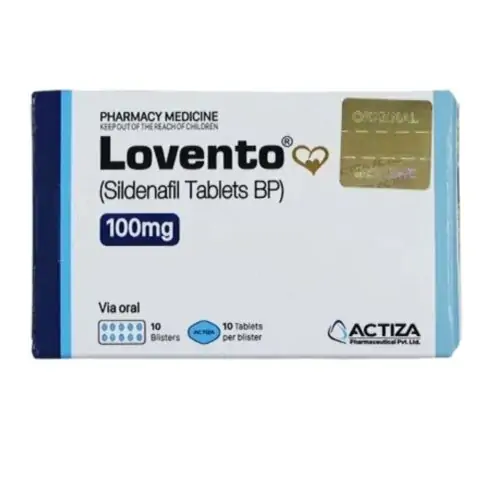
Sildenafil, tadalafil, vardenafil, avanafil. First-line treatment for most men. They increase blood flow to the penis when sexually stimulated — they don’t create arousal, they improve the physiological response to it. Effective in roughly 70% of men. Require medical supervision, especially with cardiac conditions or nitrate medications.
Underrated and underused. Regular cardiovascular exercise has been shown in multiple studies to significantly improve erectile function — independent of medication. Quitting smoking, reducing alcohol, improving sleep, and losing weight are all independently associated with meaningful improvement. For mild to moderate ED with lifestyle drivers, these alone can be curative.
For ED with a primary psychological driver — performance anxiety, depression, relationship conflict — therapy is not an adjunct, it’s the treatment. CBT (Cognitive Behavioural Therapy) and sex therapy are evidence-based and effective. Often combined with short-term medication to break the anxiety cycle.
If low testosterone is confirmed on blood testing, testosterone replacement — or alternatives like enclomiphene that stimulate natural production — can be effective. Hormone therapy for ED without confirmed deficiency is not appropriate and carries risks.
A non-invasive mechanical option. A cylinder placed over the penis creates negative pressure, drawing blood in, followed by a constriction ring to maintain the erection. Effective in men who cannot use or prefer to avoid medication. Particularly useful post-prostate surgery.
Alprostadil — injected directly into the penis or administered as a urethral suppository — produces an erection independently of arousal. Highly effective when oral medications have failed. Requires proper training and ongoing medical supervision.
Online pharmacies selling ED medication without a prescription, herbal supplements claiming to cure ED, and unregulated “natural” products are a significant patient safety issue. ED medications interact with cardiac medications — particularly nitrates — in ways that can be life-threatening. Always get a proper assessment before starting any treatment.
Getting ahead of it
Can It Be Prevented?
Not always. Some causes — neurological conditions, certain medications, genetic predisposition — are not fully within our control. But the majority of ED risk factors are modifiable. The habits that protect your heart also protect your erectile function. They are not separate categories of health.
- Exercise regularly — 150 minutes of moderate aerobic activity per week is the evidence-backed minimum
- Don’t smoke — this is the single highest-impact modifiable risk factor for vascular ED
- Keep alcohol moderate — the occasional drink is not the problem; chronic heavy drinking is
- Maintain a healthy weight
- Control blood pressure, blood sugar, and cholesterol — with your GP’s involvement
- Prioritise sleep — 7–8 hours consistently, not occasionally
- Manage stress actively — exercise, therapy, social connection, and rest all matter
- Don’t ignore mental health — depression and anxiety left untreated become physical problems
Questions men ask
Straight Answers
The evidence on this is more nuanced than the headlines suggest. Excessive pornography use has been associated with reduced responsiveness to real-world sexual stimulation in some men — sometimes called “porn-induced ED.” The mechanism is thought to involve dopamine desensitisation. If pornography consumption is significant and real-life sexual function is poor, reducing it is a reasonable starting point — but it’s worth discussing with a doctor or sex therapist rather than assuming it’s the only cause.
Prolonged pressure on the perineum from a poorly fitted saddle can compress the pudendal nerve and reduce blood flow to the penis. This is a real risk for very high-volume cyclists — but it’s largely manageable through saddle choice, position adjustment, and rest days. Recreational cycling is unlikely to be a significant contributor.
Severe dehydration reduces blood volume and can affect the vascular response required for erection. It’s an acute, situational factor — not a chronic driver of ED. If dehydration is routinely an issue, it’s one of many reasons to address it, but it’s unlikely to be the primary cause of persistent ED.
In most cases, no. ED caused by reversible factors — lifestyle, psychological causes, medication side effects, hormonal imbalance — is fully treatable. Even where structural vascular damage exists, treatment options are effective. The only scenarios where ED tends to be very difficult to reverse fully involve severe neurological damage or advanced vascular disease — and even then, assisted options exist.
When it’s been happening consistently for more than a few weeks. When it’s affecting your relationship or your avoidance behaviour. When there’s a noticeable drop in desire alongside the erectile difficulty. And especially — when you have cardiovascular risk factors like high blood pressure, diabetes, high cholesterol, or smoking history. In those cases, ED is a reason to get a cardiovascular check, not just an ED prescription.
The bottom line
Stop Suffering in Silence About Something This Treatable
Impotence carries a weight of shame that it doesn’t deserve. It’s a medical condition with identifiable causes and effective treatments. The reluctance to talk about it — to a doctor, to a partner, to anyone — is the thing that actually makes it worse.
Most men who address ED properly — with a proper assessment, appropriate treatment, and honest engagement with the lifestyle factors involved — see significant improvement. Many see full resolution.
“The men who get better are the ones who stop treating silence as strength and start treating ED as the medical condition it is.”
Talk to your doctor. Get the blood work. Understand what’s driving it. The answer is almost always findable — and almost always addressable.
This article is for informational purposes only and does not constitute medical advice.
If you are experiencing symptoms of erectile dysfunction, consult a qualified healthcare professional for assessment, diagnosis, and appropriate treatment recommendations.
📢 Why do we show ads?
We work hard to keep the prices of products listed on our site
as low as possible, while continuing to provide a
quality service.
Running and maintaining the website, servers, database, and other
services comes with ongoing costs. Ads are one of the ways we help
cover these expenses.
Don’t worry — our ads are minimal and are designed
to have as little impact on your browsing experience as possible.
By allowing these small ads, you help us keep the website running,
maintain our services, and continue offering products at competitive prices.
Thank you for your support!